Carpet cleaning chemistry refers to the science based use of cleaning solutions designed to remove soil from carpet fibers while protecting the material itself. Unlike plain water, these solutions are formulated to break the bonds that hold dirt, oils, and residues in carpet fibers so they can be safely lifted and extracted.
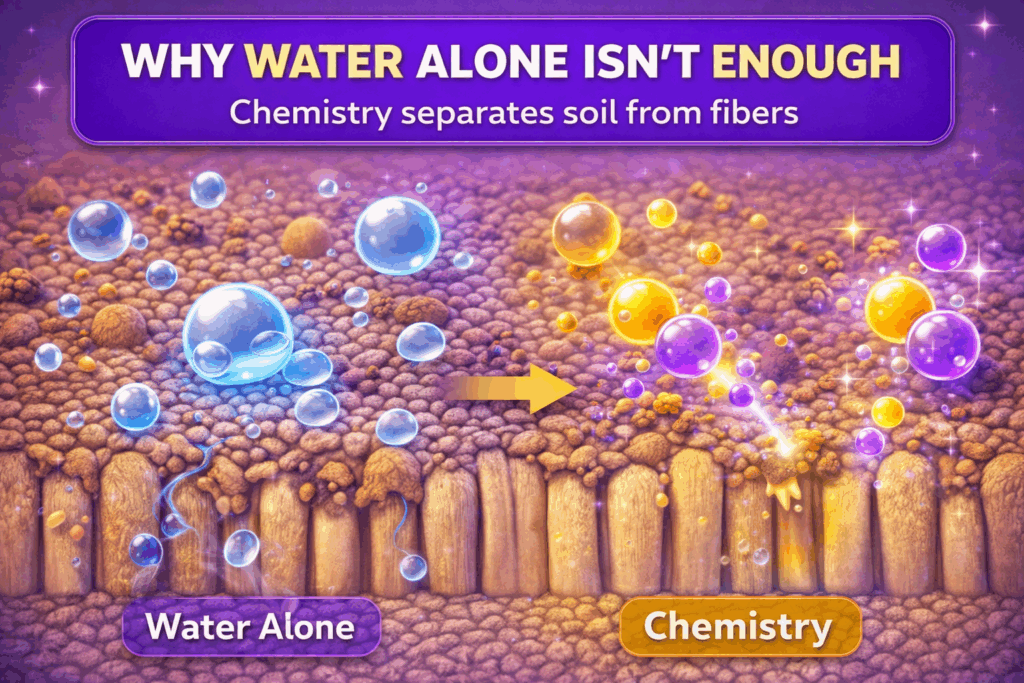
At its core, carpet cleaning chemistry exists to solve a specific problem: most of what makes carpets look dirty cannot be removed by water alone. Everyday foot traffic introduces oily residues, fine particles, and organic contaminants that cling to fibers. Without the right chemistry, these soils remain embedded, even after surface level cleaning.
Proper carpet cleaning chemistry is not about masking odors or creating short term visual improvement. Its purpose is to separate soil from fibers in a controlled way, allowing contaminants to be removed without leaving residues behind or weakening the carpet structure. When applied correctly, chemistry supports cleaner carpets, longer lasting results, and healthier indoor environments.
How Carpet Cleaning Chemistry Works
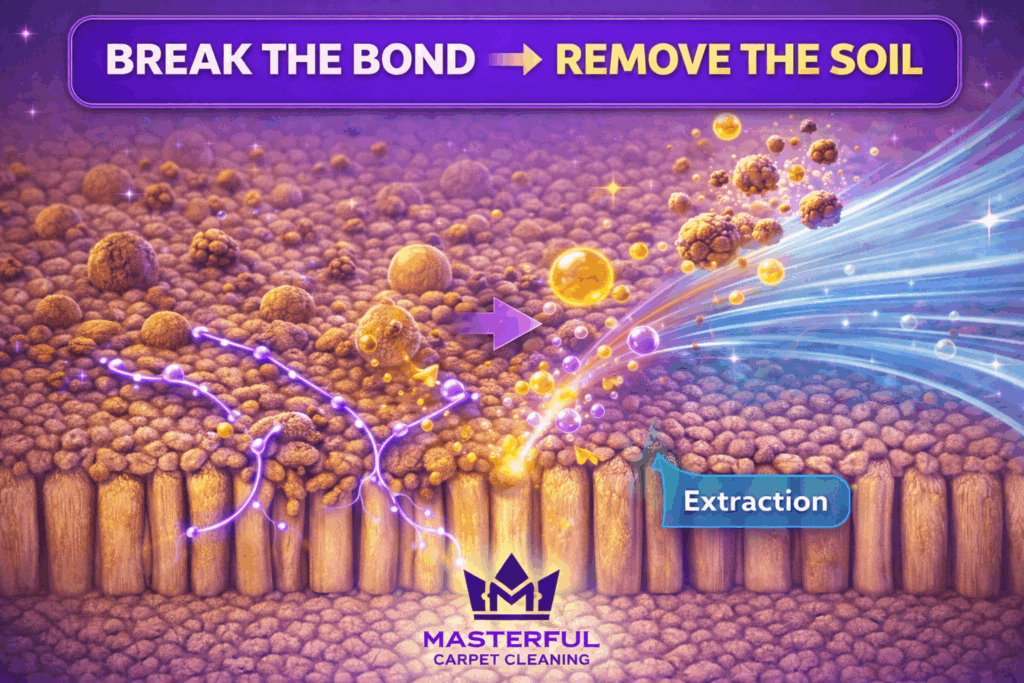
Carpet cleaning chemistry works by changing how soil behaves so it can be removed from carpet fibers, rather than simply pushed around. Most soils bind tightly to fibers through oils, static charge, or physical adhesion. Effective chemistry disrupts those bonds so soil can be suspended and extracted.
Different types of chemistry are used because different soils respond to different chemical actions.
Surfactants and Detergents
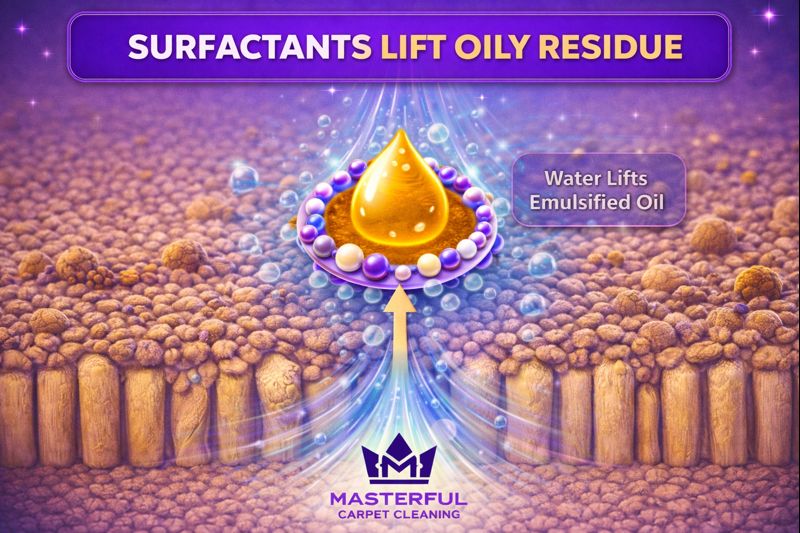
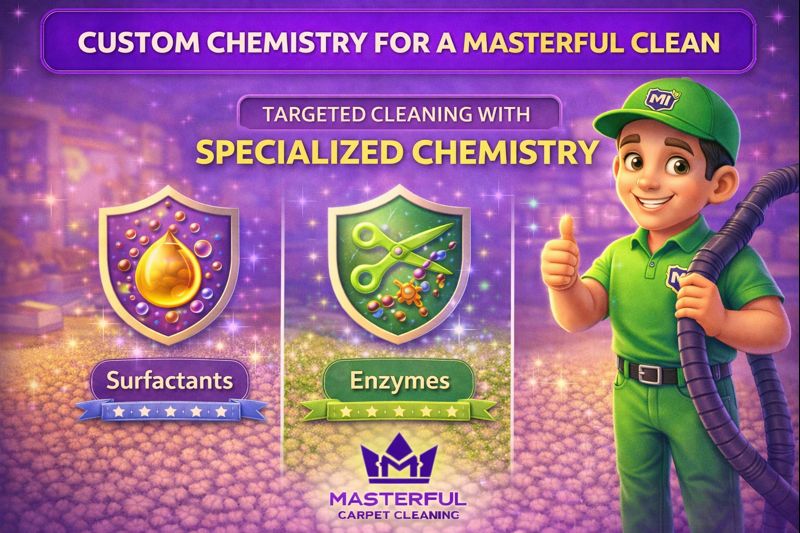
Surfactants reduce surface tension, allowing water to penetrate between soil and carpet fibers. Once that bond is broken, surfactants surround soil particles and keep them suspended so they can be removed during extraction.
Detergents work alongside surfactants by emulsifying oily residues that water alone cannot dissolve. When used correctly and rinsed thoroughly, this chemistry lifts contamination without leaving behind residue that attracts new dirt. For a deeper breakdown of how professional solutions are formulated, see this guide on types of pre-spray chemistry and what each one does.

Enzymatic Cleaners
Enzymatic cleaners function differently. Instead of loosening soil through surface action, enzymes break down organic matter at a molecular level. They target protein based contamination such as food spills and biological residues.
Because enzymes continue working as long as organic material is present, they are especially effective for deep or recurring contamination. This same chemistry is often used in enzyme based deodorization versus oxidizers when odors originate from organic sources rather than surface soil.
Oxidizers
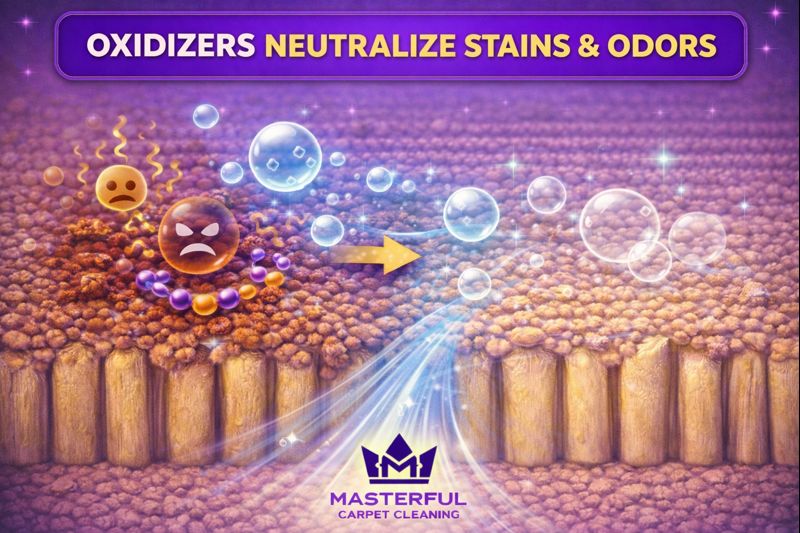
Oxidizers address stains and odors by altering the chemical structure of odor causing or discoloring compounds. Rather than dissolving soil, oxidizers neutralize it, making it colorless or odorless and easier to remove.
Used correctly, oxidizers eliminate the source of odors instead of covering them up. Their effectiveness depends on controlled application, as oxidation is a powerful reaction that must be matched carefully to the contamination being treated.
Why Not All Carpet Cleaning Chemistry Is the Same
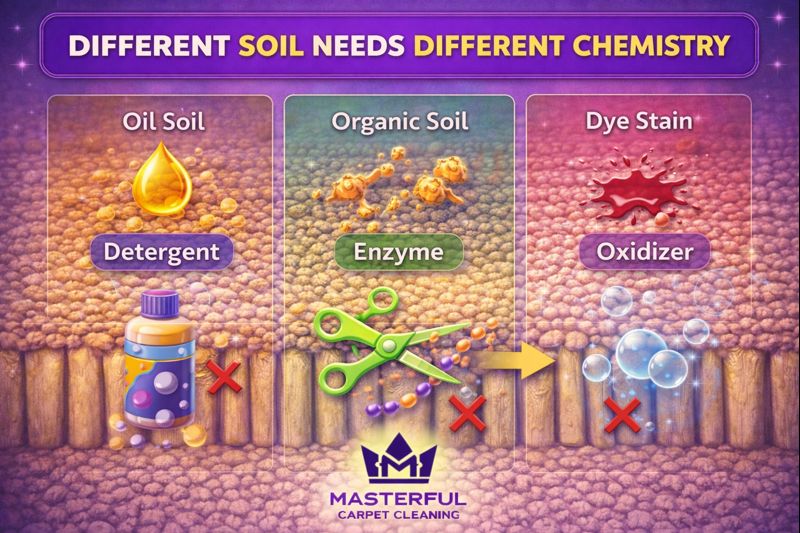
Not all carpet cleaning chemistry performs the same function because not all soil is the same. Some contamination is oily, some is particulate, and some is organic. Each behaves differently within carpet fibers.
A solution effective for oily residues may do little for organic contamination. Chemistry designed to neutralize odors may not remove visible soil. When the wrong type of chemistry is used, carpets may look acceptable at first, but soil often returns quickly because the underlying contamination was never fully addressed.
Effective carpet cleaning depends on matching chemistry to the type of soil present, not using a single solution for every situation. This distinction explains why results vary widely and why cleaning outcomes are shaped more by chemistry selection than by cleaning effort alone.
How Cleaning Chemistry Interacts With Carpet Fibers
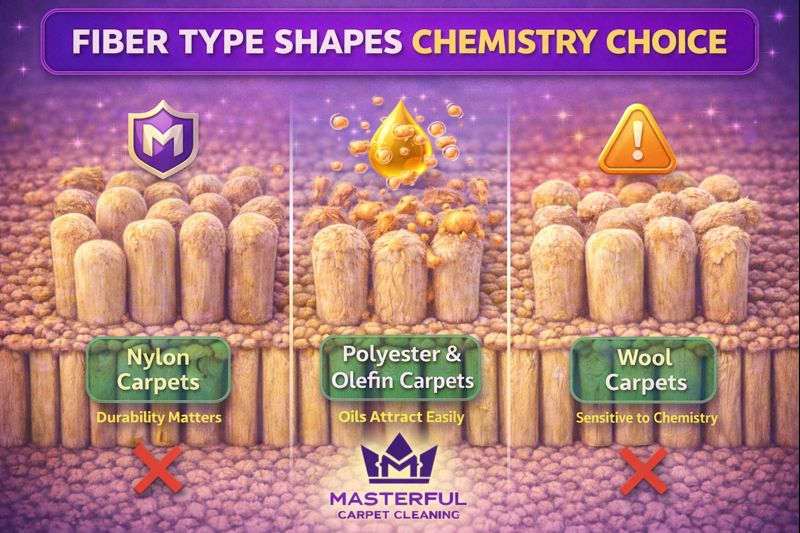
Cleaning chemistry must always be considered alongside carpet fiber type. Different fibers respond differently to moisture and chemical action, which is why chemistry selection cannot be one size fits all.
Nylon Carpets
Nylon is one of the most common carpet fibers and is generally durable, but it still relies on balanced chemistry. While nylon tolerates a broader range of solutions, improper chemistry can strip protective treatments or leave residues that accelerate resoiling. More detail on this interaction is covered in this guide to nylon carpet care and durability.
Polyester and Olefin Carpets
Polyester and olefin fibers are more oleophilic, meaning they attract and retain oily soils. This makes them more dependent on chemistry designed to release oils rather than just suspend particles. When chemistry is poorly matched, these carpets can dull quickly or show rapid soil return. Related fiber behavior is explained further in guides to polyester carpet cleaning and olefin carpet performance.
Wool Carpets
Wool carpets require the greatest care. As a natural fiber, wool is highly sensitive to chemistry, particularly extremes in pH or aggressive reactions. Improper solutions can weaken fibers or cause irreversible discoloration. This sensitivity is explored in more depth in this resource on wool carpet maintenance and chemistry compatibility.
What Can Go Wrong With Improper Carpet Cleaning Chemistry
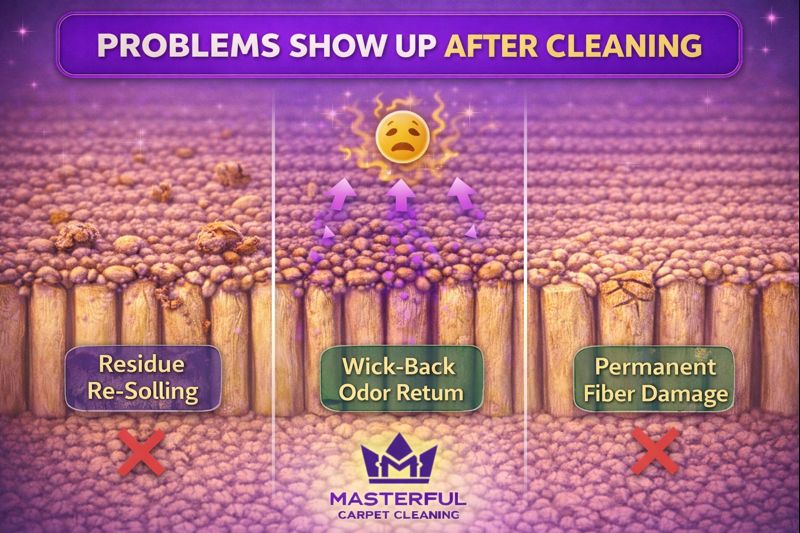
When chemistry is misapplied, problems often appear after cleaning rather than during it. These failures stem from chemistry that was mismatched, improperly diluted, or inadequately removed.
Residue Resoiling
Residue resoiling occurs when cleaning solutions are not fully extracted. Residual chemistry creates a sticky environment inside the fibers, causing carpets to attract dirt faster than before. This issue is explained in detail in this breakdown of why carpets resoil after cleaning.
Wickback and Odor Return
Wickback happens when dissolved contamination remains beneath the surface and migrates upward as the carpet dries. Odors and stains that “come back” are often the result of incomplete removal rather than poor initial cleaning. Moisture related failures are closely tied to the same chemistry decisions discussed in guides on moisture and contamination issues in carpets.
Permanent Fiber Damage
Aggressive or inappropriate chemistry can weaken fibers, alter texture, or cause discoloration that cannot be corrected later. Once fibers are damaged, no future cleaning can restore them. This risk highlights why chemistry must be selected to protect the material, not just remove visible soil.
Chemistry, Indoor Air Quality, and Safety Considerations
Carpet cleaning chemistry also influences the indoor environment after cleaning is complete. Residual solutions can bind with fine particles, increasing the amount of dust that becomes airborne through normal activity.
Proper chemistry use focuses on removal rather than retention, supporting better indoor air quality by reducing lingering residues. This relationship between carpets and air quality is explored further in this resource on carpets, indoor air quality, and allergies.
In allergy or pet sensitive environments, chemistry selection becomes even more important. Organic contamination and fine allergens require solutions that break them down and allow full removal, rather than masking the issue. Related considerations are discussed in guides addressing embedded allergens in carpets.

Why Professional Chemistry Application Outperforms
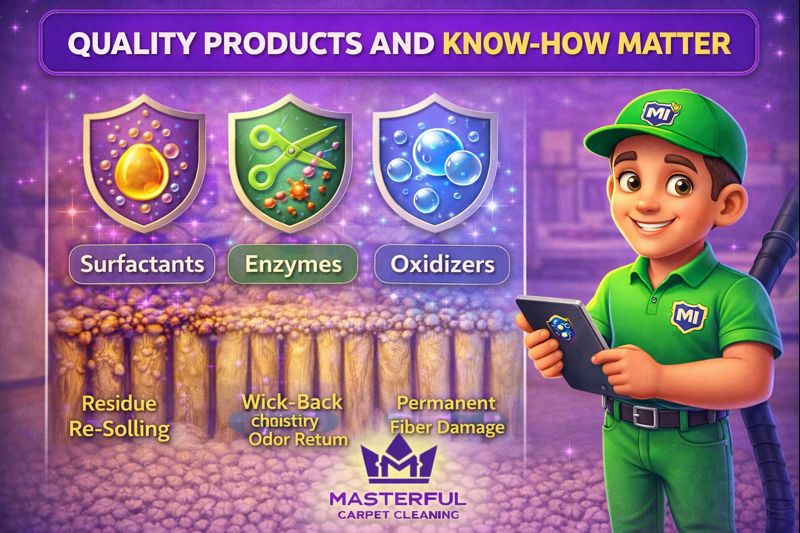
The effectiveness of carpet cleaning chemistry depends on how it is selected, applied, and removed. Professional application involves controlled dilution, appropriate dwell time, and complete extraction so chemistry performs its function without remaining in the carpet.
Equally important is knowing which reactions to avoid. Some chemistry may appear effective short term but increase the risk of residue, discoloration, or premature wear. Professional control limits these risks by applying chemistry intentionally and removing it thoroughly once soil has been released.
At Masterful Carpet Cleaning, cleaning chemistry is treated as a precision tool, guided by fiber type, soil conditions, and long-term carpet performance rather than short-term appearance.
How the Right Cleaning Chemistry Protects Your Floors
Carpet cleaning chemistry is not about stronger solutions, it is about using the right chemical action to release soil while preserving carpet fibers. When chemistry is matched correctly, carpets stay cleaner longer, resist resoiling, and maintain their structure over time.
Chemistry choices shape outcomes. Properly selected and removed solutions support better indoor environments and prevent recurring issues like wick-back and residue buildup. When chemistry is treated as a controlled process rather than a generic solution, it becomes one of the most effective tools for protecting carpets and the spaces they support.
Author