Safety first (read this before you start)
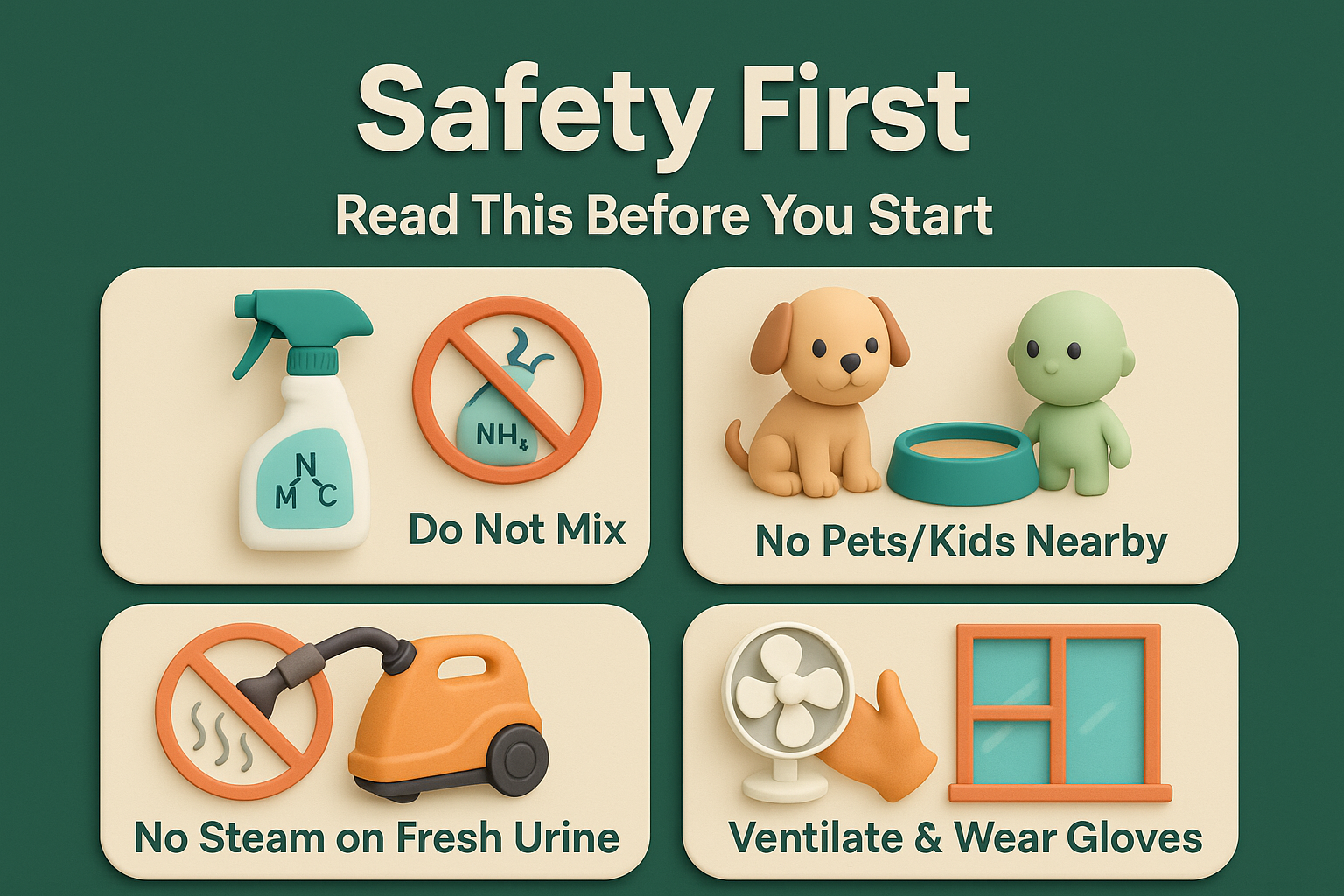
Do not mix cleaners. No ammonia. No steam on fresh urine. Patch test every product on a hidden spot first. Keep pets/kids away until the area is dry and the room is ventilated.
How to remove pet urine smell naturally (quick start)
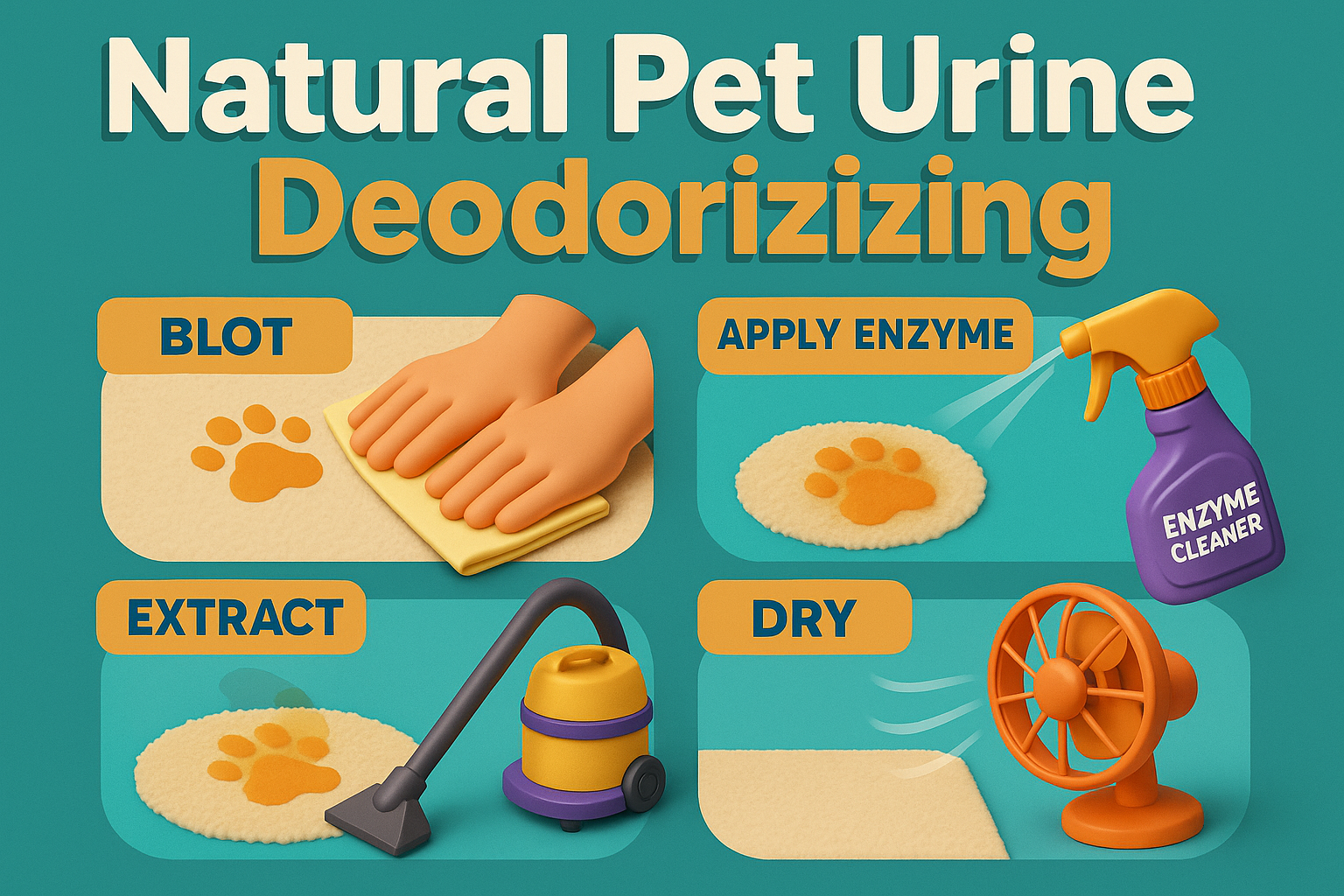
Blot the spot, mist with cool water, then apply a bio-enzymatic cleaner and give it full dwell time. Blot again or use a wet/dry vac to extract, then dry with airflow. Avoid steam and ammonia on fresh urine, and run one product at a time.
5 steps (pin this):
- Blot – press, don’t rub.
- Light rinse with cool water; blot again.
- Enzyme + dwell exactly per label.
- Extract with a wet/dry vac if you have one.
- Dry with fans; re-treat if any odor remains.
Why this works: enzymes digest odor compounds; dwell time lets them finish the job; extraction removes residues that cause wicking (reappearing stains). If an area keeps smelling, especially along seams, it’s often the padding, which DIY can’t fully reach. (That’s where pros like Masterful Carpet Cleaning come in.)
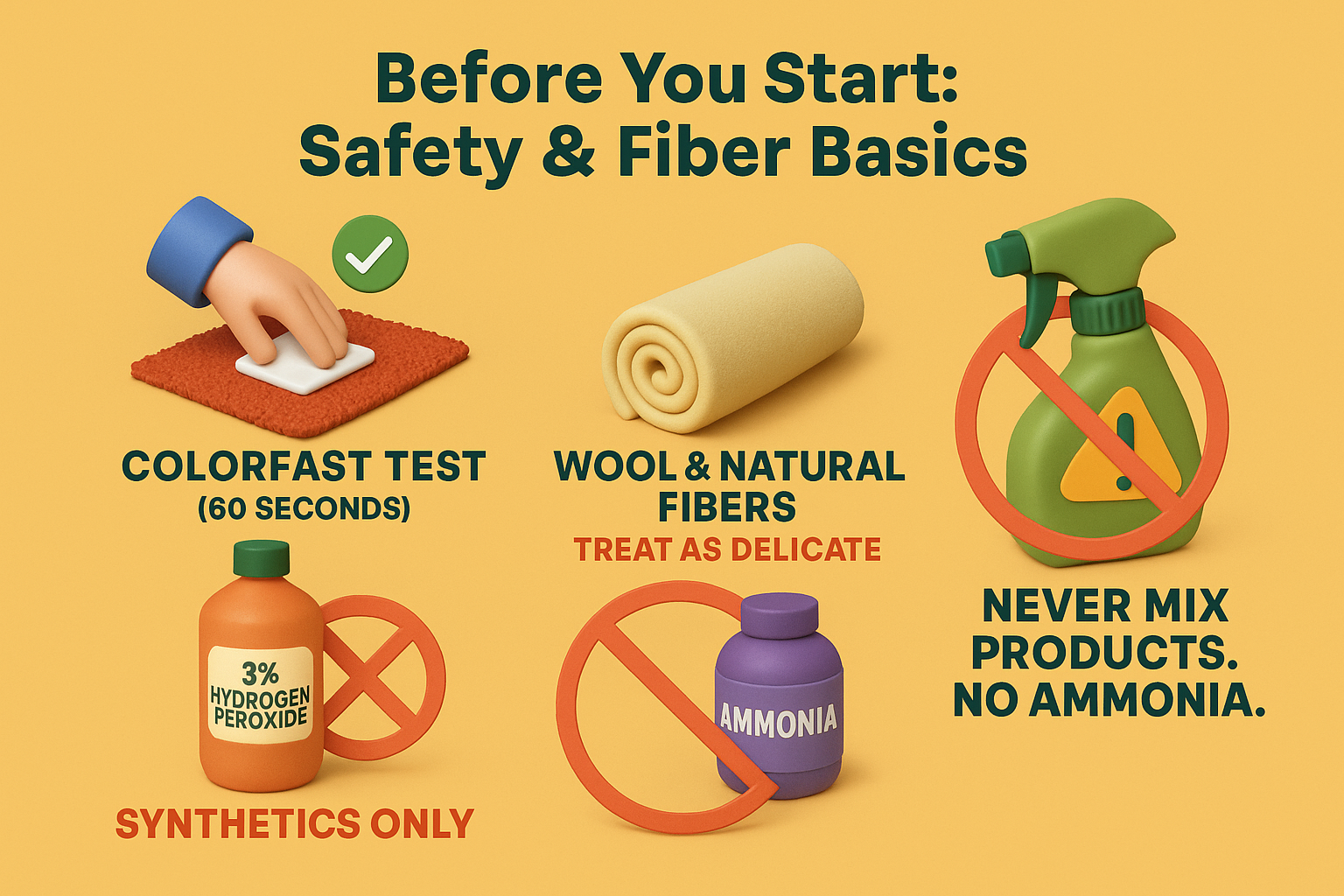
Before you start: Safety & fiber basics
Colorfast test (60 seconds). Dampen a white cloth, add a drop of the product, and dab a hidden area for 30-60 seconds. If color transfers or lightens, stop.
Wool & other natural fibers. Treat as delicate: use enzyme + cool water only, allow extra dwell, then blot/extract and air-dry. Avoid oxidizers and high alkaline mixes on wool.
Hydrogen peroxide (3% only, and only on synthetics).
- Use after enzyme rounds if discoloration remains.
- Never on wool or plant fibers; it can lighten them.
- Always spot test first and apply sparingly, then neutral rinse and dry.
Never mix products. Especially peroxide + vinegar = together they create a harsh acid. Work with one product at a time, rinsing and blotting between products.
No ammonia. Its scent can encourage re-marking, and it doesn’t remove urine residues from soft surfaces.
No steam on fresh urine. Heat can set odor compounds deeper into the backing and padding.
Ventilation & PPE. Open a window if the weather allows, run a fan, and wear gloves. Oregon’s damp months lengthen dry times, so use a dehumidifier if the room feels humid.
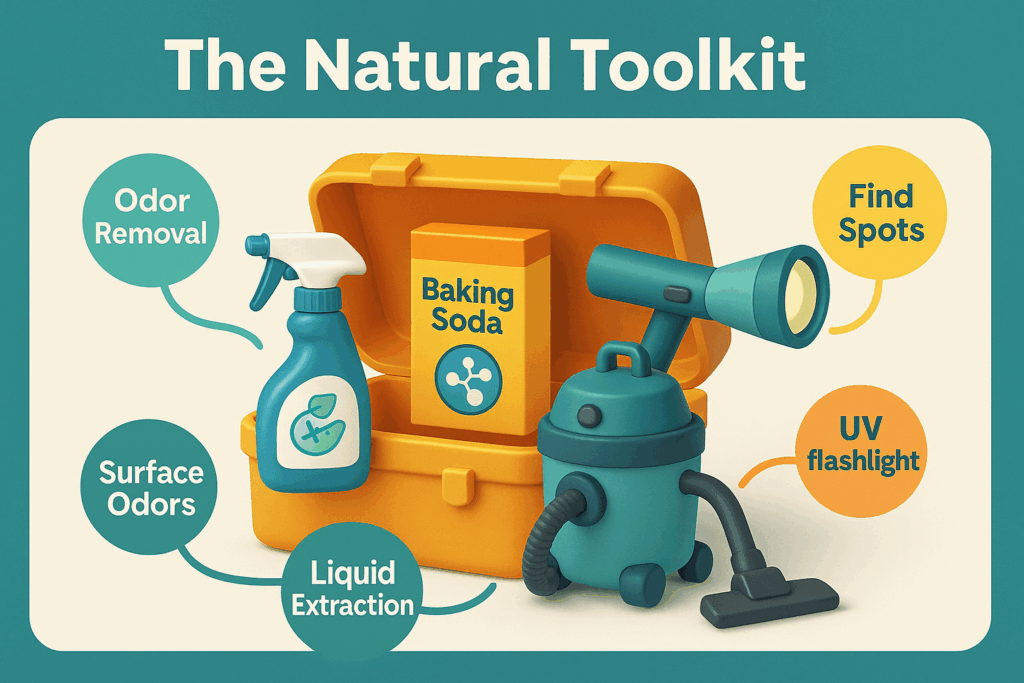
The natural toolkit (what to use, when)
| Item | Use it for | Notes that matter |
|---|---|---|
| Bio-enzymatic cleaner | Urine, vomit, feces odors | The hero for soft surfaces. Apply, give full dwell time, then blot/extract. Repeat if any odor remains. |
| Baking soda (sodium bicarbonate) | Surface odor sorbent | Lightly dust after extraction; let dry fully; vacuum. Don’t paste with acids (messy, less effective). |
| 3% hydrogen peroxide | Last-resort brightening on synthetic carpet fibers | Spot test. Avoid wool/natural fibers. Use only after enzymes; apply sparingly; rinse and dry. |
| Unscented dish soap | Protein soils (vomit), light surface grime | A few drops in cool water. Blot, rinse thoroughly, and dry – residue can attract re-soiling. |
| Wet/dry vacuum (shop-vac) | DIY extraction after enzyme dwell | Pulls residues so they don’t wick back. Move slowly; several dry passes beat one wet one. |
| UV/black-light flashlight | Locating invisible/old spots | Scan at night or in a darkened room. Edges and seams that glow often mean padding involvement. |
| Microfiber cloths & white paper towels | Blotting without dye transfer | Stack several layers and stand on them for pressure. Replace as they load. |
| Fans / dehumidifier | Faster dry, less odor bloom | Oregon’s rainier months = slower dry. Cross-breeze plus dehumidification keeps mustiness down. |
What not to use: Essential oils (pet safety risk; only add scent), heavy fragrances (masking, not removal), and “miracle” mixes that combine multiple actives, stick to the simple, proven enzyme → dwell → extract → dry chain.
Decision Tree: Fresh vs Set-In • Surface Type
Start here – what are you dealing with?
A) Fresh accident (still damp)
- Carpet/Rug (synthetic or wool): Blot hard → light cool-water mist → enzyme cleaner with full dwell → blot/extract → dry with airflow.
- Upholstery: Blot → enzyme (per tag: W/S/W-S/X) → blot/extract with handheld tool → dry (pillows propped upright).
- Hard floor: Wipe → enzyme (per label) → rinse → dry. Acid alone won’t neutralize urine odor compounds.
B) Set-in stain/odor (already dried)
- Carpet/Rug (synthetic): Enzyme rounds (treat → dwell → extract) ×2. If discoloration lingers, 3% hydrogen peroxide only on synthetics after a colorfast test; dab, wait briefly, neutral-rinse, dry.
- Carpet/Rug (wool/natural fibers): No oxidizers. Enzyme + cool water only; longer dwell; extract and dry.
- Upholstery: As above; be conservative with moisture; multiple light passes beat one heavy soak.
C) Can’t see a spot but smell it
- Darken the room and run a UV/black-light scan, especially along edges and seams. If multiple areas glow or an edge lights up, odor is likely in the padding.
Escalate here (padding/subfloor involved): book subsurface extraction for pet urine in Salem – UV mapping + pad-level treatment is the reliable fix.
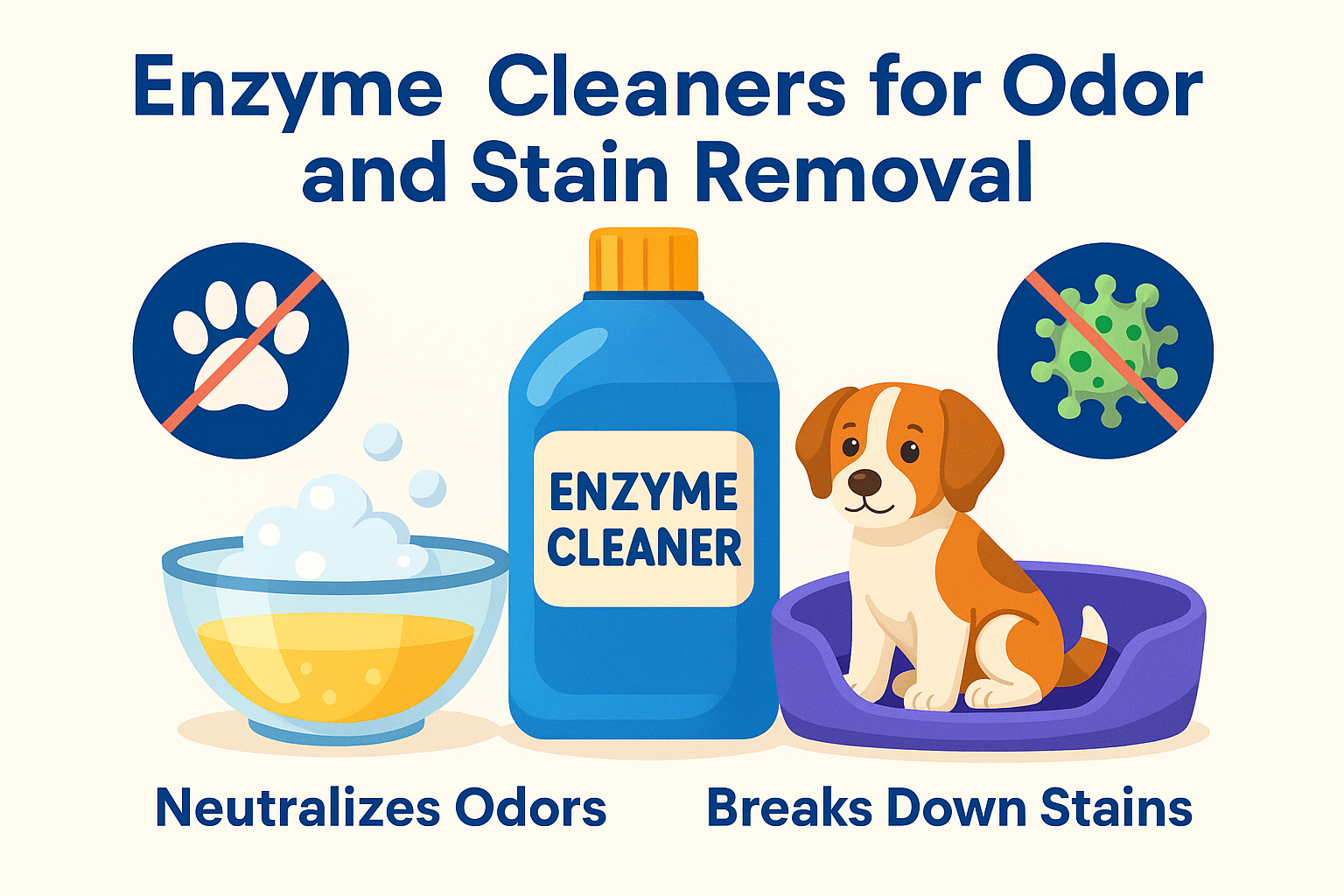
Step-by-Step Protocols That Work
Urine (fresh, any fiber)
- Blot – stack white towels and press; don’t rub.
- Light rinse with cool water; blot again to lift dilution.
- Enzyme + dwell—apply enough to reach the backing; give it the full label time.
- Extract—use a wet/dry vac with slow passes until little moisture remains.
- Dry—fans across the spot; crack a door/window or run a dehumidifier.
- Reassess—if odor lingers after dry, repeat enzyme → dwell → extract once more.
Urine (set-in, synthetic carpet only)
- Enzyme cycle #1 – apply, dwell, extract.
- Enzyme cycle #2 – repeat for stubborn residues.
- Colorfast test – hidden patch; stop if color shifts.
- 3% hydrogen peroxide (optional) – light dab on the discolored area; wait a minute or two.
- Neutral-rinse with cool water; extract; dry with airflow.
- If edges/seams stay odorous, assume wicking from padding and move to professional extraction.
Vomit
- Lift solids with a scraper; bag and bin.
- Enzyme on the spill zone; dwell.
- Blot/extract until the spot is nearly dry.
- Mild soap rinse (few drops unscented dish soap in cool water) if pigment remains; rinse again to remove soap.
- Dry thoroughly; groom the pile.
Feces
- Lift with gloves; pre-treat any smear with enzyme; dwell.
- Blot/extract; repeat enzyme if needed.
- Rinse lightly; extract; dry.
- Sanitize hands/tools; replace towels/cloths.
Hard floors (sealed surfaces)
- Wipe residue; enzyme over the spot; dwell per label.
- Rinse with clean water; dry to prevent streaks or slippery film.
- If odor persists in nearby rugs or baseboards, treat those soft materials with the carpet protocol.
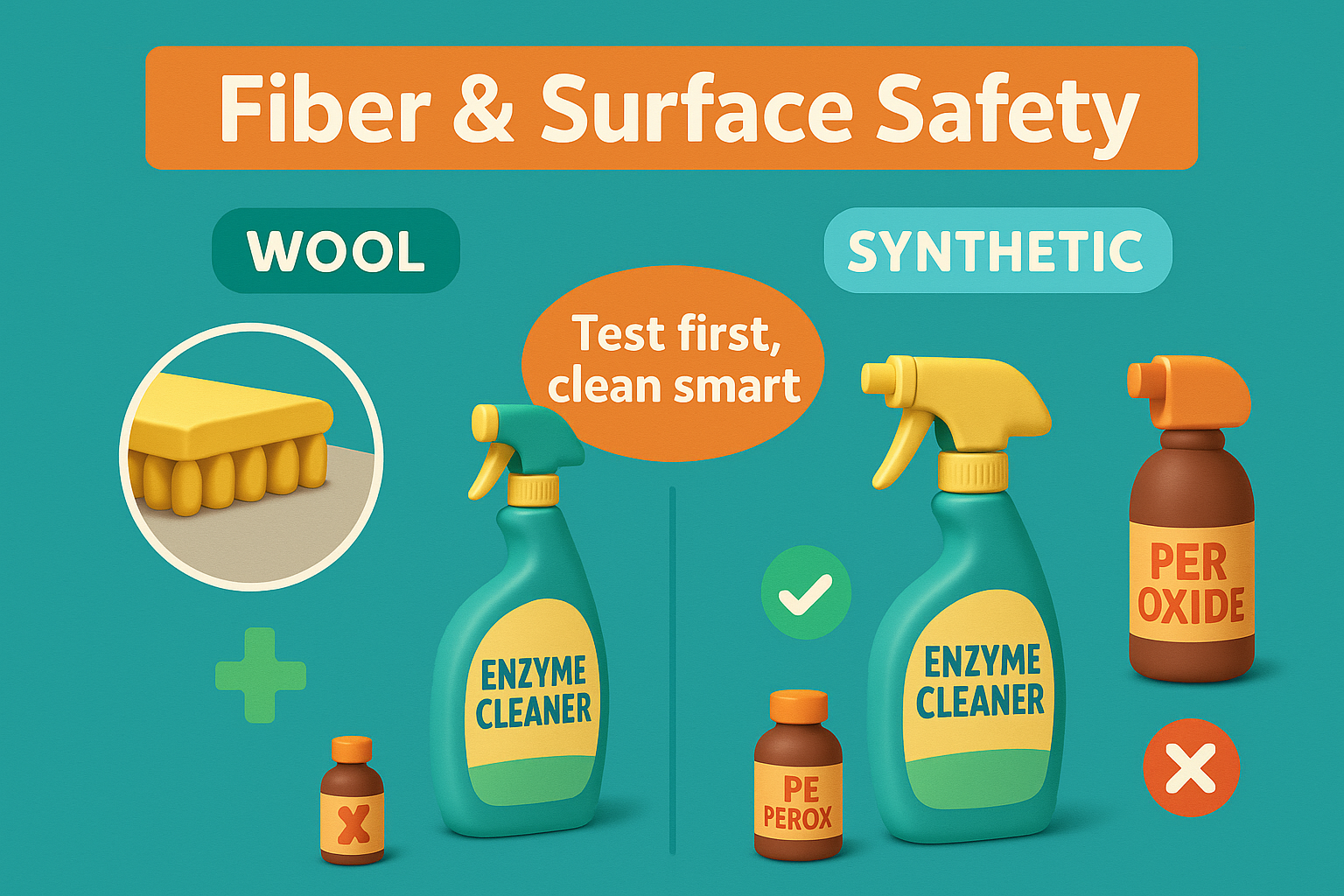
Wool & Other Natural Fibers (Special Rules)
Wool, silk, and plant-based fibers behave differently from synthetics. Keep it conservative and enzyme-first.
- Use cool water and a bio-enzymatic cleaner only; give longer dwell so enzymes can work without extra moisture.
- Blot/extract gently – multiple light extractions are safer than one wet pass.
- Avoid oxidizers and high alkaline cleaners. Even 3% peroxide can lighten wool; skip it entirely.
- Dry patiently. Set fans to indirect flow; avoid heat. In Oregon’s damp months, run a dehumidifier to keep mustiness down.
- If odor or yellowing remains after two careful enzyme cycles, stop. Natural fibers are easy to over-treat, let a specialist take it from here.
Want proof you’re not the only one dealing with delicate fibers? See how neighbors rate their outcomes in local testimonials.
Stop the Comeback Stain (Wicking & Padding)
If a stain reappears after drying, you’re seeing wicking: liquid that soaked into the padding rises back through the carpet as the face fibers dry. It’s common along seams, doorways, and baseboards, and it’s why a spot can look fixed…until tomorrow.
How to fight wick-back (DIY):
- Reopen the spot with a light cool-water mist.
- Enzyme + dwell again – enough to reach backing (not a soak).
- Extract slowly with a wet/dry vac until the airflow pitch rises (drier sound).
- Weight-and-blot stack: place a thick stack of white towels over the area; put a flat object (cutting board) on top and add a few books for overnight pressure. Replace towels as they wet out.
- Edge check: run a UV/black light along edges and seams; glow here is a strong padding signal.
If the edges or seams keep lighting up, or the odor returns with humidity, that’s a pad-level problem. DIY extraction can’t fully neutralize what’s in the pad or subfloor. When that happens, skip the merry-go-round and book a professional extraction to reset the area.
Natural Fixes to Skip (and Why)
| Fix | Why it falls short | Do this instead |
|---|---|---|
| Vinegar on carpet urine | Acid changes smell but doesn’t digest urine residues; can encourage re-marking | Enzyme cleaner + full dwell time, then extract |
| Baking-soda paste | Masks surface odor; paste is hard to remove and can trap soils | If needed, lightly dust after extraction, let dry, vacuum |
| Essential oils | Pet-safety concerns; adds scent, not removal | Skip fragrances; keep it enzyme-first |
| Mixing vinegar + peroxide | Can create a hazardous acid; never mix actives | One product at a time; rinse/blot between |
| Steam on fresh urine | Heat can set odor deeper | Cool water rinse → enzyme/dwell → extract → dry |
Curious why enzymes beat pet odors when home brews don’t? This short explainer breaks down the chemistry and the process: how enzymes beat pet odors.
Oregon Smart Drying & Odor Control
Oregon’s damp months slow evaporation, which can leave a “wet dog” aura even after a solid clean. Help the area dry fast and clean:
- Create airflow: position two fans so air moves across the spot (not straight down). Crack a door/window if weather allows.
- Dehumidify: a dehumidifier near the room keeps moisture moving off fibers; empty the tank frequently.
- Lift textiles: slide a ruler or spoon handle under rug edges to tent them for better airflow.
- No sealing the room: shutting everything tight traps moisture; give the space a path to dry.
- After smoke days: once outdoor air improves, launder soft goods and do a slow vacuum + enzyme pass on rugs and high-use areas; replace HVAC/purifier filters on schedule.
Dry fibers don’t just smell better, they’re less likely to wick soils and odors back to the surface.
FAQs (quick, straight answers)
Is vinegar good for dog/cat urine in carpet? No. It doesn’t break down urine compounds and can prompt re-marking. Use a bio-enzymatic cleaner with full dwell time, then extract and dry.
Is hydrogen peroxide safe on carpet? Only 3% on synthetic fibers, and only after enzyme rounds and a colorfast test. Avoid on wool and other natural fibers.
Why does a stain come back after drying? Wick-back. Urine in the padding rises as the top dries. Re-treat with enzyme and extract; if edges or seams keep glowing under UV, you’ll need pad-level treatment.
When should I call a professional?
- UV shows multiple hits or bright seams/edges
- Odor returns with humidity
- Color loss or yellowing appears
- The affected area is dinner plate size or larger
Unsure about fiber type or colorfast risk? Talk with a technician before you try peroxide.
You’ve got this (and when DIY should end)
Most fresh accidents respond to the enzyme → dwell → extract → dry chain. Keep passes light, be patient with dwell time, and use airflow so fibers dry fast and clean. If a stain reappears, edges glow under UV, or odor blooms with humidity, the issue lives in the padding – that’s when professional subsurface extraction earns its keep.
Author