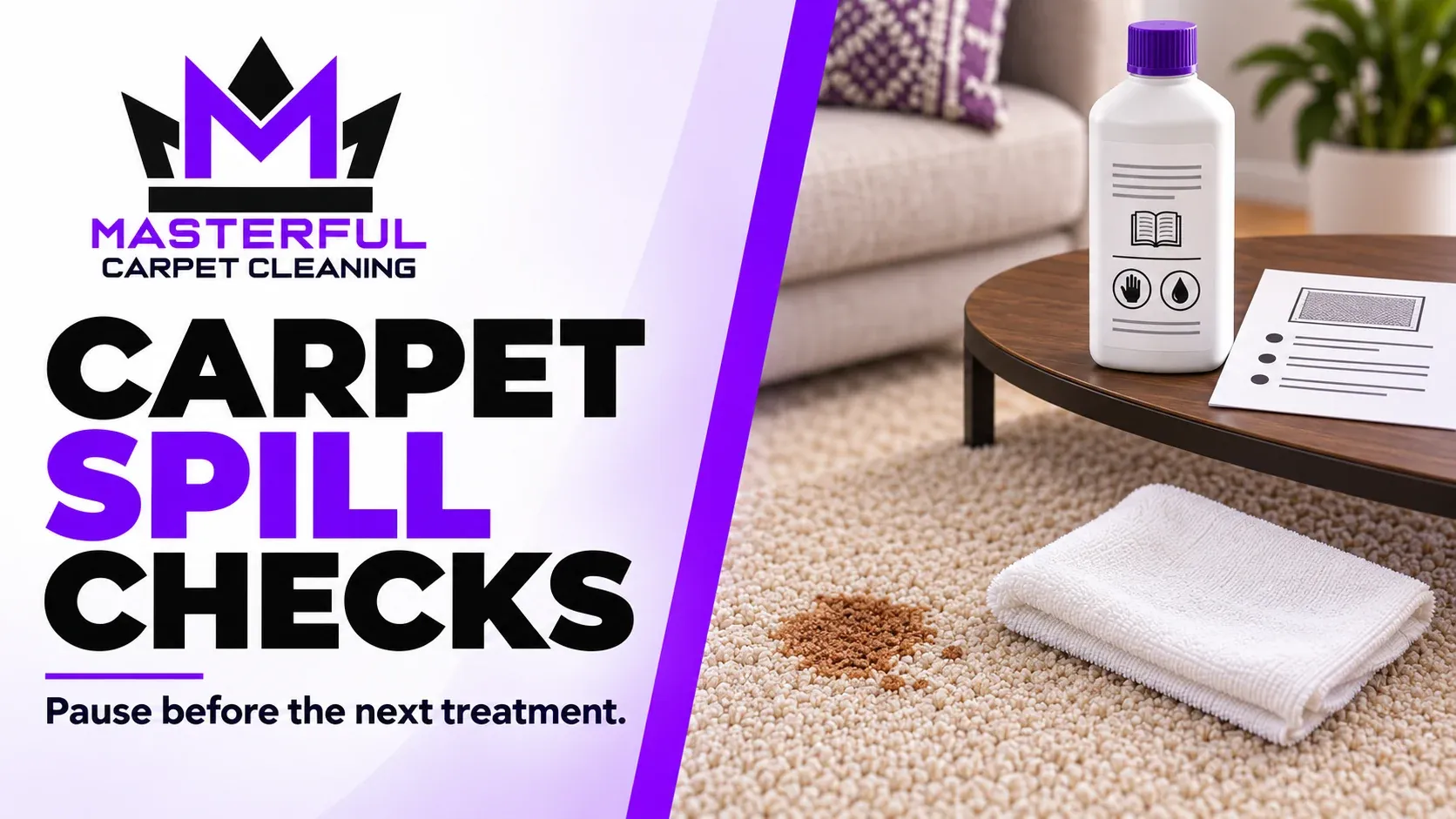
After you absorb a known household spill on carpet, pause before adding a cleaner, more water or a machine. Five checks can tell you if another home attempt fits the carpet or if you need a different kind of help. A product chosen in a hurry can spread a mark, move dye or wet backing. No one recipe works for coffee, juice, pet liquid and an unidentified substance on every installed carpet.
If the source is unknown or may be hazardous, keep people away and seek appropriate safety help from a safe place. Do not touch or smell material to identify it. A large water release, sewage or an active leak needs a source and material response before carpet cleaning. For a known household spill, use the checks below after blotting before adding a product or machine.
What comes before these five checks?
For a known household spill, lift loose material and blot free liquid with a clean white absorbent cloth without rubbing. Keep others from stepping on the patch. Our first steps after a carpet spill explains the starting response in more detail. Once free liquid has been absorbed, use the checks below before trying another product or machine.
Notice the source, amount if known, time, location and any earlier products. A white cloth can show if color is moving, but it cannot tell you if the color came from the spill or carpet without further assessment. A photo can record the visible mark; it cannot diagnose wet backing or pad.
Coffee may include milk or sugar; wine or juice can leave colored material. Record the specific drink and anything already applied. For a pet accident, note repeat incidents and any returning odor because lower layers may need assessment. Mud can leave grit as well as a mark. After free liquid is addressed, use only a vacuum compatible with the carpet pile for loose dry particles, and do not grind wet soil into the yarn.
What five signs should stop another home treatment?
Use each check before opening a spot product, pouring rinse water or switching on a portable extractor. A stop means pause that routine treatment and seek the right information or help. It does not mean every mark is permanent.
- Unknown or hazardous source. If you cannot identify the substance safely or it could be fuel, a strong chemical, sewage or other hazardous material, move away. Do not test it by touch or smell.
- Carpet or product permission unclear. Find the installed carpet’s care directions and the exact cleaner and machine labels. If the proposed surface, amount, method or test is not allowed, stop that plan.
- Dye, pile or mark changes. Stop if color moves from the carpet, the pile changes, or a mark spreads during a permitted first response. More scrubbing or liquid can make the next assessment harder.
- Earlier chemistry unknown. If someone has already used a spray, powder, soap, solvent or rinse and cannot identify it, do not layer on another product. Record what is known.
- Water may be continuing or deeper. An active leak, large wet area, soaked backing or pad, or contaminated water needs source and material assessment before another spot treatment.
For an active water problem, the US Environmental Protection Agency explains that wet carpet, backing and pad need prompt drying and assessment after water damage. A surface that feels dry does not establish that concealed layers are dry. Do not lift installed carpet yourself to inspect a possibly wet pad or aim a fan at unknown material. Ask a qualified responder how to assess the affected layers.
Why do quick fixes need their own permission?
Vinegar, soap, powders, scented oils, enzymes and solvents have different chemistry and use directions. A household name or “natural” description does not mean a product suits the carpet’s fiber, dye, backing or earlier treatment. Do not mix cleaners or use a generic recipe for an unidentified mark. The US Environmental Protection Agency advises reading household product labels for use and storage precautions.
A rinse adds liquid. A portable extractor can apply and recover liquid, but it may also move a stain or affect backing if the carpet, machine and product do not fit. A fan changes airflow but does not identify a wet pad, resolve an active leak or make every product safe to breathe near.
Check the carpet’s written directions and each proposed product or machine manual before another treatment. If permission is uncertain, ask rather than testing a visible area.
Do not assume an enzyme is the right choice for every pet accident. A pet liquid can affect more than visible yarn, and odor after drying can have several sources. Another scented product cannot establish what layer was affected. Describe the incident and any earlier treatment when requesting an assessment.
Which kind of help fits the condition?
The five checks show when to pause. Use the table to choose who to contact next. Scroll sideways to read each help route.
| Condition after the first response | Next kind of help | Useful information to share |
|---|---|---|
| Known household spill, no stop sign | Check carpet and product directions; ask about a suitable cleaning visit if a mark remains. | Spill source, time, carpet style, size and all products used. |
| Unknown or possibly hazardous material | Seek appropriate safety or qualified spill response from a safe place before discussing carpet cleaning. | Known source or container details if safely available; do not touch or smell the material. |
| Active leak, sewage or soaked lower material | Address the water source and seek appropriate material or water damage assessment first. | Where water entered, duration if known and affected rooms, without lifting carpet to inspect. |
| Dye or pile change, old products unknown | Pause more products and ask for a carpet condition assessment. | Photographs, care sheet, treatment history and what changed during the first response. |
What should you record for the next person helping?
Write down the incident source if known, when and where it happened, the approximate area, products or machines already used, and what transferred to a cloth. Photograph the surface from a safe distance when appropriate. Keep the carpet care sheet and any product container or label. Do not handle an unknown hazardous substance to gather evidence. A clear sequence helps the next person avoid repeating a treatment that already changed the mark.
- Color appeared on a white cloth
- Record which cloth and step showed it. The color may come from the spill or carpet; the cloth alone cannot identify the source.
- The mark spread after a spray
- Record the product and sequence. The photo does not establish which ingredient or earlier treatment caused the change.
- Dampness returned
- Record where and when it returned. Surface feel cannot show the condition of backing or pad.
Keep the sequence in order: original spill, first blot, each product or machine, and each visible change. Dye damage, worn pile, a persistent deposit and moisture below the surface can look similar in a photo but call for different help.
When should you contact Masterful?
After a known household spill has been absorbed and any safety or active water issue has been addressed, ask Masterful if a cleaning visit is available and suitable for your carpet. Share the care sheet, source, earlier products, photos and any dye, pile or moisture change.
Ask what the visit can address, what may remain and what aftercare applies. Confirm current appointment availability. If dye or pad may be affected, ask what separate assessment is needed before booking.
If the issue is an unknown chemical, sewage, continuing leak or possible wet pad, seek the appropriate safety or material assessment first. Once that concern is addressed and carpet cleaning is appropriate, you can ask about a visit. For a remaining household mark, contact Masterful Carpet Cleaning or call (971) 600-6265. If the carpet condition and requested work are clear, book online.
Common questions after an urgent carpet spill
Should I add a carpet cleaner as soon as blotting stops?
Run the five checks first. The carpet, cleaner and any machine directions must permit the plan. A remaining mark alone does not establish which product to use.
Can I rinse the area repeatedly to remove the spill?
Do not add repeated water without a permitted method and a way to recover and dry it. Added liquid can move the mark or affect backing and pad.
Will a fan solve a wet pad problem?
No conclusion about the pad follows from surface airflow. Address the water source and seek appropriate material assessment when deeper wetness is possible.
Can Masterful respond to every carpet emergency?
Ask about current availability and what cleaning can address. Hazardous material, sewage, active water and other safety concerns need the appropriate response before a carpet cleaning visit.
What if color transfers to a white cloth?
Stop further product or rubbing. Record what was applied and ask about the carpet condition before another attempt; the color may need a different assessment.