Carpet cleaning residue is the invisible film left behind after carpet cleaning when detergents and surfactants are not fully removed. This residue bonds to carpet fibers, creating a sticky surface that attracts new soil. Over time, residue causes carpets to resoil quickly, hold odors, and contribute to problems like wickback, even when carpets initially look clean.
What Is Carpet Cleaning Residue?
Carpet cleaning residue is not simply “leftover soap.” It is a surface condition created when cleaning agents remain bonded to carpet fibers after service.
Instead of being fully rinsed away, a thin surfactant film stays behind. That film continues interacting with soil, moisture, and foot traffic long after cleaning is complete.
Why Residue Is Often Invisible at First
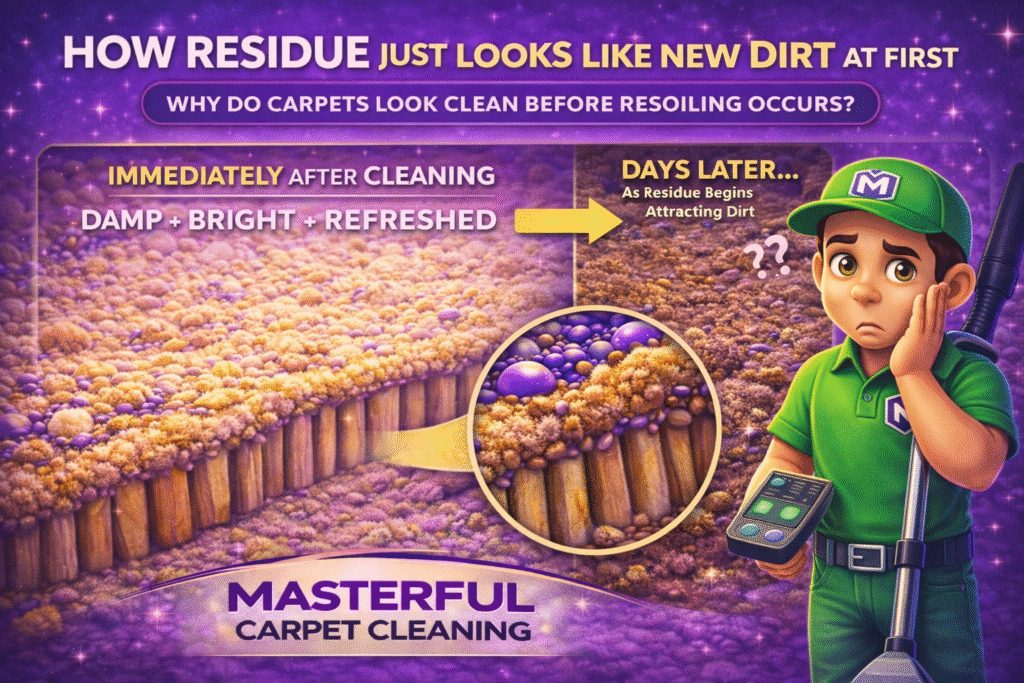
Residue is usually invisible immediately after cleaning because carpets look bright and refreshed when damp fibers dry. The problem emerges later, once the residue begins attracting airborne soil and tracking debris.
This delay is why residue issues are often mistaken for new dirt rather than a leftover cleaning failure.
What Causes Residue in Carpets After Cleaning?
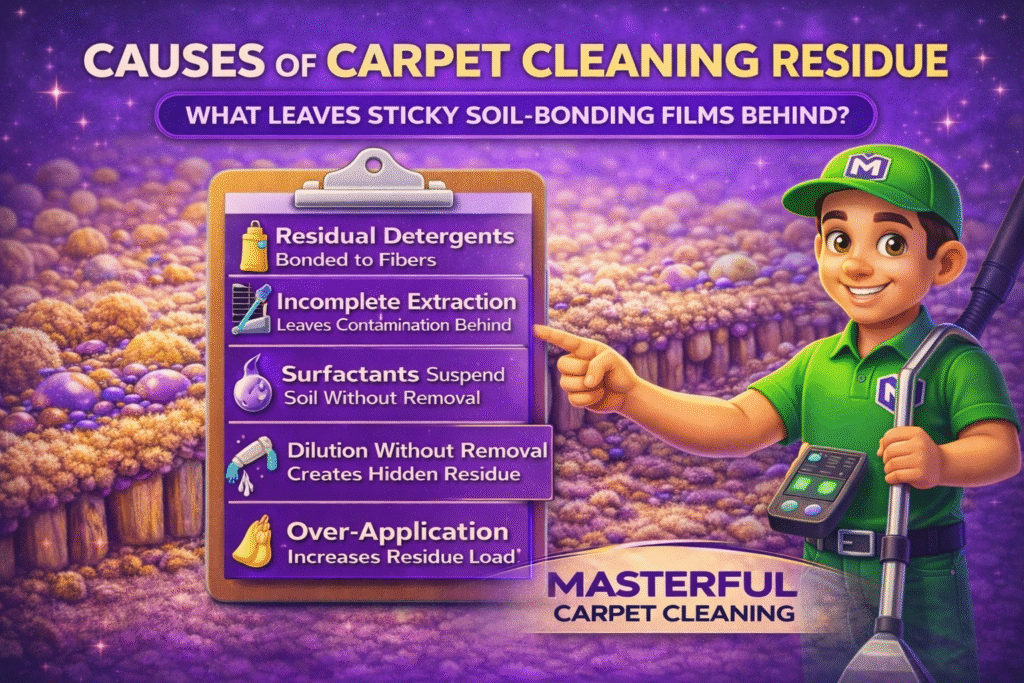
Residue forms when cleaning chemistry is suspended but not removed from the carpet system.
- Residual detergents remain bonded to carpet fibers
- Surfactants suspend soil without full removal
- Incomplete extraction leaves contamination behind
- Dilution without removal creates hidden residue
- Over-application increases residue load
Each of these contributes to the same outcome: contamination that stays in place instead of leaving the carpet.
How Improper Rinsing Creates Residual Surfactant Film
Improper rinsing does not always mean “no rinse.” In many cases, detergents are diluted with water but not fully extracted. This leaves behind a residual surfactant film that continues binding soil.
Because the residue is thin and evenly distributed, it does not feel sticky right away, making the failure difficult to detect.
Why “Clean” Is Not the Same as Residue Free
A carpet can look clean while still being residue laden. Visual cleanliness reflects surface appearance, not fiber surface condition.
This distinction explains why some carpets resoil quickly despite appearing well cleaned at first. The fibers themselves are still chemically active.
How Residue Changes Carpet Fiber Behavior
Once residue is present, carpet fibers behave differently.
Sticky Fibers and Electrostatic Soil Attraction
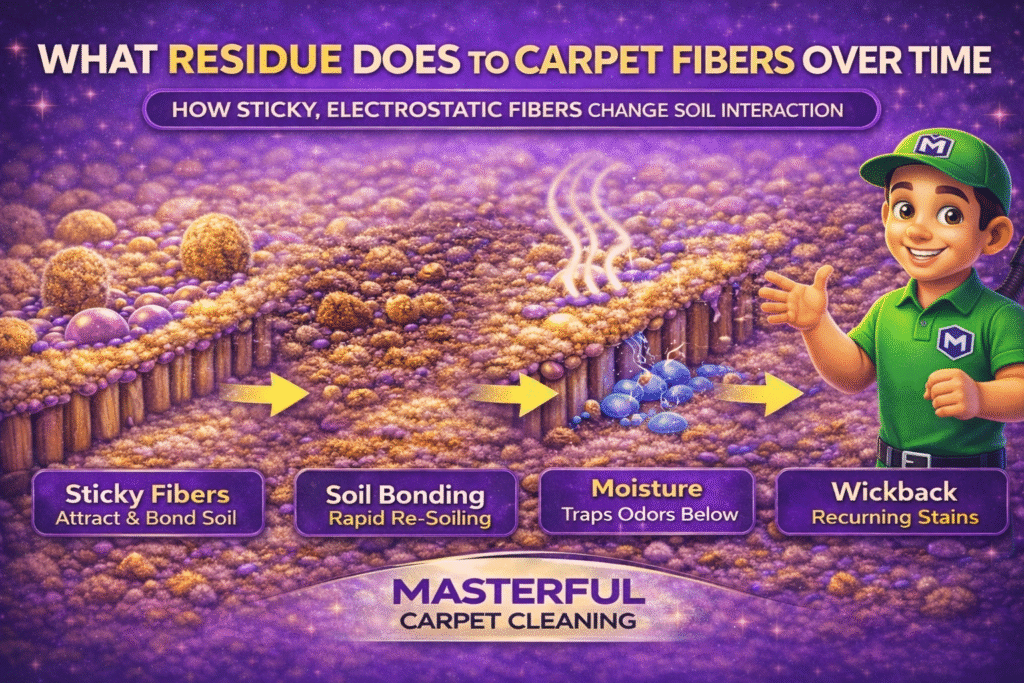
Residue changes fiber surface energy, making fibers hydrophilic and slightly electrostatically attractive. Instead of releasing soil, fibers actively pull dirt from shoes, air, and traffic.
This is why residue affected carpets often darken along walkways and traffic lanes first.
Why Vacuuming Alone Cannot Fix Residue Problems
Vacuuming removes loose soil, but it cannot remove residue bonded to fibers. As long as residue remains, new soil continues attaching faster than routine maintenance can remove it.
This is why repeated vacuuming fails to restore appearance once residue exists.
Why Carpets Get Dirty Again After Cleaning
Resoiling is the most common symptom of residue problems.
How Residue Causes Rapid Re-Soiling
Residue creates a continuous soil binding layer. Each step presses new soil into sticky fibers, where it bonds more aggressively than it would to residue free carpet.
Over time, this leads to progressive soil accumulation, not a one time issue.
Why Foot Traffic Activates Residue Instead of Causing It
Foot traffic does not create residue, it activates existing residue. Traffic compresses fibers, spreads contamination, and accelerates soil bonding along consistent paths.
This is why resoiling often follows predictable traffic patterns rather than appearing evenly.
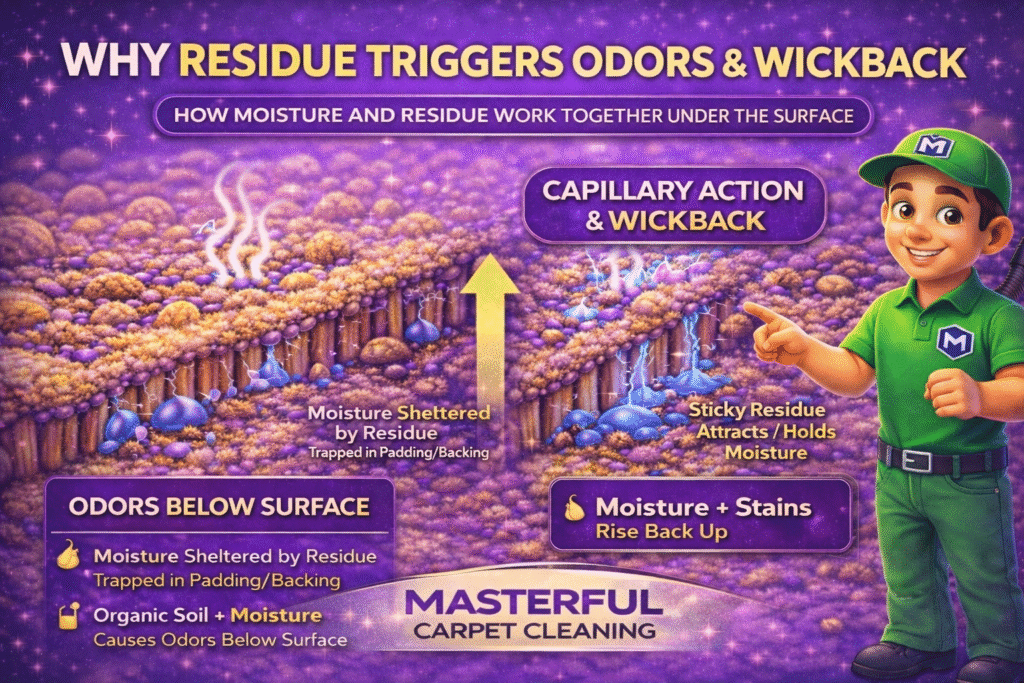
Can Carpet Residue Cause Odors?
Yes. Carpet residue frequently contributes to persistent or returning odors.
How Residue and Moisture Trap Odors Below the Surface
Residue attracts and holds moisture. When moisture combines with organic soil trapped in padding and backing, odors develop below the surface. even when the carpet appears dry.
This interaction explains why some carpets smell worse days after cleaning rather than immediately. For related moisture driven failures, see: Wickback After Carpet Cleaning: Causes, Prevention, and Fixes That Really Work
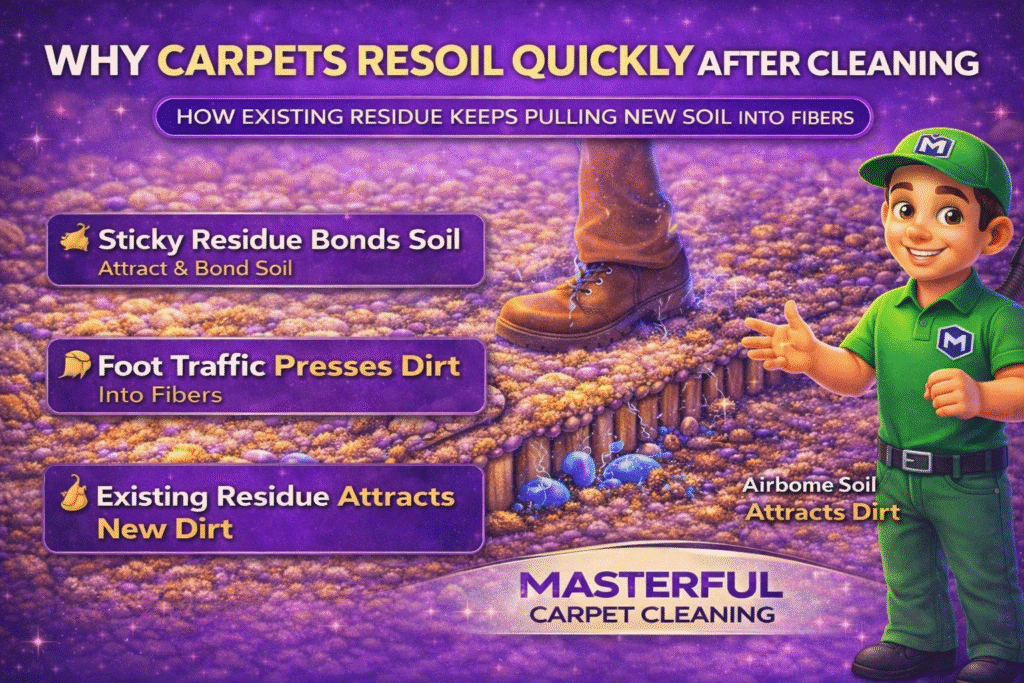
How Residue Leads to Wickback and Recurring Stains
Residue plays directly into wickback.
How Capillary Action and Residue Work Together
As carpets dry, moisture trapped deeper in the system migrates upward through capillary action. When that moisture carries residue and dissolved soil to the surface, stains reappear.
Wickback is not a separate problem, it is residue and moisture working together.
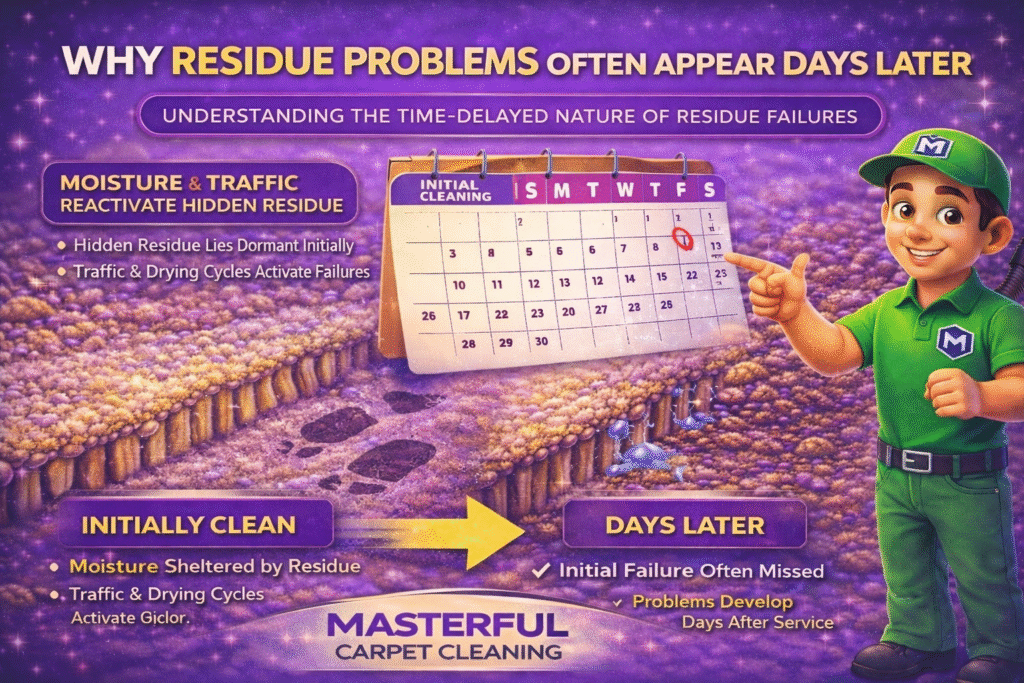
Why Residue Problems Often Appear Days Later
Residue related failures are time delayed by nature.
The Time Delayed Nature of Residue Failures
Residue remains dormant until activated by moisture, traffic, or both. Because carpets often look fine initially, the connection between cleaning and failure is missed.
How Drying Time and Moisture Reactivate Residue
As carpets move through drying cycles, residual moisture repeatedly interacts with surfactant films. This reactivation explains delayed odor, staining, and resoiling.
For a deeper look at moisture related risks, see: Over Wetting Carpets: How Too Much Moisture Causes Odor, Mold, and Damage
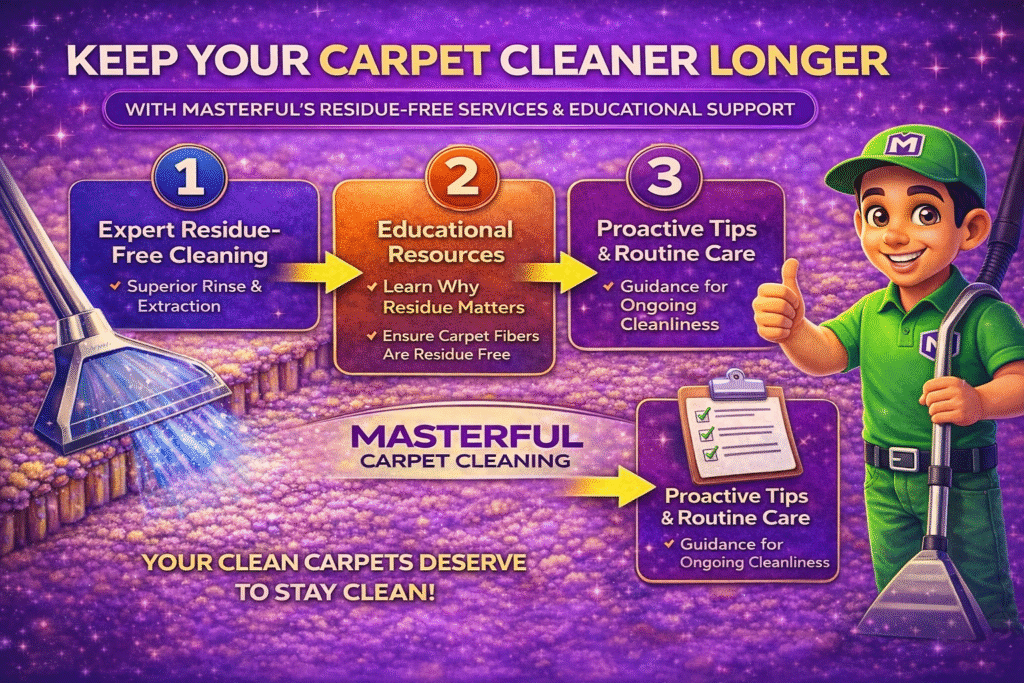
How Professional Standards Prevent Carpet Cleaning Residue
Residue prevention is a process control issue, not a product issue.
The Result of Proper Rinsing and Complete Extraction
Professional standards emphasize complete removal of suspended soil, not just agitation. Proper rinsing combined with sufficient extraction strength prevents surfactant films from remaining in the carpet.
This is the foundation of true no residue carpet cleaning, not a marketing claim.
Why Post Clean Inspection and Quality Control Matter
Professional quality control includes inspection for residue-related symptoms such as sticky fibers, rapid resoiling zones, or uneven drying. Identifying these early prevents callbacks and long-term damage.
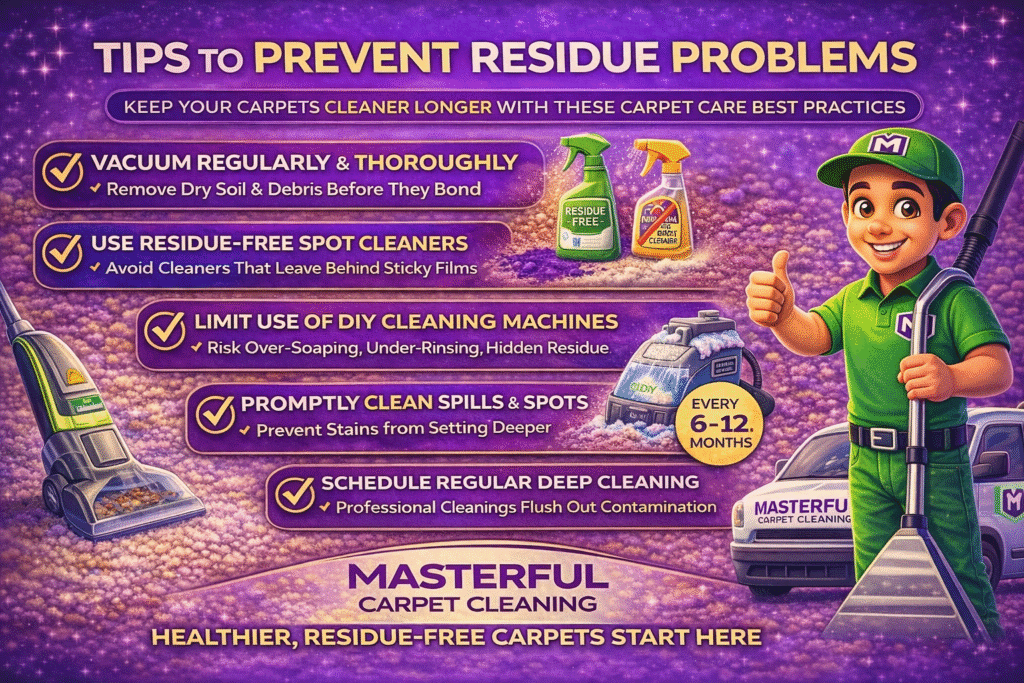
Why Residue Explains Multiple Carpet Problems at Once
Residue is a unifying cause behind many common carpet complaints.
| Residue Effect | Result |
|---|---|
| Sticky fibers | Faster soil buildup |
| Moisture attraction | Odor development |
| Surfactant films | Wickback risk |
| Traffic activation | Uneven appearance |
| Delayed visibility | False sense of cleanliness |
Professional Insight on Residue in Carpets
Masterful Carpet Cleaning approaches residue as a diagnostic issue, not a cosmetic one. By focusing on process control, complete extraction, and post service evaluation, professional cleaning can deliver results that last, without resoiling or recurring issues.
For related professional standards, see: No Residue Carpet Cleaning: What It Means and Why It Matters
Key Takeaways About Residue in Carpets
- Residue is a surface condition, not just leftover soap
- Improper rinsing leaves invisible contamination behind
- Residue causes resoiling, odors, and wickback
- Time and traffic activate residue after cleaning
- Professional process control prevents residue related failure
FAQ
What is residue in carpets after cleaning?
Residue in carpets is the invisible film left behind when cleaning detergents and surfactants are not fully removed. This residue bonds to carpet fibers, creating a sticky surface that attracts new soil. Over time, residue causes carpets to look dirty again much faster than expected.
Why do carpets get dirty so fast after professional cleaning?
Carpets resoil quickly when residue remains on the fibers after cleaning. Residual surfactants continue binding soil from foot traffic and air, accelerating dirt buildup. The issue is not new dirt, but old residue activating again.
Is carpet residue caused by poor cleaning?
Carpet residue is usually caused by incomplete rinsing or extraction, not by cleaning itself. When detergents are diluted but not fully removed, residue remains active in the carpet. This is a process failure, not simply a cleanliness issue.
Can carpet residue cause bad smells?
Yes, carpet residue can contribute to odors by attracting and holding moisture below the surface. When moisture interacts with residue and trapped organic soil, odors can develop days after cleaning. This is why smells often return after carpets appear dry.
Why does carpet look clean at first but then get dirty again?
Carpets often look clean immediately after service because moisture temporarily masks residue. As the carpet dries and foot traffic resumes, residue begins attracting soil again. This delayed reaction creates the illusion that dirt appeared suddenly.
Is residue the same as wickback?
Residue and wickback are related but not the same. Residue is the underlying condition left in the carpet fibers, while wickback occurs when moisture pulls residue and soil back to the surface during drying. Residue makes wickback more likely, but moisture triggers it.
Can vacuuming remove carpet residue?
Vacuuming cannot remove residue bonded to carpet fibers. While vacuuming removes loose soil, it does not change the sticky surface condition caused by residue. As long as residue remains, carpets will continue resoiling quickly.
How long does carpet residue last?
Carpet residue can remain active indefinitely if not properly addressed. Each time moisture or foot traffic interacts with the fibers, residue continues attracting soil. Without professional correction, residue problems often worsen over time.
Does residue damage carpet fibers?
Residue does not immediately damage fibers, but it accelerates wear. Sticky fibers hold abrasive soil longer, increasing friction during foot traffic. Over time, this leads to matting, dull appearance, and shortened carpet lifespan.
Why does residue show up more in high traffic areas?
High traffic areas experience more pressure and soil transfer, which activates residue faster. Foot traffic compresses fibers and pushes soil deeper into sticky surfaces. This makes residue related resoiling appear first in walkways and entrances.
Is carpet residue more common with certain cleaning methods?
Residue is more likely when cleaning processes rely heavily on detergents without adequate rinsing and extraction. The issue is not the method itself, but if suspended soil and surfactants are fully removed. Proper process control prevents residue regardless of method.
How do professionals identify residue problems?
Professionals identify residue through visual resoiling patterns, fiber feel, odor recurrence, and drying behavior. Post clean inspection helps detect residue before it causes long term issues. Residue diagnosis focuses on outcomes, not appearance alone.
Why does residue cause multiple carpet problems at once?
Residue affects how fibers interact with soil, moisture, and traffic simultaneously. This is why resoiling, odors, and wickback often occur together. Residue is a single underlying condition with multiple visible symptoms.
Is carpet residue a homeowner maintenance issue?
Carpet residue is not caused by routine maintenance or normal use. It originates during cleaning when suspended soil is not fully removed. Homeowner behavior may activate residue, but it does not create it.
How can professional carpet cleaning avoid residue problems?
Professional carpet cleaning avoids residue by focusing on complete soil removal rather than surface appearance. Proper rinsing, adequate extraction, and post clean inspection are required. Residue prevention is a process control issue, not a product choice.
Why does residue explain recurring carpet problems better than stains?
Stains are isolated events, while residue affects the entire fiber surface. Residue explains why problems return across large areas rather than in one spot. This system level impact makes residue a more accurate explanation for recurring issues.
Author