Professional carpet cleaning sometimes fails not because the cleaning was done incorrectly, but because drying conditions, moisture balance, or post service behavior interfere with proper stabilization. Even when professionals follow best practices, excess moisture, residue, or delayed drying can cause resoiling, odor, or stains to reappear. These outcomes are predictable, and preventable, when the full carpet system is understood.
Why Professional Carpet Cleaning Can Fail Even When Done Correctly
Professional carpet cleaning failure refers to outcome degradation, not poor workmanship. In many cases, carpets are cleaned properly but fail later because the surrounding conditions do not allow moisture and suspended soil to fully exit the carpet system.
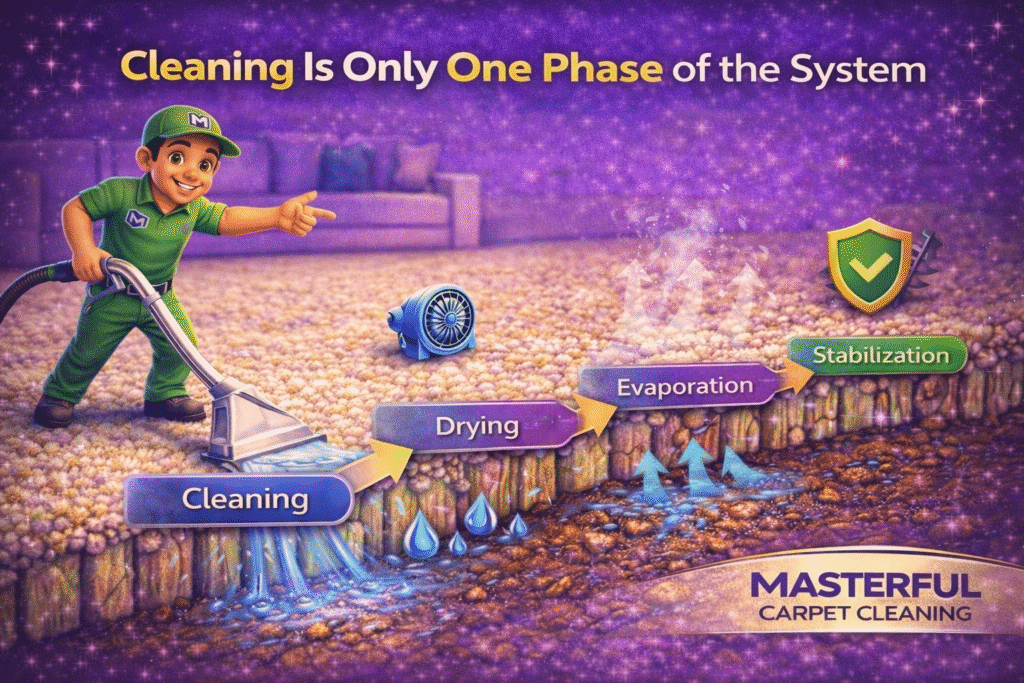
Cleaning is only one phase of the process. Drying, evaporation, and post cleaning stabilization are equally important. When those phases fall out of balance, results deteriorate even after a technically correct service.
What Causes Carpet Cleaning Failures
The most common causes of professional carpet cleaning failure include:
- Moisture trapped in carpet padding
- Residue left behind during extraction
- Improper drying conditions
- Moisture migration causing wickback
- Premature foot traffic before stabilization
- High indoor humidity slowing evaporation
Each of these causes affects how moisture and soil behave after cleaning, not during it.
Causes and Results Overview
| Cause | Result |
|---|---|
| Moisture retention | Odor and delayed drying |
| Over wetting | Wickback and residue |
| Improper drying | Rapid resoiling |
| Residue | Dirt attraction |
| High humidity | Extended moisture retention |
How Moisture Imbalance Leads to Carpet Cleaning Failure
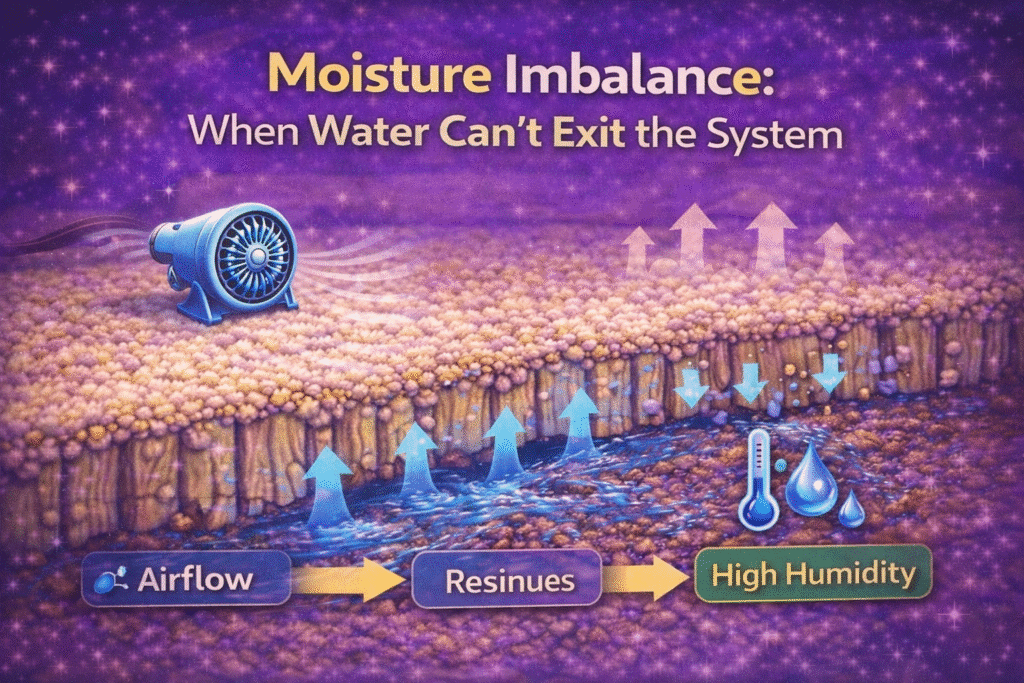
Moisture imbalance occurs when the amount of water introduced exceeds the space’s ability to remove it efficiently.
Even with professional equipment, carpet fibers, padding, and backing can hold moisture longer than expected if airflow, temperature, or humidity are unfavorable.
Why Over Wetting Creates Long Term Problems
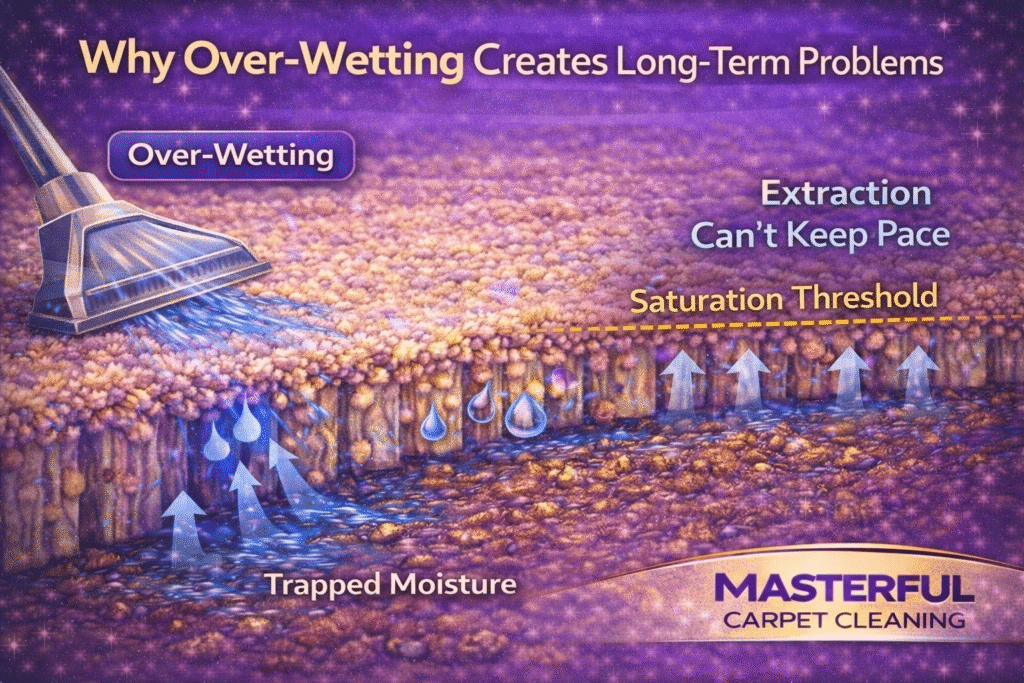
Over wetting happens when moisture passes the carpet’s saturation threshold, allowing water to penetrate deeply into padding and backing. When extraction efficiency cannot keep pace with dwell time, moisture remains behind.
That trapped moisture dissolves soils and residues instead of removing them, setting the stage for wickback, odor, and rapid re-soiling.
Why Improper Drying Causes Delayed Failure
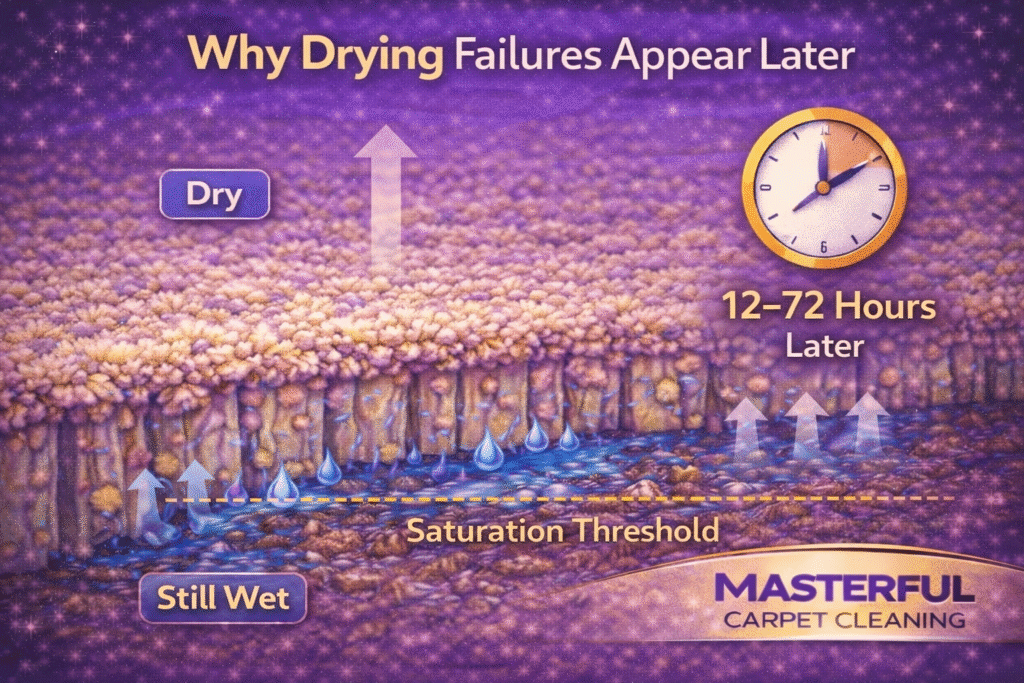
Improper drying does not always show immediate symptoms. Because evaporation occurs unevenly, surface fibers dry first while deeper layers retain moisture. This evaporation lag explains why carpets can look clean initially, then develop odor or discoloration hours or days later.
Why Residue Causes Carpets to Get Dirty Again
Residue is one of the most misunderstood reasons carpets appear dirty shortly after cleaning.
How Residue Attracts Soil After Cleaning
When moisture levels prevent complete extraction, dissolved soils remain suspended in carpet fibers. As moisture evaporates, these residues become sticky points that attract airborne soil and foot traffic contamination.
This process is known as fiber suspension, and it explains why carpets can resoil faster after a failed cleaning cycle.
Why Residue Is a Process Issue, Not a Product Issue
Residue problems are rarely caused by the type of cleaning solution used. They are typically the result of dilution imbalance, where moisture and soil are not fully removed during extraction.
This is why “no residue” outcomes depend more on process control than chemistry No Residue Carpet Cleaning: What It Really Means
What Is Wickback and Why Stains Reappear
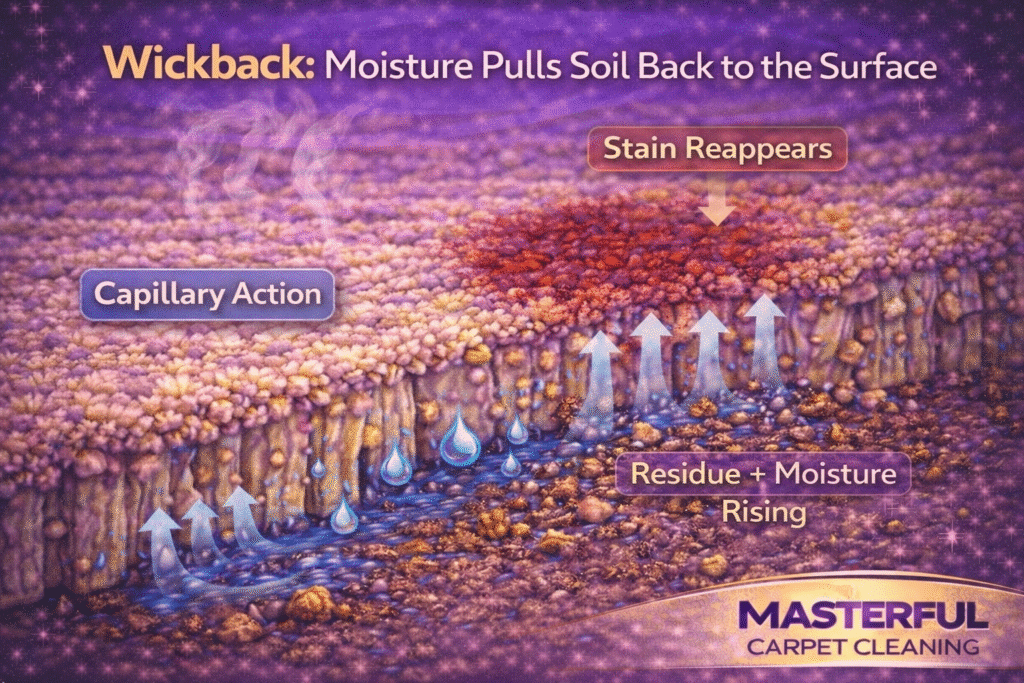
Wickback is the reappearance of stains after carpets seem clean and dry.
How Moisture Migration and Capillary Action Cause Wickback
As deeper moisture moves upward through capillary action, it carries dissolved soils back to the surface. When that moisture evaporates, stains reappear in the same locations.
Wickback is a symptom of moisture migration, not a cleaning failure by itself. It is predictable when deep moisture is not fully controlled. Wick-Back After Carpet Cleaning: Causes, Prevention, and Fixes That Really Work
Why Carpet Odor Appears After Professional Cleaning
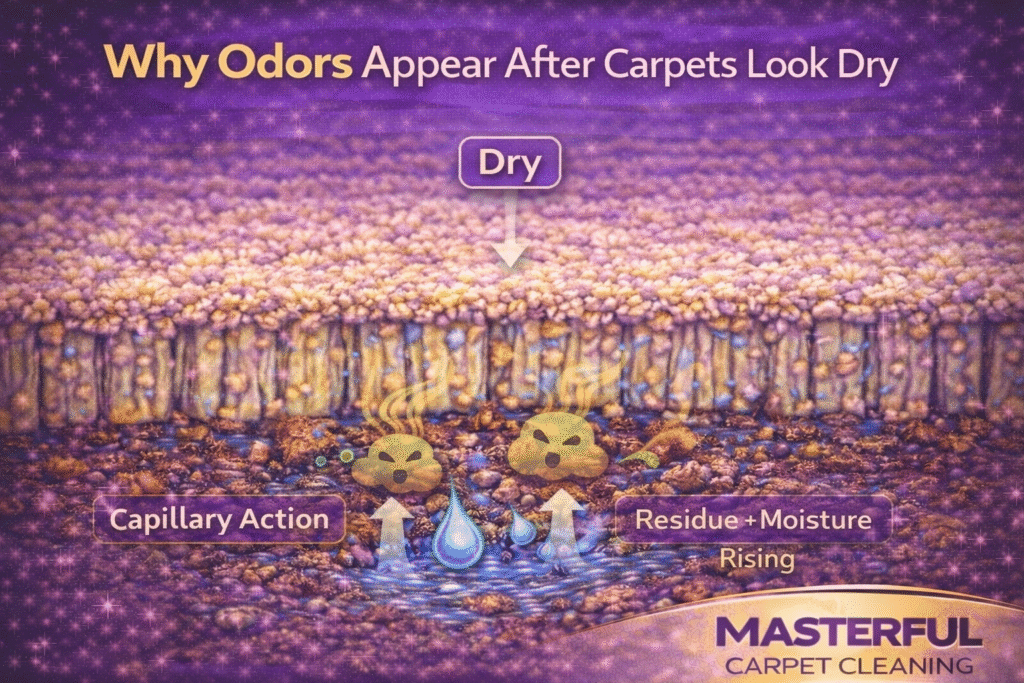
Odor after professional carpet cleaning is almost always moisture related.
How Padding Contamination Creates Persistent Odors
Carpet padding retains moisture far longer than surface fibers. When moisture remains trapped, padding contamination can occur, producing musty or sour odors even when the carpet looks dry.
In severe cases, moisture can migrate downward toward the subfloor, compounding odor issues and increasing long term damage risk.
Can Professional Carpet Cleaning Make Carpets Look Worse?
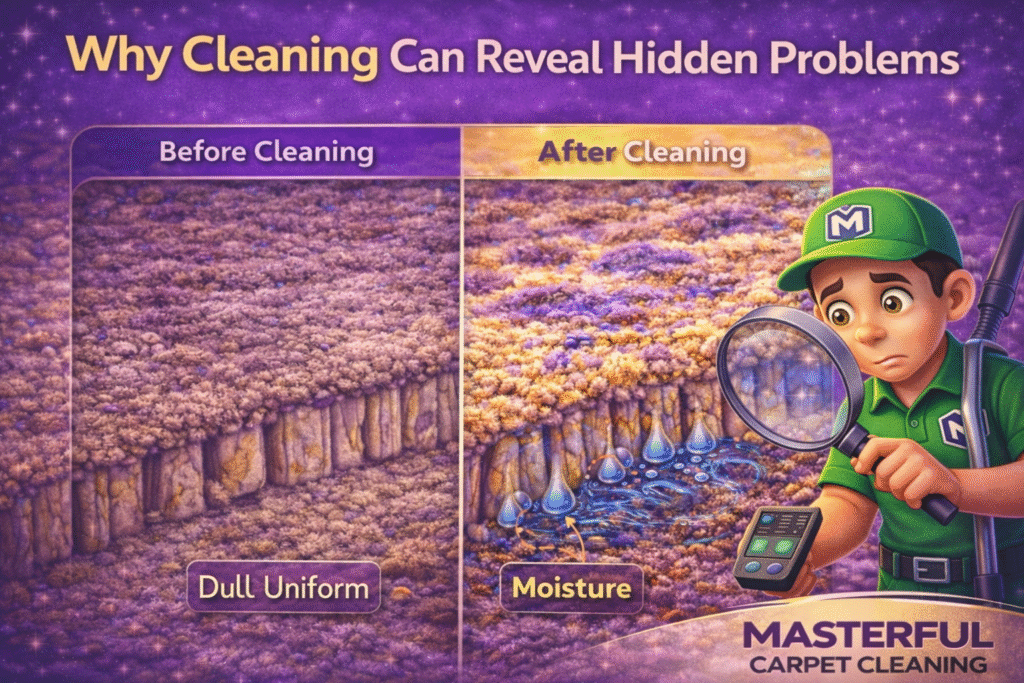
Yes, professional carpet cleaning can temporarily make carpets look worse when moisture imbalance exists.
In these cases, cleaning exposes underlying issues like residue, padding contamination, or uneven drying. The cleaning did not cause the problem; it revealed conditions already present within the carpet system.
Is Over Wetting the Main Reason Carpet Cleaning Fails?
Over-wetting is a major factor, but it is not the only reason carpet cleaning fails.
Failure typically results from a combination of:
- Moisture exceeding drying capacity
- Inadequate airflow
- High humidity
- Premature use
Over wetting becomes a problem when it is not paired with sufficient drying control.
How Environmental Conditions Affect Carpet Cleaning Results
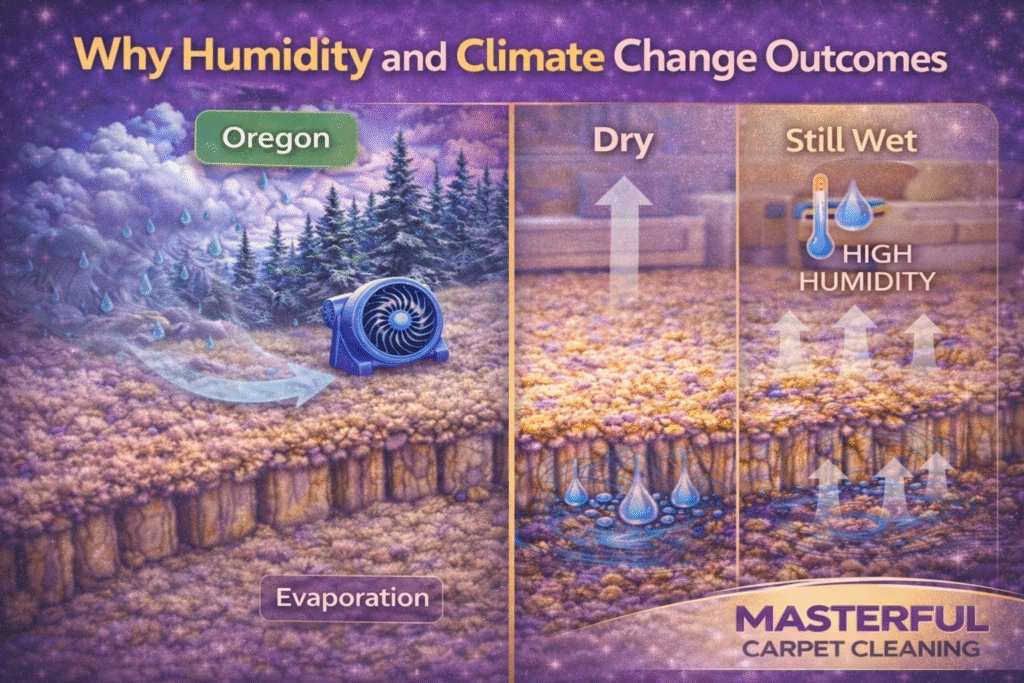
Environmental conditions often determine if a professional cleaning succeeds or fails.
Why Indoor Humidity Overrides Technique
High indoor humidity slows evaporation dramatically. Even well executed cleaning cannot overcome poor evaporation rates when moisture has nowhere to go.
Why Climate Changes Outcomes in Different Buildings
In Oregon, seasonal humidity and cooler temperatures increase drying time. Identical cleaning methods can perform very differently depending on building layout, airflow, and climate exposure.
How Carpet Cleaning Failures Can Be Prevented
Carpet cleaning failures are preventable when prevention occurs before symptoms appear.
Why Prevention Must Occur Before Symptoms Appear
Once wick back, odor, or residue becomes visible, moisture imbalance has already occurred. Prevention focuses on post cleaning stabilization, not correction.
This is why Carpet Cleaning Aftercare: What to Do After Professional Cleaning
What Proper Moisture Control Looks Like After Cleaning
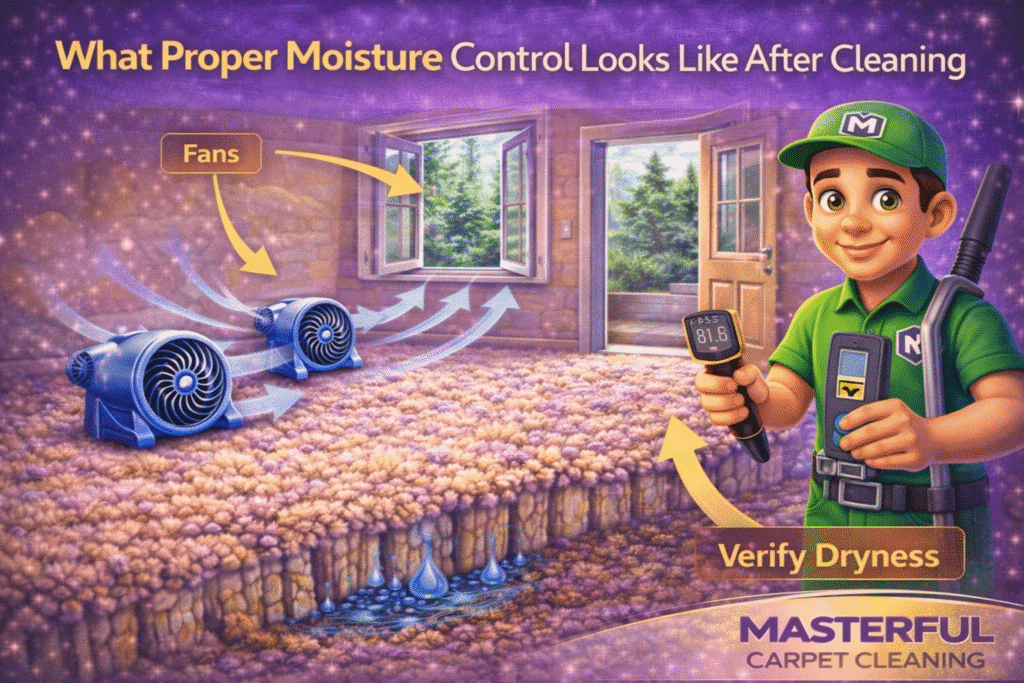
Proper moisture control includes:
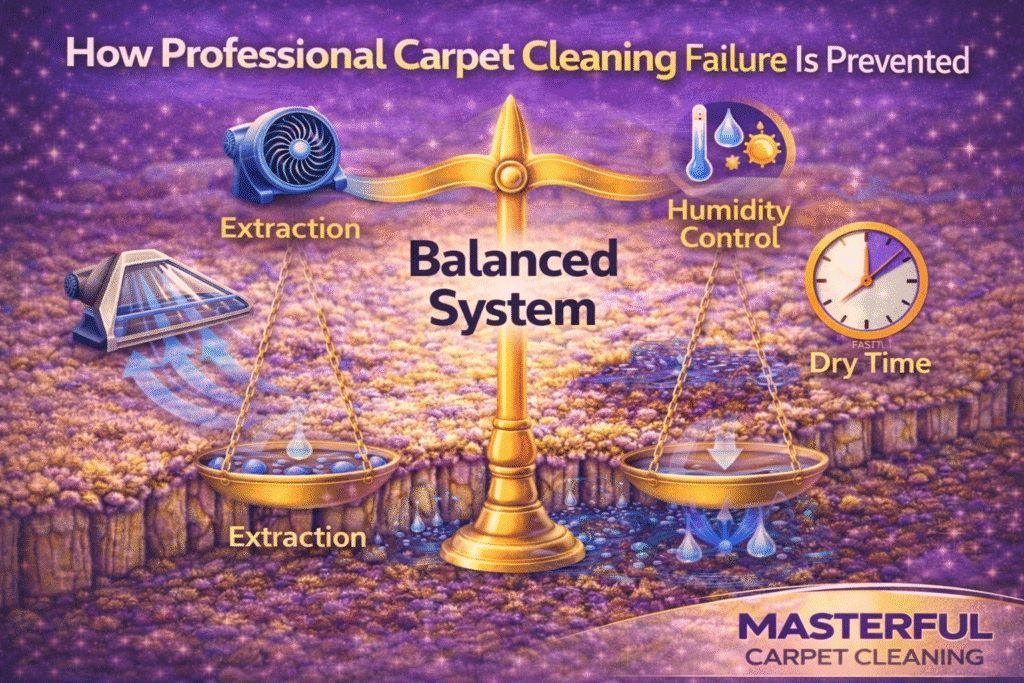
- Balanced extraction
- Controlled airflow
- Managed humidity
- Sufficient drying time
These factors work together to restore moisture balance.
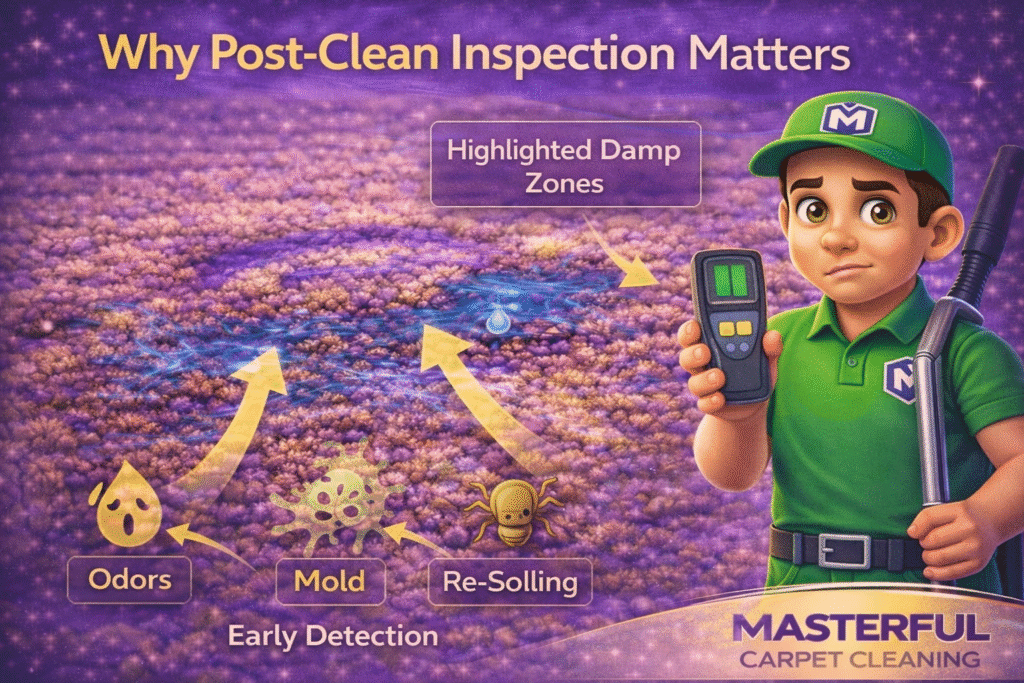
Post clean inspection identifies damp areas, odor development, or early discoloration before failures escalate. Early detection reduces risk and protects outcomes.
Professional Standards for Preventing Carpet Cleaning Failure
Professional standards and manufacturer guidelines emphasize moisture control, drying verification, and post service care as key components of successful carpet cleaning.
When these standards are followed, long term results improve and failure risk decreases significantly.
Professional Carpet Cleaning Guidance in Oregon
Masterful Carpet Cleaning provides professional carpet cleaning guided by moisture management standards and region specific climate considerations, helping clients avoid preventable post cleaning failures.
Key Takeaways: Why Carpet Cleaning Fails and How to Prevent It
- Carpet cleaning failure is a system imbalance, not incompetence
- Moisture control matters more than technique alone
- Residue and wickback are predictable outcomes
- Environmental conditions influence results
- Prevention protects outcomes before symptoms appear
FAQ
Why do carpets get dirty again so fast after professional cleaning?
Carpets get dirty again quickly when moisture or residue remains trapped after cleaning. As moisture evaporates unevenly, residue rises to the surface and attracts new soil. This is a predictable outcome of moisture imbalance, not a sign that cleaning was ineffective.
Is it normal for stains to come back after carpet cleaning?
Yes, recurring stains, often called wickback, are normal when deep moisture migrates upward during drying. The cleaning removes surface soil, but moisture left in padding can carry dissolved residue back to the carpet surface as it dries.
Can professional carpet cleaning cause mold or mildew?
Professional carpet cleaning itself does not cause mold, but improper drying conditions can. When moisture remains trapped in carpet padding or backing for extended periods, it creates an environment where mildew odors or microbial growth can develop.
Why does my carpet smell musty days after cleaning?
A musty smell days after cleaning usually indicates moisture retention below the carpet surface. Padding holds moisture longer than fibers, and if evaporation is slow, odor can develop even after carpets appear dry.
Does over wetting always mean the cleaner did something wrong?
No. Over wetting can occur even during correct cleaning if environmental conditions slow evaporation. Failure happens when moisture input exceeds drying capacity, not necessarily because of poor technique.
How long after carpet cleaning do problems usually appear?
Most carpet cleaning failures appear 12 to 72 hours after service, once moisture migration and evaporation imbalance become visible. This delay is why failures are often misattributed to cleaning quality instead of drying conditions.
Can carpet padding be the reason cleaning results don’t last?
Yes. Carpet padding plays a major role in long term results. If padding remains damp or contaminated, odors, wickback, and resoiling can occur even when surface fibers were cleaned properly.
Why does carpet look uneven or blotchy after drying?
Uneven appearance after drying is often caused by inconsistent moisture evaporation. Areas that dry slower allow residue to resurface, creating visible blotching or shading differences.
Can high humidity ruin carpet cleaning results?
High indoor humidity can significantly reduce evaporation rates. In humid environments, even well executed professional cleaning may fail unless airflow and moisture control are actively managed.
What is the biggest mistake after professional carpet cleaning?
The biggest mistake is assuming cleaning ends when technicians leave. Walking on carpet too soon, blocking airflow, or ignoring drying conditions increases the likelihood of residue, odor, and failure.
Author