

If known cooking oil or greasy food lands on installed carpet, remove free material before choosing a cleaner. Carefully lifting a food solid and blotting free oil can limit spread. The remaining dark or sticky mark may need a product that fits this carpet, and some color or pile changes may remain even after suitable cleaning.
First identify what spilled. Household food oil and an unknown solvent or motor oil are different situations. This article covers the first response to a known ordinary household oily spill. If the substance is fuel, automotive oil, liquid from a paint product, a solvent or an unknown chemical, stop the routine carpet response and follow the product label or qualified local guidance for that material.
Identify the oily substance before touching the carpet
Cooking oil, butter, greasy food and some lotions can leave an oily deposit on carpet. A food spill can also contain dye, sugar, protein or fine particles; a lotion may include fragrance or pigment. Knowing the product helps you describe the incident and compare permitted care directions. The look of a dark patch alone cannot identify its chemistry or tell you how deep it reached.
Motor oil, fuel, liquid from a paint product, industrial lubricant, solvent or an unknown chemical should not be treated like an ordinary food spot. Keep people and pets away from that area, avoid adding another chemical, and use the original product label or qualified local guidance.
The US Environmental Protection Agency explains how to identify and handle household products that may be hazardous. Masterful’s routine carpet cleaning enquiry is not an emergency chemical response or disposal service.
If you cannot identify the source, photograph the container or setting if safe and tell the person assessing the area that the substance is unknown. Do not try a recipe intended for greasy food as a test. If the source is a continuing leak, stop it when safe before arranging any carpet treatment.
Scroll the table sideways to read the source and response limits.
| What landed on carpet | First action | Next decision |
|---|---|---|
| Known cooking oil | Blot free liquid with clean white absorbent material, without rubbing. | Check carpet and cleaner directions before treating the remaining mark. |
| Greasy food or butter | Lift loose food carefully, then blot free oil. | Record added color or ingredients; one spot may contain more than oil. |
| Known lotion or similar household product | Remove free material gently if its label presents no separate handling concern. | Check ingredients and carpet compatibility; fragrance or pigment may remain. |
| Fuel, motor oil, solvent or unknown chemical | Stop routine spot treatment and limit access to the area. | Follow the source label or qualified local safety and cleanup guidance. |
Remove free household grease without spreading it
For a known ordinary cooking oil or greasy food spill, stop the source and keep shoes and pets from carrying it into clean pile. If loose food is present, lift it carefully with a smooth, rounded edge that will not snag the carpet. Press a clean white absorbent cloth onto free oil. Move to a clean section as it absorbs, and work from the outside of the affected area toward the center without rubbing.
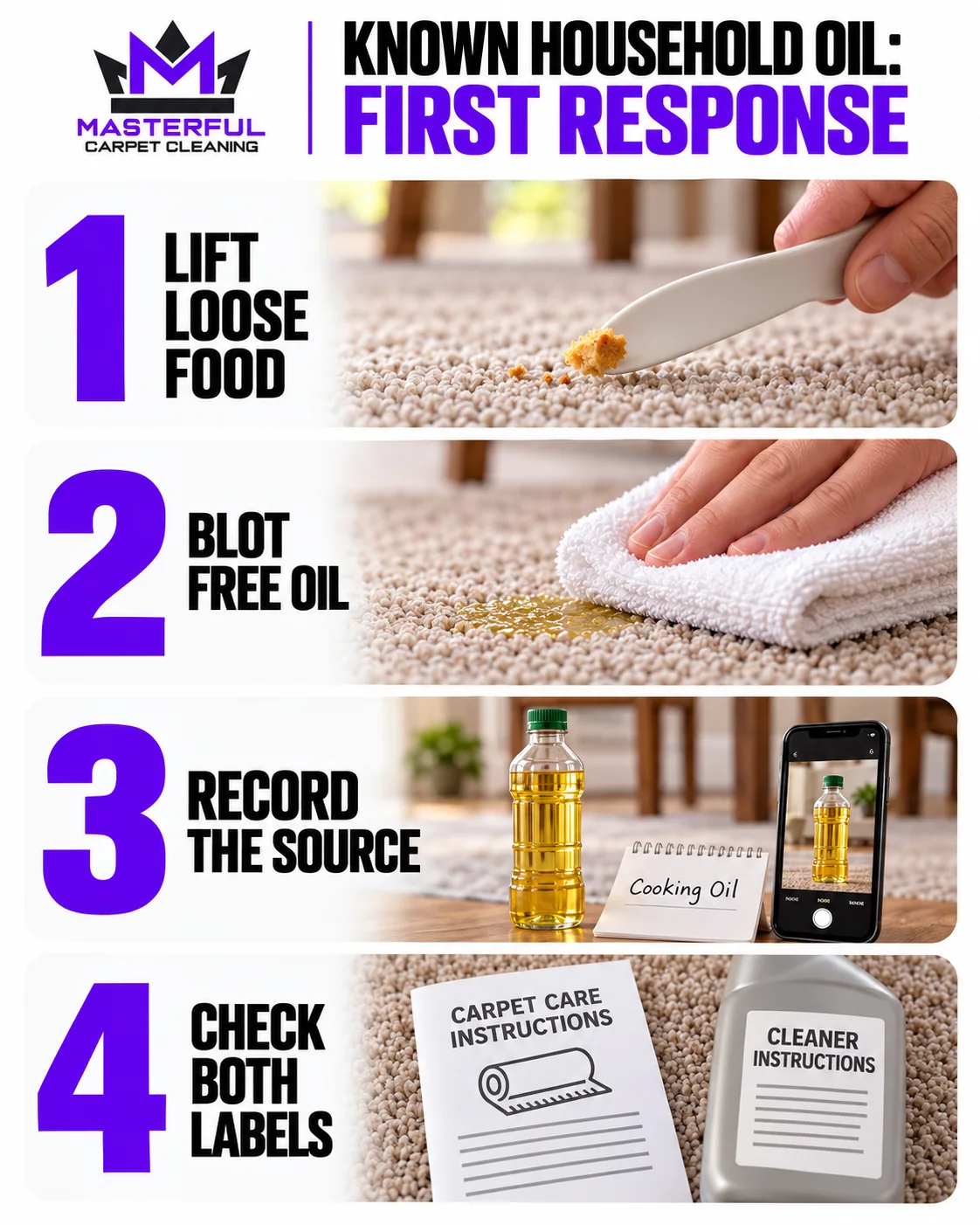
Do not scrub with a stiff brush or flood the area to “dilute” oil. Water alone is not a universal way to release an oily deposit and can carry material toward backing or pad. Do not cover the pile with baking soda, cornstarch, litter or another powder by default; powder can lodge in carpet and add residue that must later be removed.
Stop when free material is no longer transferring. The remaining mark is a separate product decision, not a reason to keep rubbing or repeat wet passes until the carpet looks different. Our first spill guide covers the general blotting step; this page adds the oil source and residue checks.
Record what remains after free oil is lifted
Note the substance or container, the estimated amount, when it landed and any food color or other ingredient. Photograph the whole area and the mark in ordinary light. Find the installed carpet style, fiber or blend, pile, dye, finish, backing and care or warranty directions if available. An edge or seam, a repeated incident and a previously treated patch can change the question.
A dark lane may contain oily soil, dry grit, earlier cleaning residue, altered dye or worn pile. A sticky feel may reflect the spill or a past product. Appearance and touch can guide what you report, but they do not prove which substance remains or how far it moved. Our difficult stain guide compares oil with colored drinks, ink and other stain families.
- Dark or sticky area
Unknown: Appearance cannot separate oily deposit, food color, dry soil or an earlier product.
Next question: What landed here, and what was used before checking both sets of care directions?
- Changed color or pile
Unknown: A photo cannot show if remaining soil, altered dye or worn yarn causes the change.
Next question: Has the material itself changed? Pause repeated rubbing or wet passes and seek an assessment.
- Broad or returning dampness
Unknown: A face pile that looks dry cannot show the condition of backing or pad.
Next question: Is a source still active, and how far did moisture extend? Stop adding liquid and seek a source and extent assessment.
Write down any dish soap, spot spray, solvent, powder, machine pass or heat already applied. Do not silently try a second product over the first. This history helps a cleaner assess residue and compatibility and set realistic expectations.
Compare carpet care with a proposed spot cleaner
Read the exact carpet’s care and warranty directions and the complete label for any proposed cleaner. Check that both allow that product or method for the installed pile, dye, finish and backing. Follow their instructions for a permitted hidden test, application amount, dwell, removal, drying and when people or pets may return. If the directions are missing or conflict, ask before applying it.
A hidden test can show one local response, but does not guarantee that a larger oily mark, an older residue or backing will behave the same. Stop if carpet dye appears on a clean cloth, the pile feels different, color spreads or moisture remains longer than the directions allow. Do not assume a label saying “degreaser,” “natural” or “carpet safe” overrides the installed carpet’s limits.
Dish soap, vinegar, solvent, enzyme and industrial degreaser are not interchangeable oil treatments. A product intended for a counter, garage floor or machine part may be unsuitable for installed carpet. Adding chemistry or repeated rinse water can create a new residue problem. If the chosen method is uncertain, bring the label and incident notes to the service discussion.
Pause when the carpet or stain changes
Stop home treatment if oil spreads beyond the first mark, carpet dye transfers, pile roughens or a seam opens. Also pause if the spot stays sticky after an earlier product, the source is uncertain, or dampness may extend into backing or pad. Ask a cleaner if a limited compatible test or another assessment makes sense; a stronger bottle is not automatically the next step.
Some oil deposits may respond to suitable professional cleaning, while a food dye, changed carpet dye, worn yarn or material below the pile can require a different assessment. Even a successful surface improvement does not prove that every layer is free of residue. If a leak or broad wet area is present, resolve the source before routine cleaning.
A new mark that remains after the first careful response belongs in our new stain guide. If the spill happened earlier or several products have been used, our new and older stain comparison explains why the treatment history changes the decision.
Ask Masterful about the carpet and incident
Tell us if this was cooking oil, greasy food, lotion or another known household source. Share the product or ingredients when available, approximate amount, time since the spill, photographs, carpet care information and every treatment already tried. Mention dye transfer, spreading, sticky residue, a loose seam or suspected wet backing. These facts help us discuss a reasonable cleaning scope and likely limits.
Ask which method or spot product is suitable for the installed carpet and how added liquid or residue would be removed. A professional visit can be useful for compatible soil or a persistent household oil mark, but complete stain removal cannot be promised from a description or photo. We do not present ordinary carpet cleaning as a service for motor oil, fuel, solvent or an unknown hazardous material.
Contact Masterful, call (971) 600-6265, or book a carpet cleaning visit for a suitable household stain.
Common questions about oil on carpet
Should I add water to a fresh oil mark?
First absorb free material from an ordinary known household spill. Do not flood the carpet. Use water or a cleaner only if the installed carpet and product directions permit that method, including removal and drying steps.
Is dish soap always safe for greasy food on carpet?
No. A soap can leave residue or conflict with the carpet’s care directions. Check both sets of instructions before applying any product, and seek advice if the installed carpet is unknown.
Will baking soda or cornstarch pull out the oil?
Neither is a universal carpet treatment. Powder can remain in pile, and its removal does not prove the oily deposit or any deeper source is gone. Start with careful absorption of free material instead.
Why does the spot still look dark after blotting?
Oily soil can remain after free liquid is removed. Food color, dry grit, an earlier cleaner, dye change or pile wear may also affect appearance. Record the source and history; do not identify the cause by color alone.
Can polyester or olefin hold oily soil?
Some polyester and olefin carpets can retain oily soil, but their fiber name does not choose a spot product. Pile, finish, dye, backing and the installed style’s instructions still govern treatment.
Can household oil reach the carpet pad?
Enough liquid may move toward backing or pad, depending on amount, construction and earlier treatment. The face pile cannot show the full extent. Mention a large spill or persistent dampness before booking routine cleaning.
What if the spill was motor oil or an unknown chemical?
Stop routine carpet spot treatment. Keep people and pets away, avoid mixing cleaners, and consult the source label or qualified local guidance. A method for cooking oil is not a safety or disposal plan for that substance.







