

Regular upholstery care helps remove settled dust from furniture. It is one part of household air care, but a sofa that looks cleaner does not establish how much the air in the room has changed. The U.S. Environmental Protection Agency (EPA) advises vacuuming carpets and furniture weekly, or more often. This is a surface care task; it is not a professional cleaning schedule or a medical treatment.
For professional care, start with the furniture maker’s cleaning instructions. La-Z-Boy advises frequent vacuuming and contacting a professional service once the upholstery has become overall soiled. Other fabrics and manufacturers can have different limits. There is no single calendar interval that fits every sofa, fabric, home, and use pattern.
What regular upholstery care can do
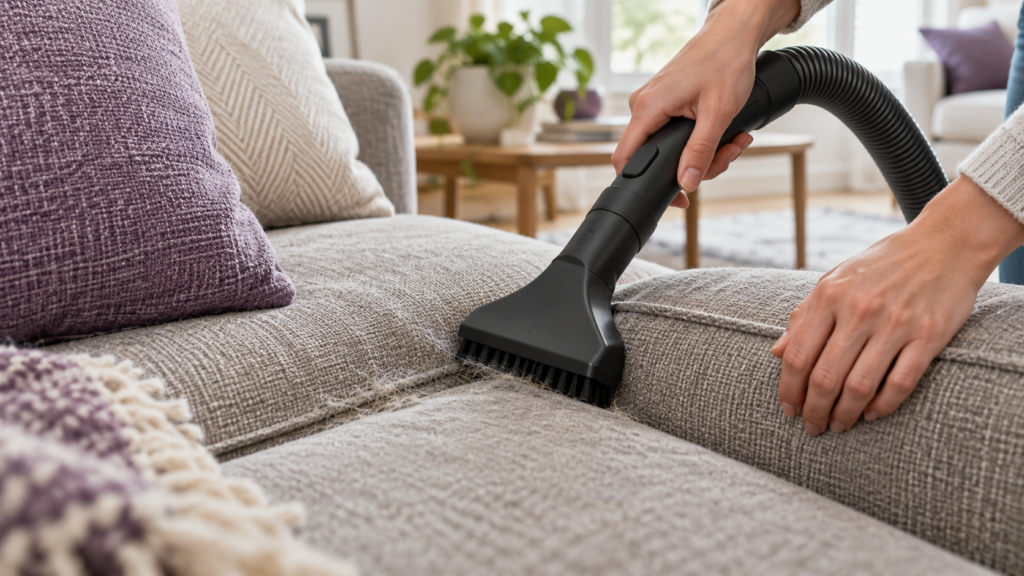
Fabric covered furniture can collect household dust. The EPA notes that dust can be stirred into the air during ordinary indoor activity and can contain biological contaminants. Its indoor air guidance recommends routine vacuuming of fabric covered furniture as one part of household cleaning.
Vacuuming with an upholstery attachment can pick up loose dust, crumbs, and pet hair from the surface, seams, and accessible cushion edges. The EPA says a HEPA filter can help keep some vacuumed dust from escaping back into the air. This is a dust control step, not a promise that the furniture, room, or home is free of allergens.
Professional cleaning addresses soil that routine care has not removed, when the maker’s instructions allow the method. Professional upholstery cleaning treats the furniture; it does not assess pollution sources elsewhere in the home. Airborne pollution needs its own assessment; the appearance of a seat or the color of cleaning water cannot quantify a change in room air.
Use a vacuum attachment permitted for the fabric and work over accessible seats, arms, seams and cushion edges. Stop if the tool catches or pulls the material. Follow the vacuum maker’s instructions for filter fitting, emptying, cleaning and replacement. For the full sequence, use our fabric care, vacuuming and spot cleaning steps.
What cleaning cannot promise about health
The EPA identifies some biological contaminants as asthma or allergy triggers. That statement does not demonstrate a medical benefit from a particular furniture service. Do not book upholstery cleaning as a treatment for symptoms, a way to prevent disease, or a promise of better sleep. A cleaning company cannot diagnose what is causing a household member’s symptoms.
Vacuuming can also stir up dust. The EPA advises people with asthma or allergies to leave the area being vacuumed. If someone in the home has symptoms or a diagnosed condition, use their clinician’s advice for health decisions.
Cleaning products need care too. Read the product label and furniture instructions before use, and never mix cleaning products. The EPA cautions that many antimicrobial products are not intended for water absorbing materials such as fabrics and upholstery. Do not apply a disinfectant, deodorizer, or stain remover to furniture unless its label permits that material and use.
Put upholstery care in the wider household plan
The EPA identifies source control, ventilation and air cleaning as separate strategies. Furniture care addresses only part of that work.
| Task | Practical next step | Limit |
|---|---|---|
| Reduce pollution at its source | Identify and reduce the source, rather than repeatedly cleaning a nearby seat. | Cleaning the sofa does not stop an ongoing source elsewhere in the home. |
| Ventilate | Use appropriate outdoor ventilation or exhaust arrangements. | Check outdoor conditions. Opening windows is not a blanket answer when smoke or other pollution is nearby. |
| Filter room air | Follow the equipment maker’s operating and maintenance instructions. | Room filtration and removing debris from upholstery are different tasks. Neither establishes a medical outcome. |
For equipment selection, follow the EPA’s linked air cleaning information and the requirements of your home.
Choose a sensible care schedule
| Care task | A useful starting point | What sets the next step |
|---|---|---|
| Routine vacuuming | Vacuum furniture weekly, or more often, following EPA dust control advice. | Visible dust, crumbs, hair, household use, and the maker’s directions. |
| Spill or spot response | Check the furniture label before applying water or a product. Follow its permitted method. | The fabric, the spill, and how the maker says to treat it. See our upholstery care code and cleaning steps. |
| Professional cleaning | Use the furniture maker’s instructions. Consider service when the upholstery is overall soiled and the maker permits professional care. | Fabric restrictions, visible soil, use, and the technician’s confirmed method. No fixed interval applies to every item. |
Homes with pets or frequent use may need surface vacuuming more often because hair and crumbs return sooner. That observation does not set a professional cleaning interval. Look at the furniture itself and follow its care label instead of booking by a blanket “every six months” rule.
When asking about broad soiling, describe what remains after permitted vacuuming: discoloration across a seat or arm, a persistent mark, or a change in texture. Compare the same areas in similar light. These are observations for an assessment, not proof that more cleaning will fix the piece. Fading, abrasion and damaged seams may need a different response.
Why there is no single professional cleaning interval
A sofa in a quiet room and a dining chair used every day do not collect soil at the same rate. Fabric type, the furniture maker’s directions, household use, visible soiling, spills, and prior cleaning all affect the safe next step. Those details support an item by item decision; they do not support a health claim or a fixed appointment promise for every household.
Routine vacuuming removes loose material from the surface. A professional visit uses a cleaning method that must suit the fabric and construction. The word “regular” can describe the household habit of dust removal, but it should not be read as a requirement for periodic hot water extraction or disinfecting. Never assume steam, moisture, or a chemical treatment is suitable just because another piece of furniture tolerated it.
Check the result without overstating it
Keep a short care record: the date, areas treated, products or service used, and anything that changed after drying. Note how soon visible crumbs, hair or dust return. Use that record to adjust routine surface care and to give a cleaner a useful history.
A fresh scent, lighter fabric or a full dust collector is not an indoor air measurement. Judge a furniture appointment against the agreed cleaning task, such as removal of visible loose soil or improvement of a stated mark. Ask which marks may remain before work begins. If the goal is to investigate air quality or symptoms, arrange the appropriate assessment instead of using the sofa’s appearance as the result.
Check the furniture before booking
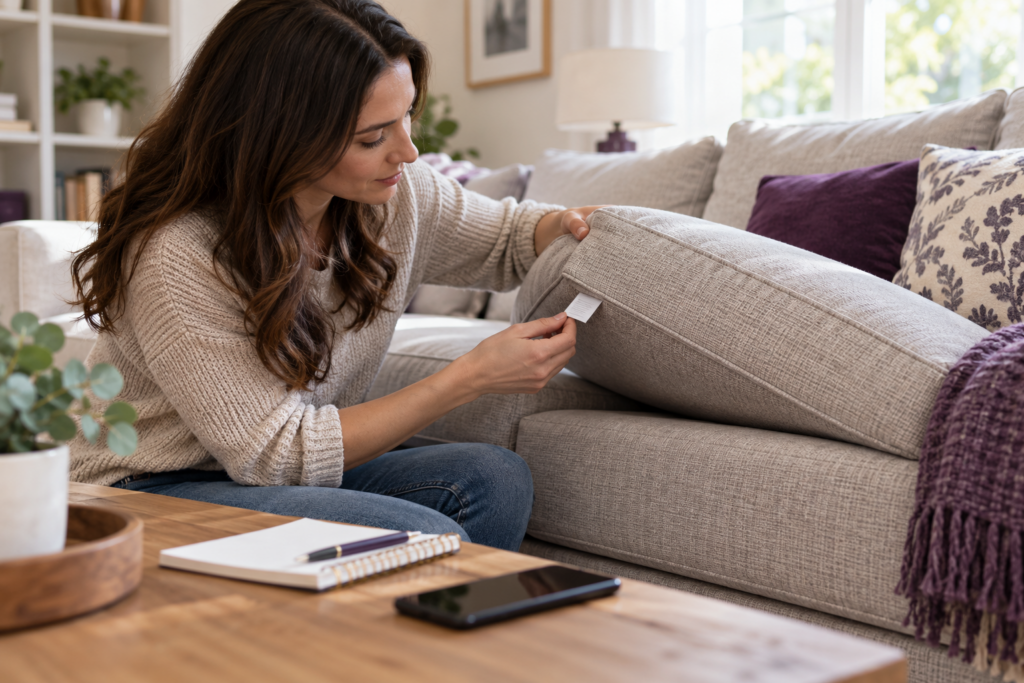
- Find the cleaning code or written instructions from the furniture maker. If the tag is missing, contact the maker or retailer before applying liquid or solvent.
- Describe the fabric, visible soil, prior spot treatments, and any areas that have stayed damp.
- Ask the cleaner to confirm that the planned method fits the maker’s directions and the furniture’s construction. If the method is unclear, pause until the maker or a qualified cleaner can identify a safe option.
- Ask about the products, ventilation, drying and reentry instructions before treatment. Follow all label restrictions for children, pets and other household members. Keep children and pets away during treatment and until the product’s reentry conditions are met.
- Confirm the areas included, the price and the limits of the expected result. Ask how to report a returning mark, odor or damp area after the visit.
Report a persistent or returning odor for assessment rather than applying more deodorizer. Persistent dampness needs its moisture source addressed. Cleaning upholstery by itself does not repair a leak or correct a damp room. Tell the cleaner about prior water exposure; if mold or a health concern is suspected, seek suitable building or health advice instead of treating a cleaning visit as a diagnosis.
Before using the furniture again, follow the treatment’s drying and reentry instructions. Our upholstery care steps explain aftercare and when to stop home treatment. A surface that feels dry does not cancel a product restriction.
Book only after the method is clear
If your furniture is overall soiled and its care instructions allow professional service, check Masterful’s online booking options or call (971) 600-6265. Before you schedule, confirm that the fabric and proposed method fit the furniture maker’s instructions.
Sources and further reading
- U.S. EPA: Indoor Dust and Cleaning Advice. Covers dust reduction and weekly vacuuming advice.
- U.S. EPA: Biological Contaminants and Indoor Air Quality. Covers contaminants, routine care and product cautions.
- U.S. EPA: Improving Indoor Air Quality. Explains source control, ventilation and air cleaning.
- La-Z-Boy: Fabric and Leather Care. Gives an example of maker advice for routine and professional care. Follow the instructions for your own furniture.







