To clean upholstered furniture, check its care instructions, remove loose dirt, and use only a permitted treatment. If the code is missing or unclear, ask the manufacturer before applying a cleaner.
This advice covers fabric sofas and chairs. Follow separate instructions for leather, suede, and removable slipcovers.
Check the care label before choosing a cleaner
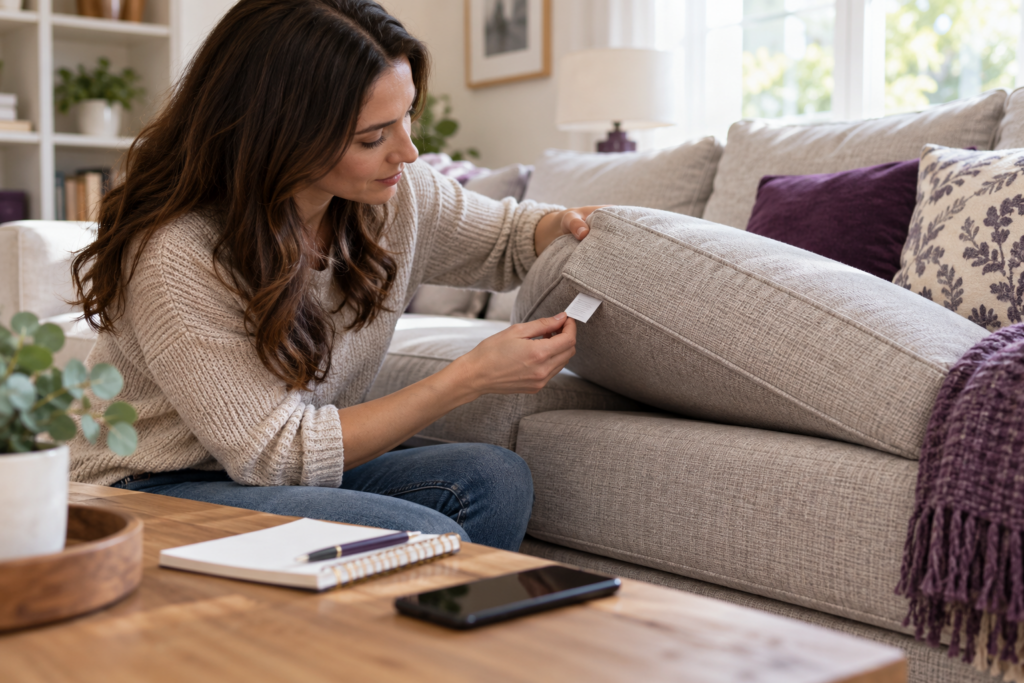
Look beneath removable seat cushions or under the furniture without tipping a heavy piece on your own. Ashley identifies these as tag locations on its upholstered products. A retailer’s order record or the maker’s model information may help if the label is missing. Until the instructions are confirmed, do not guess a liquid treatment.
Find the furniture tag and read the manufacturer’s instructions. The code restricts cleaner choice; it does not guarantee stain removal.
| Code | Permitted care |
|---|---|
| W | Water based upholstery shampoo or foam; avoid solvents and saturation. |
| S | Water free upholstery solvent; do not use water. |
| WS or SW | Check the furniture instructions for the permitted water based or solvent treatment. |
| X | Vacuum or brush lightly; no foam or liquid cleaners. |
La-Z-Boy’s fabric care instructions explain these codes. A zipper does not mean cushion covers can be washed. Follow the furniture manufacturer’s instructions.
Names such as microfiber, polyester, velvet, or a performance fabric describe the material or finish; they do not replace the complete care instructions. If a removable slipcover has its own washing label, follow that label. Leather and suede need care intended for those surfaces. A method used on a fabric sofa should not be transferred to them.
Prepare the furniture and supplies
- Keep the furniture instructions and the cleaner’s label available throughout the task.
- Have a suitable vacuum attachment and clean, absorbent cloths ready. Add a cleaning product only after checking that the furniture permits it.
- Remove loose objects and examine seams, worn patches, buttons and trim before handling the cushions.
- Plan how the piece will dry and how people and pets will stay clear while product restrictions apply.
A fragile seam, loose trim, or a damaged cushion changes the task. Photograph the problem and discuss it with a suitable furniture professional before trying to clean across it.
Remove loose dirt before treating a mark
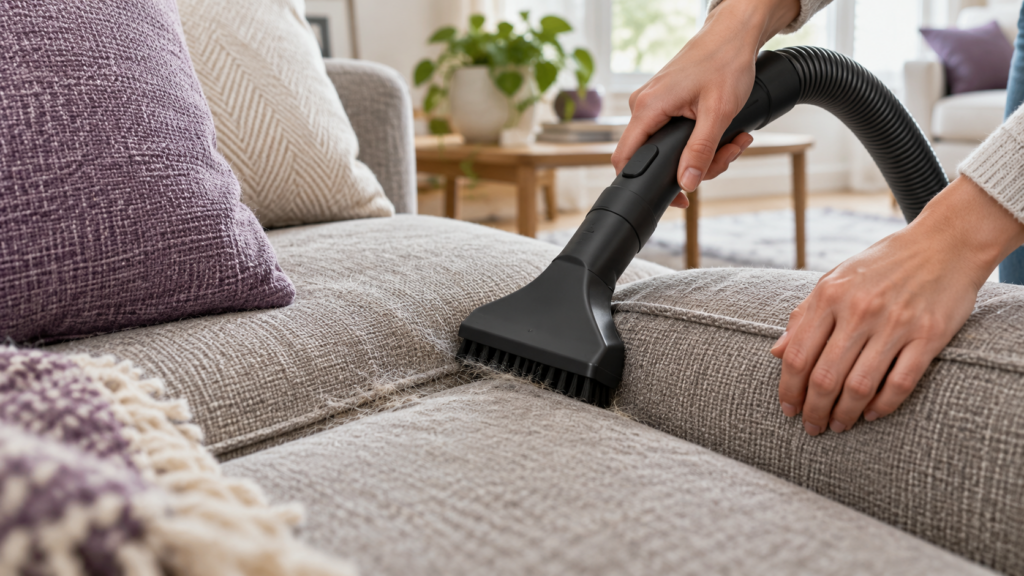
Vacuum accessible seats, arms, seams, and gaps gently with an upholstery attachment. Check the furniture instructions before choosing a brush. Stop if the fabric catches or frays.
Check products as carefully as the fabric
A homemade mix or a product sold for carpets is not automatically suitable for upholstery. Before using vinegar, baking soda, bleach, a deodorizer, or a disinfectant, check both the furniture instructions and the product’s allowed surfaces. Do not improvise a mixture to work around a restriction.
The EPA’s cleaning product advice says to follow labels, use the stated dilution, avoid mixing products, and provide ventilation during and after use. Many antimicrobial products are unsuitable for water absorbing fabric. Follow any protective equipment, child, pet, and reentry instructions on the product label. If you cannot meet those conditions at home, ask for professional advice.
Deal with a fresh spill without spreading it
Blot promptly with a clean, absorbent cloth. Do not rub or add liquid to X code fabric. For permitted spot cleaning:
- Choose a cleaner allowed by the furniture instructions.
- Test an inconspicuous area using the product instructions. Let it dry, then compare its color and texture with the surrounding fabric before continuing.
- Use the amount and application method on the cleaner’s label. Follow its removal or rinsing instructions without saturating the fabric.
- Stop if the color or texture changes.
Bernhardt’s cleaning instructions call for pretesting and moisture restraint. Some require treatment across an entire panel. Follow your furniture’s directions instead of repeatedly treating one spot.
Assess an older stain before adding another product
Write down what caused the mark, when it appeared, and what has already been applied. Note any change in color, texture, outline, or odor after earlier treatment. This gives a cleaner more useful information than a photograph alone.
Food grease, ink, pet accidents, and an unknown secondhand stain do not share one treatment recipe. A remaining mark could also be discoloration or wear that cleaning cannot reverse. If you cannot identify the substance or the permitted method, stop repeated spot treatments and request an assessment. Keep product names or packaging available for the cleaner.
Do not assume steam cleaning suits every sofa
Bernhardt does not recommend steam or hot water extraction for its SW code fabrics. A cleaning code alone does not approve a machine. Share the care tag with your cleaner and ask how the proposed method follows the manufacturer’s instructions.
Dry the furniture and check it before reuse
Ask for aftercare instructions for the exact product or professional method used. Confirm the expected drying conditions, any permitted cushion positioning, and the point at which people and pets can use the furniture again. A drying time quoted for a different sofa or a carpet does not establish a safe time for your piece.
Before reuse, check accessible seams, cushion edges and undersides as well as the visible seat. If an area remains damp, or the filling seems wet, contact the cleaner or furniture maker. Do not keep adding water or another cleaner to correct a returning mark or odor. Report the change and the original treatment so the next step can be assessed. If a leak or recurring dampness is involved, address that source before arranging another clean.
Follow the product’s ventilation and reentry conditions even when the surface feels dry. Avoid improvised heat treatments and return cushions only as the maker or cleaner directs.
Build a routine around how the furniture is used
Vacuum regularly, blot new spills promptly, and reverse cushions only where their design allows it. Avoid direct sunlight and nearby heat. Bernhardt’s furniture care advice supports these precautions.
Cleaning cannot repair a broken frame or split seam. Separate those repair needs from the cleaning decision.
Routine surface care and a professional appointment have different purposes. Use visible soil, household use, and maker instructions to decide the next step. Our article on upholstery cleaning frequency and indoor dust explains routine vacuuming, professional care thresholds, and the limits of health claims.
Know when home cleaning should stop
Ask for professional advice if instructions are missing, a permitted treatment fails, the fabric changes, or the filling becomes wet. Keep people and pets away until the treated piece is dry and the product’s restrictions are met. Ask for aftercare instructions for the method used.
Arrange upholstery cleaning in Salem
Before arranging upholstery cleaning in Salem, explain the material, care code, staining, and any previous treatment so Masterful’s team can confirm suitability. Have these questions ready:
- Does the proposed method fit the maker’s instructions and this furniture’s construction?
- Which areas and treatments are included in the quoted price?
- Which marks may remain, and what changes should I report after drying?
- What access, preparation, drying, and aftercare arrangements are needed?
View upholstery services and appointment options, or call (971) 600-6265 to discuss a piece that needs assessment. Confirm the scope, expected result, price, and aftercare before work begins.