Shag (long pile) carpet needs the right tools, consistent grooming, and strong airflow to avoid matting/flattening and reduce dry times. If you treat shag like normal carpet, it’s easy to overwet it, leave it slow to dry, and end up with a flat, tangled look.
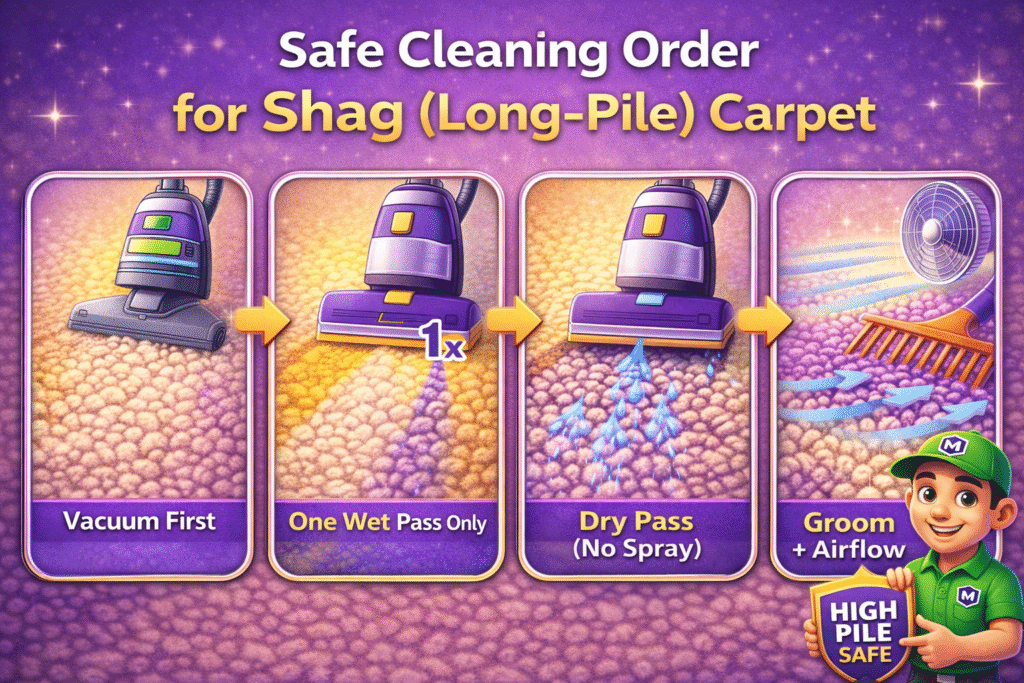
Safest way to clean shag (long pile) carpet
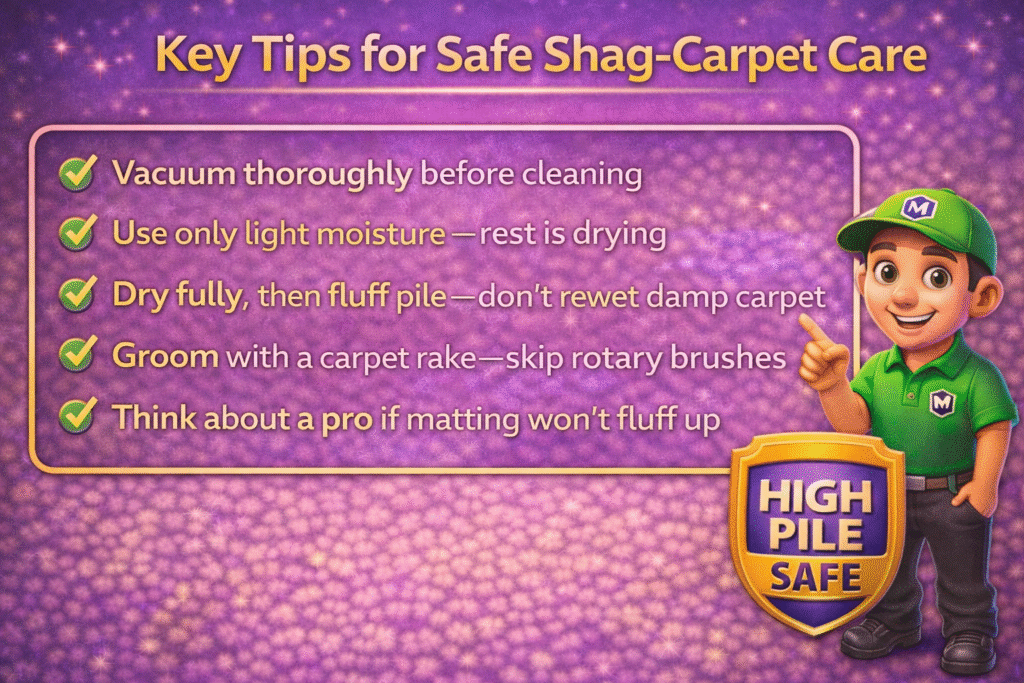
- Vacuum first to remove dry grit (grit + moisture = faster matting)
- Use controlled moisture (avoid soaking the pile)
- If using a machine: one wet pass, then a vacuum only “dry pass” (no spray) to pull moisture out
- Groom while damp (rake/comb) to separate fibers
- Move airflow across the surface (fans + ventilation)
- Keep foot traffic off until fully dry
- Recheck “flat” areas after drying, then groom again
Fast rule: If shag still feels noticeably damp well past the expected window, stop rewetting and switch to airflow + (if needed) a dehumidifier.
Need help right now? If you’ve got a stain, a matted patch, or you’re worried you’ll ruin the pile, book professional help: Stain help for shag
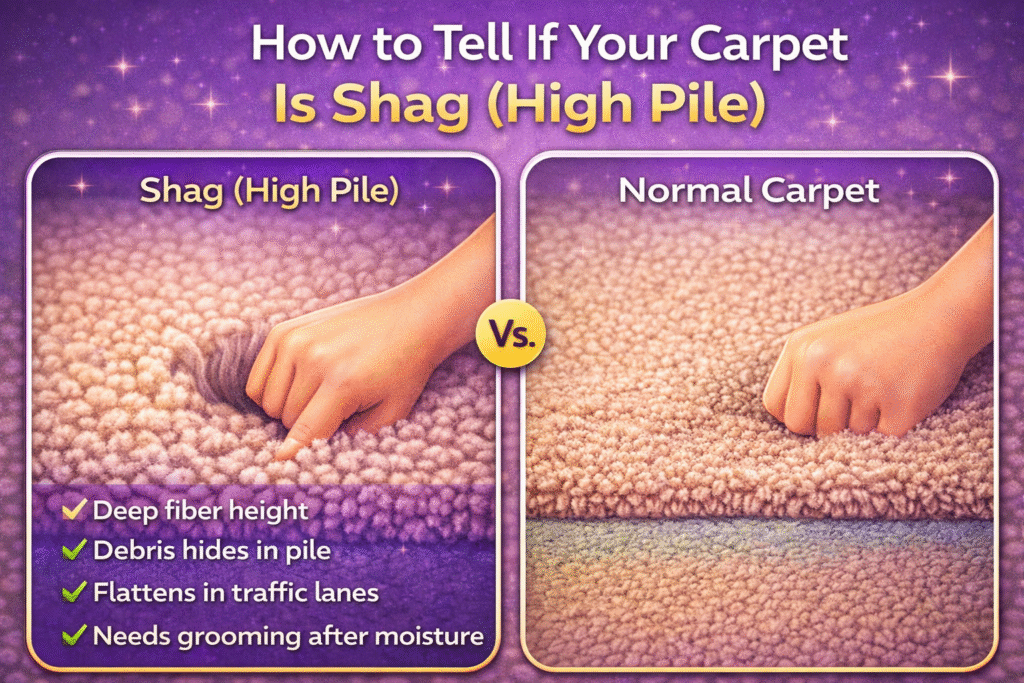
How to tell if your carpet is shag (and what “long pile” means)
“Shag” isn’t just a style, it’s a long pile carpet where the fibers sit taller and deeper than typical carpeting. That extra pile height is why shag needs more grooming, more attention to tools, and a real drying plan.
Quick shag / long pile checklist
You likely have shag (high pile) carpet if:
- The fibers look deep and plush, not short and tight
- You can press a finger in and see a noticeable “valley” in the pile
- It tangles easily and can look flat in traffic areas (matting/flattening)
- Debris and pet hair seem to hide down in the pile
- It takes longer to “feel dry” after any moisture (slow dry time tendency)
Why long pile changes cleaning and drying
Long pile acts like a thicker sponge:
- It can hold more moisture, which stretches dry times
- The fibers can clump together if you use the wrong tool or too much water, causing matting
- Grooming isn’t optional, shag often needs a rake/comb step to look normal again
Next: once you know it’s shag/long pile, the two problems to prevent are matting and slow drying, and the fix is predictable: tool setup + controlled moisture + grooming + airflow.
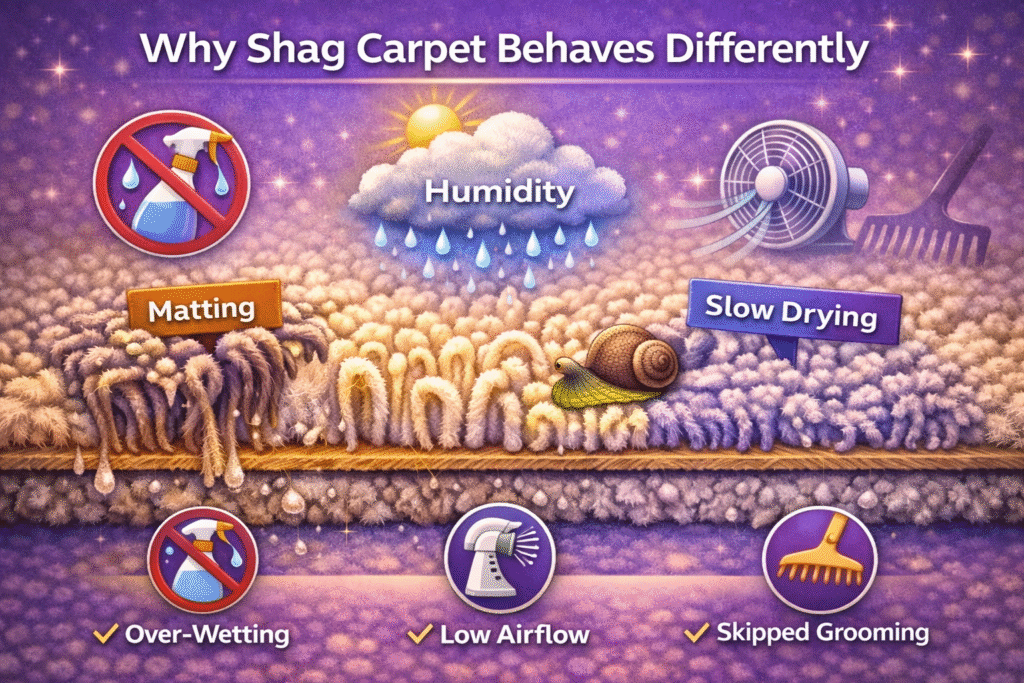
Why shag (long pile) carpet mats and dries slowly
Shag looks forgiving, but long pile behaves differently than standard carpet. The fibers are taller, they tangle more easily, and they can hold more moisture, so two issues show up again and again: matting/flattening and slow dry times.
Matting/flattening: what causes shag to look flat
Shag usually mats for a few predictable reasons:
- Traffic and pressure crush the pile down (especially in pathways and under furniture)
- Wrong tool choice (aggressive brush action or the wrong vacuum setting) pulls and tangles fibers instead of lifting them
- Too much moisture makes fibers clump together while they dry
- Skipping grooming leaves the pile stuck in whatever position it dried in
The key takeaway: when shag looks flat, it’s often a pile restoration problem, not a “needs stronger cleaner” problem.
Slow drying: how long pile traps moisture
Long pile can hold moisture deeper in the fibers, which is why shag can feel damp longer than people expect. Slow drying usually comes from:
- Over wetting (too much solution or too many wet passes)
- Low airflow in the room (moisture has nowhere to go)
- Humidity slowing evaporation
- Pile height/density holding water longer than a low pile carpet
If you’ve ever noticed a damp or musty smell after cleaning, it’s commonly tied to slow drying, the fix is almost always more airflow and less moisture, not more soap.
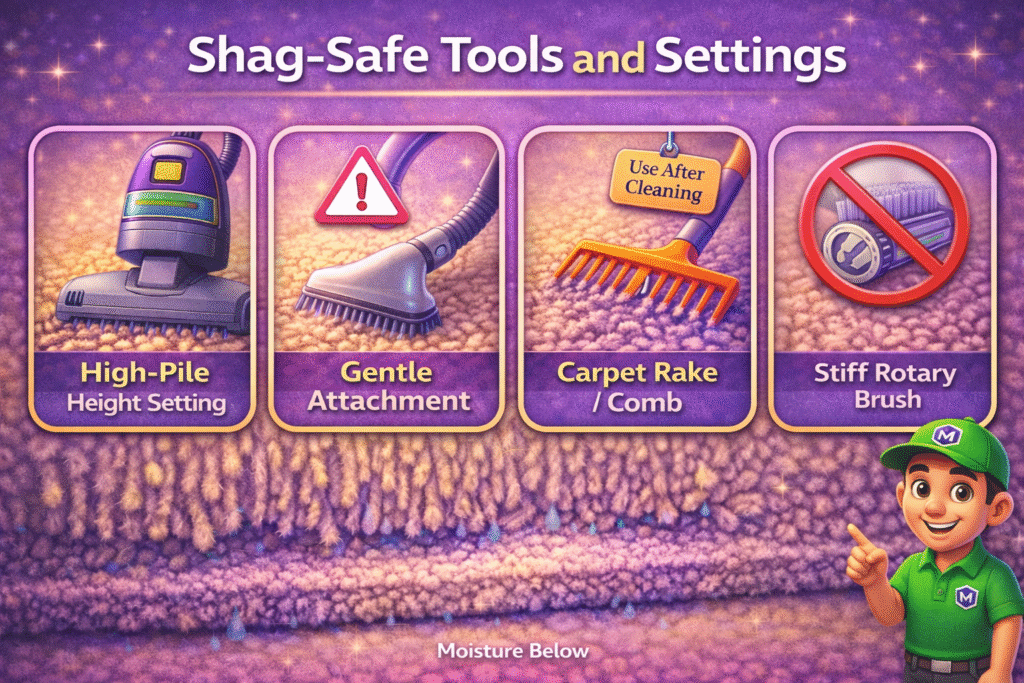
The safe shag cleaning approach: right tools + grooming + airflow
The safest way to clean shag (long pile) carpet is to follow a simple sequence: set up the right tools, use controlled moisture, groom the pile, then finish with a real airflow/drying plan. This protects texture and shortens dry times.
Step 1: Tool setup (vacuum settings and gentle attachments)
Before you do anything wet, set yourself up to avoid tangling or flattening the pile:
- Use a high pile / height adjustment setting so the vacuum glides instead of digging in
- If brush action is tugging or tangling fibers, switch to a gentler mode (or use a hose/attachment where possible)
- Plan to use a carpet rake/comb after cleaning on shag, grooming is part of the process, not an extra
Step 2: Controlled moisture (avoid overwetting)
Shag rewards restraint. Your goal is to use the least moisture that still works:
- Apply solution lightly (mist/dab, don’t pour)
- Avoid repeated wet passes over the same area
- If you’re using a machine, think: one wet pass, then stop adding moisture and move into moisture removal
Step 3: Groom while damp (separate fibers)
Grooming prevents the pile from drying in a clumped or flattened state:
- Use a rake/comb to separate fibers while the carpet is damp (not soaking)
- Work with the pile direction to lift without tearing or tangling
- Don’t press hard, shag responds better to a light, consistent pass than aggressive brushing
Step 4: Drying plan (airflow + optional dehumidifier)
Dry times are where shag wins or loses. Finish with a simple drying plan:
- Get moving air across the carpet (fans aimed across the surface help a lot)
- Use ventilation when weather allows
- If humidity is high, a dehumidifier can speed drying
- Keep traffic off until fully dry, then do a final light grooming pass to restore fluff
For a deeper drying playbook that pairs well with shag, see:
Shag looks flat after cleaning? Matting triage (how to make it fluffy again)
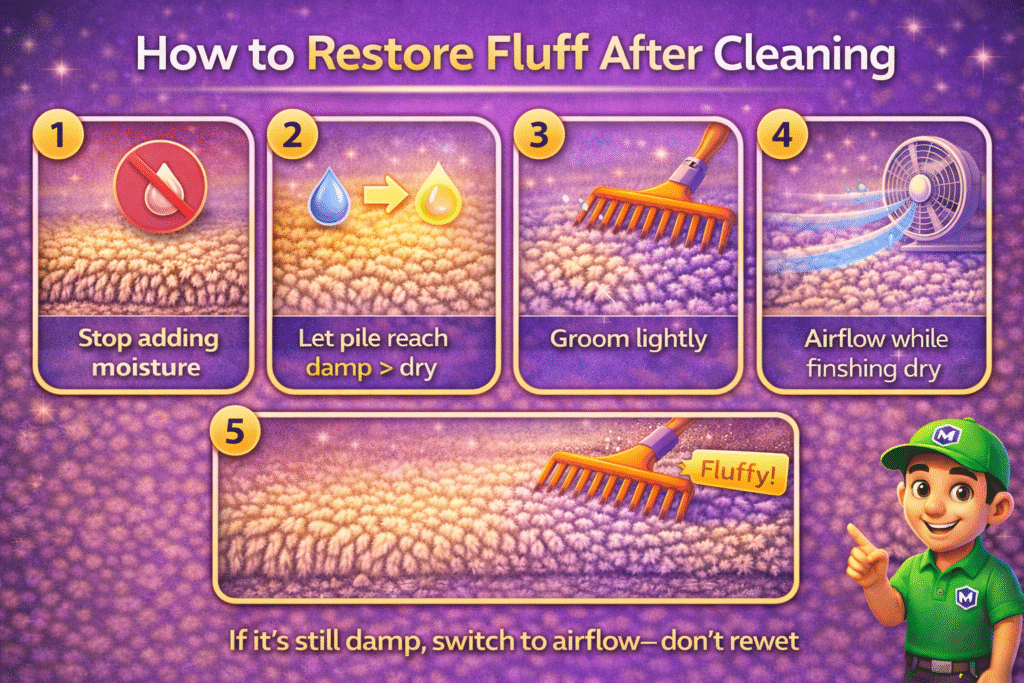
A shag carpet can look “ruined” right after cleaning, especially in traffic areas, but most of the time it’s just pile lay down plus moisture. The fix is timing and grooming, not more water.
How to make shag carpet fluffy again (quick protocol)
- Stop rewetting it. More moisture usually makes matting worse and stretches dry time.
- Let it get mostly dry. Shag fluffs best when it’s damp, but not wet.
- Groom with a carpet rake/comb. Use light pressure and work with the pile direction to lift fibers.
- Keep airflow moving across the surface while it finishes drying.
- Do a second light grooming pass after fully dry (this is where the “fluff” really returns).
What to do if one area is badly flattened
- Focus on airflow + patience first (it’s hard to lift pile that’s still wet deep down).
- Groom lightly, let it dry further, then groom again, shag responds better to multiple gentle passes than one aggressive one.
- If a large section stays crushed or tangled after drying + grooming, that’s a good “call a pro” threshold (especially if the carpet was overwet).
How long does shag carpet take to dry after cleaning?
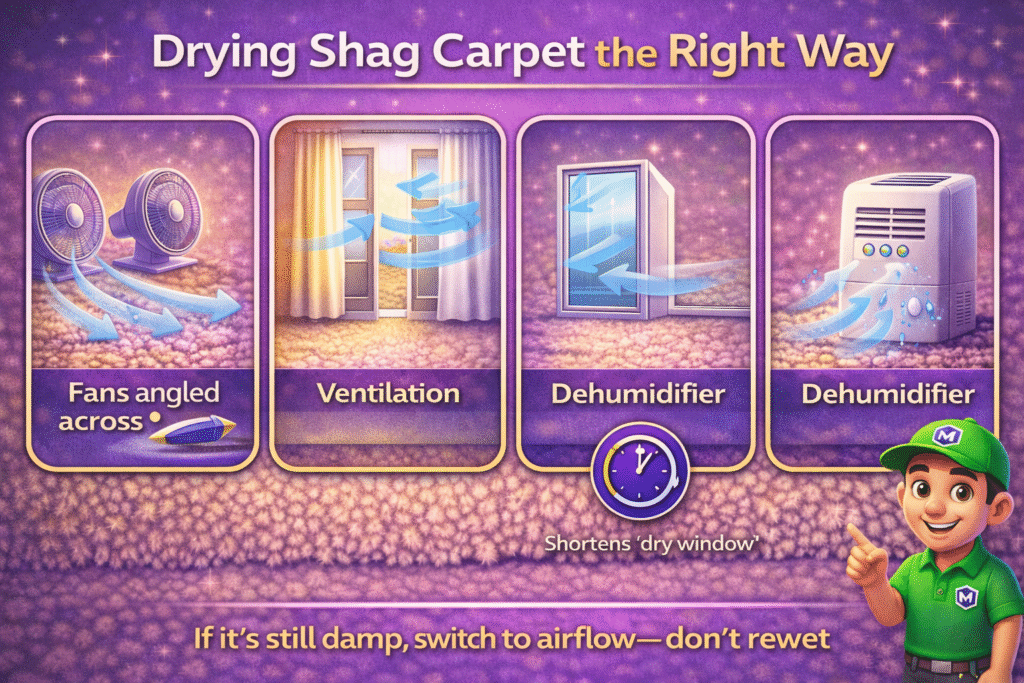
Shag (high pile) carpet often takes longer to dry because the long fibers can hold more moisture. Many carpets dry in about 6-12 hours, but humidity, airflow, pile thickness, and how much moisture was used can extend that. The goal is to shorten the “wet window” with a simple drying plan.
Dry time depends on
- Humidity and airflow (still air = slow drying)
- Moisture used (one controlled pass vs repeated wetting)
- Pile height/density (deeper pile holds more moisture)
- Room temperature (cool, damp rooms dry slower)
Drying plan checklist (shag-friendly)
- Fans aimed across the carpet, not straight down (moving air across the surface helps evaporation)
- Ventilation when weather allows (crack a window/door briefly to swap humid air)
- Dehumidifier if the air is humid or the area is slow to dry
- No heavy foot traffic until fully dry (traffic presses pile down and slows drying)
Practical check: If shag still feels noticeably damp deep in the pile, don’t “freshen it” with more cleaner, switch to airflow and moisture removal.
For a deeper drying playbook that pairs perfectly with shag/high pile, see:
How to spot clean shag carpet without flattening the pile
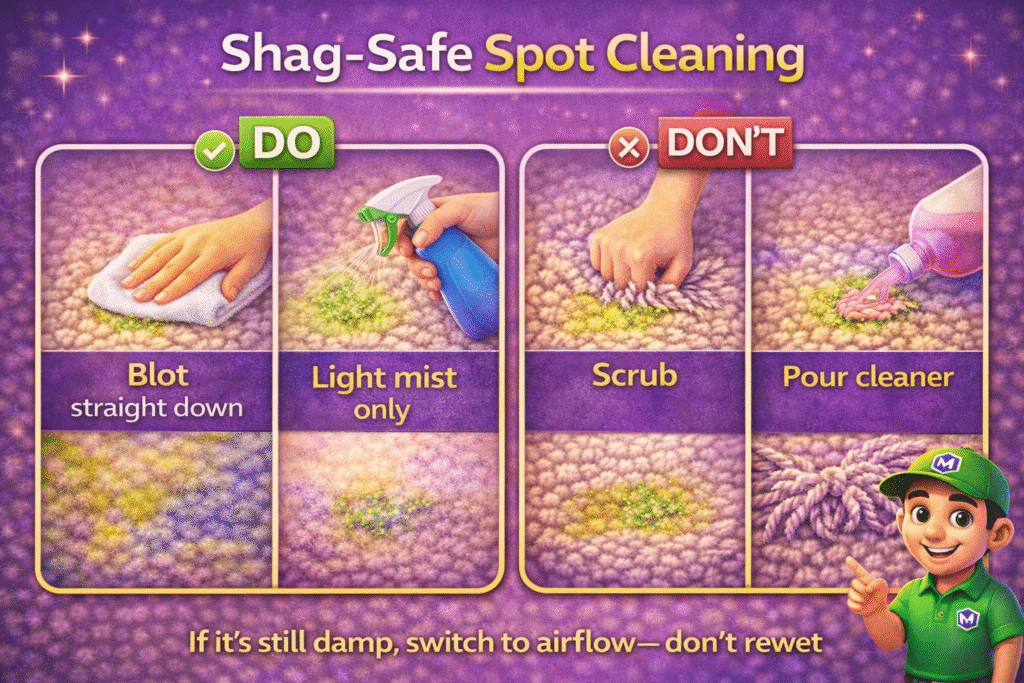
Spot cleaning shag is all about minimal moisture + zero scrubbing + grooming at the right time. If you soak the pile or rub hard, you’re basically inviting matting.
Shag safe spot cleaning steps (quick HowTo)
- Vacuum first (dry soil removal). Pull out grit and crumbs hiding down in the pile.
- Test a hidden area. Dab your cleaner on an inconspicuous spot to confirm it won’t discolor the fibers.
- Use minimal moisture. Lightly mist the surface or apply cleaner to a cloth, don’t pour onto the carpet.
- Blot, don’t rub. Press straight down and lift. Rubbing tangles fibers and flattens the pile.
- Work from the outside in. This helps keep the spot contained.
- Press dry with a clean towel. Put a dry towel on top and press to pull moisture out of the pile.
- Airflow immediately. Aim a fan across the area to shorten dry time.
- Groom after it’s mostly dry. Use a carpet rake/comb with light pressure to lift the fibers back up.
Shortcut that saves shag: If you can’t solve it with light moisture and blotting, don’t escalate to soaking, route to pro spot treatment instead.
Why shag carpet smells musty after cleaning (and what to do)
A musty or damp smell after cleaning shag is usually a sign of slow drying, the pile is still holding moisture deeper than the surface. The solution is almost always airflow + moisture removal, not more cleaner.
Step 1: Is it still damp?
If the carpet feels damp deep in the pile:
- Stop rewetting. Don’t add more cleaner to “freshen it up.”
- Increase airflow (fans moving air across the surface).
- Improve ventilation when weather allows.
- If humidity is high, add a dehumidifier to pull moisture out of the air.
- Keep traffic off until fully dry (foot traffic presses moisture deeper and slows drying).
Step 2: It’s dry, but it still smells
If the carpet feels dry to the touch and the smell persists:
- The odor source may be deeper than the surface (older contamination, moisture that reached lower layers, or a larger affected area than you can see).
- At that point, it’s usually more effective to get a professional clean that’s designed for high pile drying and odor control, without soaking the shag again.
Step 3: When to call a pro (clear thresholds)
Book professional help if:
- A large section was overwet (DIY machine or repeated attempts)
- The carpet stayed damp longer than expected even with airflow
- The musty smell doesn’t improve after thorough drying
- You’re dealing with repeated issues: matting + slow dry times + odor
For a deeper drying playbook (and why drying matters), see:
When to hire a professional for shag (long pile) carpet cleaning
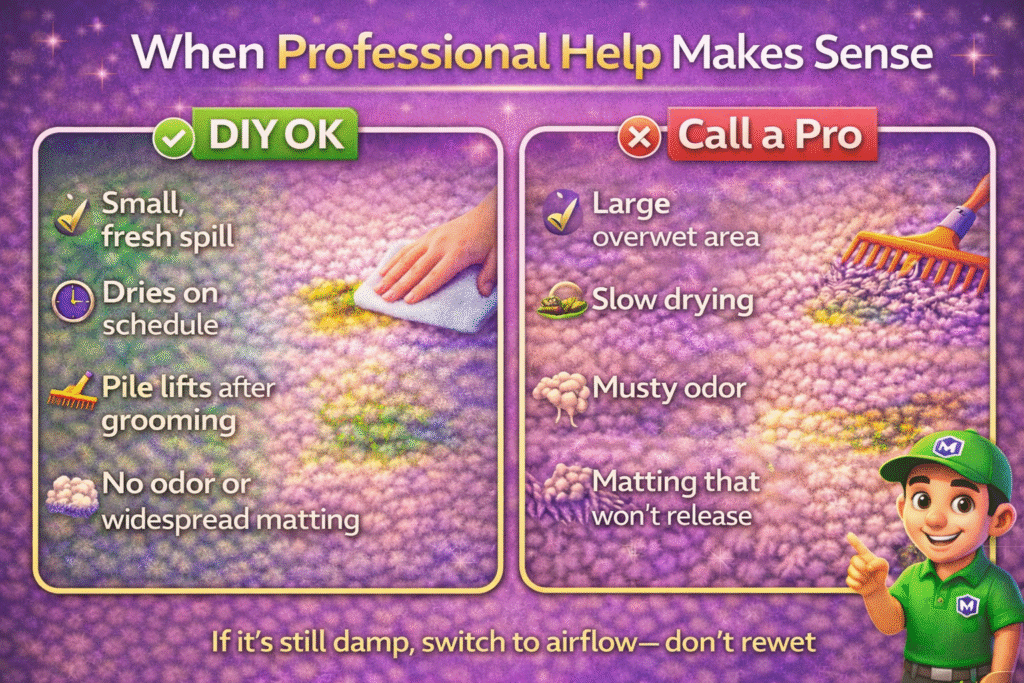
Shag can be cleaned safely at home in small doses, but it’s also one of the easiest carpets to overwet and flatten. If you’re on the fence, use these quick thresholds, because most shag “disasters” happen when people try to force a result with more moisture or more scrubbing.
DIY is OK if
- It’s a small, fresh spill and you can treat it with minimal moisture
- You can blot and press dry without soaking the pile
- The area dries on schedule with airflow
- The pile lifts back up after drying and light grooming
- You’re not dealing with musty smell, widespread matting, or a large traffic lane
Call a pro if
- A section is matted/flattened and doesn’t lift after drying + grooming
- The carpet was soaked (rental machine, repeated wet passes, or large DIY attempt)
- It’s drying very slowly, even with fans/ventilation
- There’s a musty/damp smell that doesn’t improve after thorough drying
- You need an even finish across a large area (shag shows “patch cleaning” fast)
The shortcut rule (prevents the DIY spiral)
If you’ve tried once and your next idea is “use more water” or “scrub harder,” stop there. Shag responds better to less moisture + better moisture removal + grooming + airflow, or professional cleaning designed for long pile.
Shag carpet cleaning FAQs
How do you clean shag carpet without matting it?
Use controlled moisture, avoid aggressive scrubbing, and treat grooming as part of the process. Vacuum first, blot instead of rubbing, press dry to remove moisture, and groom the pile while damp (then again after it’s mostly dry). Strong airflow shortens dry time and helps prevent the pile from drying flat.
How long does shag carpet take to dry after cleaning?
Many carpets dry in about 6-12 hours, but shag/high pile can take longer depending on humidity, airflow, pile thickness, and how much moisture was used. Fans moving air across the surface, and a dehumidifier in humid weather, can shorten dry time. Avoid rewetting “to fix” the look while it’s still drying.
How do I make shag carpet fluffy again after cleaning?
Let it get mostly dry, then groom with a carpet rake/comb using light pressure and working with the pile direction. Keep airflow moving across the surface as it finishes drying, then do a second light grooming pass after it’s fully dry. Fluffing is harder if the pile was overwet or compressed by early foot traffic.
What vacuum setting is best for shag/high pile carpet?
Use a high pile/height adjustment setting so the vacuum glides without digging into the fibers. If brush action is tugging, tangling, or flattening the pile, switch to a gentler mode or use a hose/attachment where possible. Slow passes help pull debris out without beating the pile down.
Can you use a carpet cleaner machine on shag carpet?
Yes, but the main risk is overwetting. Keep it to one controlled wet pass, then do a vacuum only “dry pass” (no spray) to pull moisture out. Finish with grooming and airflow so the pile dries faster and doesn’t set flat.
Why does shag carpet smell musty after cleaning?
A musty smell is often a sign of slow drying, moisture is still trapped in the pile or lower layers. Increase airflow right away and consider a dehumidifier if the air is humid. If the carpet is dry and the odor persists, it’s a good time to call for professional help.
How do you spot clean shag without flattening it?
Vacuum first, use minimal moisture (mist/dab, don’t pour), and blot, don’t rub. Press dry with a clean towel to remove moisture, use airflow immediately, and groom after it’s mostly dry to lift the fibers back up. If the spot spreads or you’ve already soaked the area, professional spot treatment is the safer move.
When should I hire a professional?
Hire a pro if the shag is matted, if a large area was overwet, if dry times are stretching despite airflow, or if a musty smell doesn’t improve after thorough drying. Professional cleaning is also worth it when you want an even finish across a room without patchiness or pile damage.
Author