When it comes to grout cleaning, the brush you choose makes a bigger difference than most people expect.
We see it all the time: homeowners use the wrong brush, spend far too much time scrubbing, and still end up with grout lines that look dirty. In some cases, the wrong tool can even scratch the tile or wear down older grout.
For most grout cleaning jobs, we recommend starting with a nylon bristle brush. It offers enough scrubbing power for everyday grime without the higher risk that comes with harsher tools. From there, the right choice depends on the buildup, the width of the grout line, and the area you’re cleaning.
At Masterful Carpet Cleaning, we help homeowners and businesses throughout Salem with tile and grout cleaning, along with carpet, rug, upholstery, stain removal, and odor removal services. If your grout still looks dark after repeated scrubbing, professional cleaning may save you time, frustration, and unnecessary wear on the surface.
What Type of Brush Is Best for Grout Cleaning?
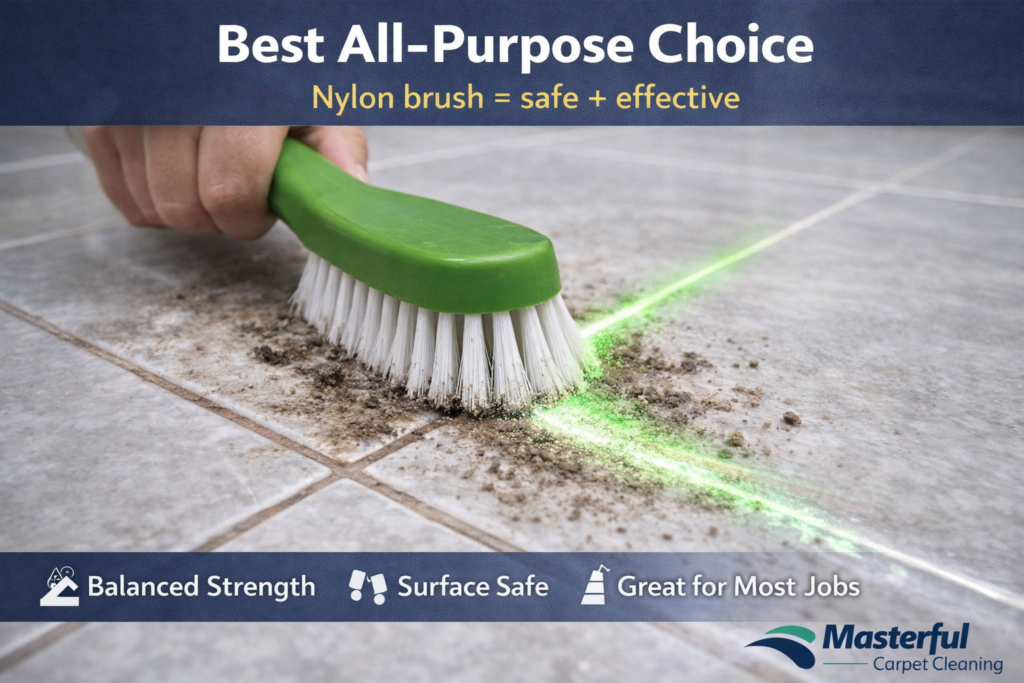
In most cases, the best brush for grout cleaning is a nylon bristle brush.
We recommend nylon because it gives you a solid balance of scrubbing strength and surface safety. It works well for regular grout maintenance without being as aggressive as metal or overly harsh scrubbing tools.
Other brushes still have their place:
- Stiff bristle grout brush: best for heavier buildup
- Narrow grout brush: best for tight grout lines
- Toothbrush or detail brush: best for corners and small areas
- Angled brush: best for awkward edges and fixtures
- Steam brush attachment: best for loosening stubborn grime with less chemical reliance
The goal is not to use the toughest brush. The goal is to use the right brush for the job.
Why Brush Choice Improves Grout Cleaning
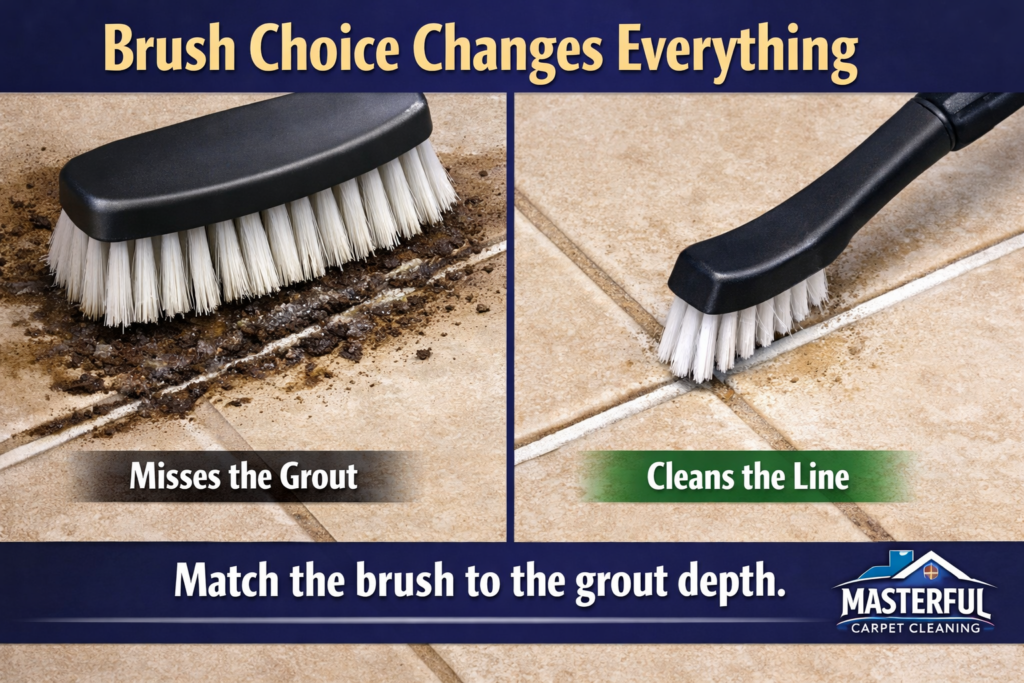
Grout sits lower than the tile surface, which means dirt, residue, and soap scum settle into the line itself. A brush that works fine on the tile face may do very little inside the grout channel.
That’s why the wrong brush often creates problems instead of solving them. It may:
- push dirt around rather than pull it out
- waste effort on the tile surface instead of the grout line
- scratch the surrounding tile
- wear down grout that is already older or fragile
We always recommend matching the tool to the condition of the grout, not just attacking the stain with the most aggressive brush you can find.
Nylon Brushes: The Best All Purpose Choice
If you only keep one grout-cleaning brush at home, this is the one we suggest.
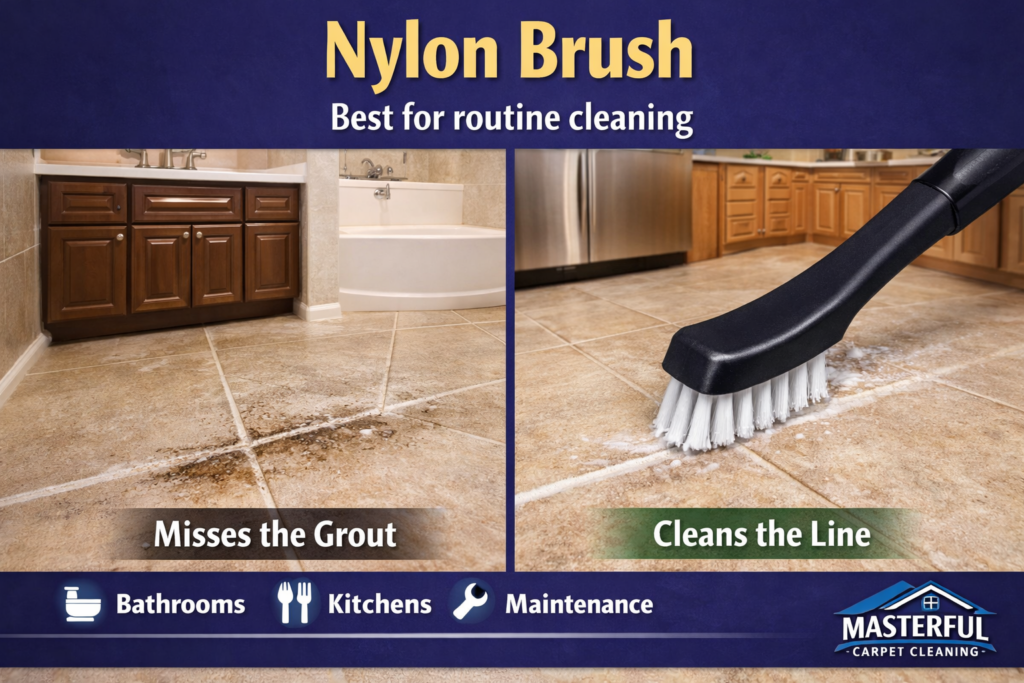
Nylon bristles are effective enough for everyday grout maintenance while still being safe for most tile and grout surfaces. That makes them the most reliable all purpose option for bathrooms, kitchens, and general floor cleaning.
Best uses for a nylon brush
- routine bathroom grout cleaning
- kitchen backsplash grout
- light to moderate floor buildup
- regular maintenance between deeper cleanings
- homes where protecting the tile finish matters
When nylon may not be enough
There are times when a nylon brush won’t cut it on its own. That usually happens when the grout has:
- Deep set staining
- compacted grime
- soap scum buildup over time
- heavier traffic residue on floors
In those cases, we’d move to a stiffer grout brush or a narrower brush that can focus pressure more directly inside the grout line.
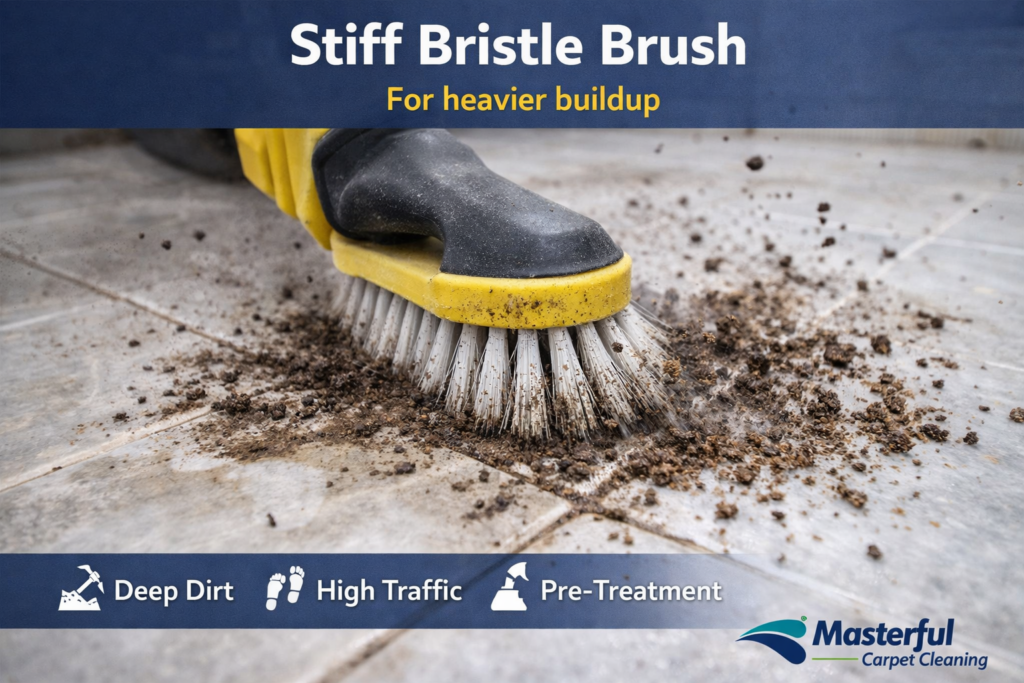
Stiff Bristle Grout Brushes: Better for Heavier Buildup
A stiff bristle grout brush is a good next step when a nylon brush is not getting enough traction.
We like these brushes for heavier buildup, especially on floors or in grout lines that have been neglected for a while. They give you more scrubbing force without immediately jumping to tools that may damage the surface.
Best uses for a stiff bristle grout brush
- neglected bathroom floor grout
- entryway tile with tracked in dirt
- kitchen tile with heavier residue
- pre-treatment before sealing or maintenance
When to use caution
Stiffer is not always better. If the grout is chalky, cracked, flaky, or already recessed, aggressive scrubbing can make the condition worse.
We always suggest starting with the least aggressive brush that still produces results.
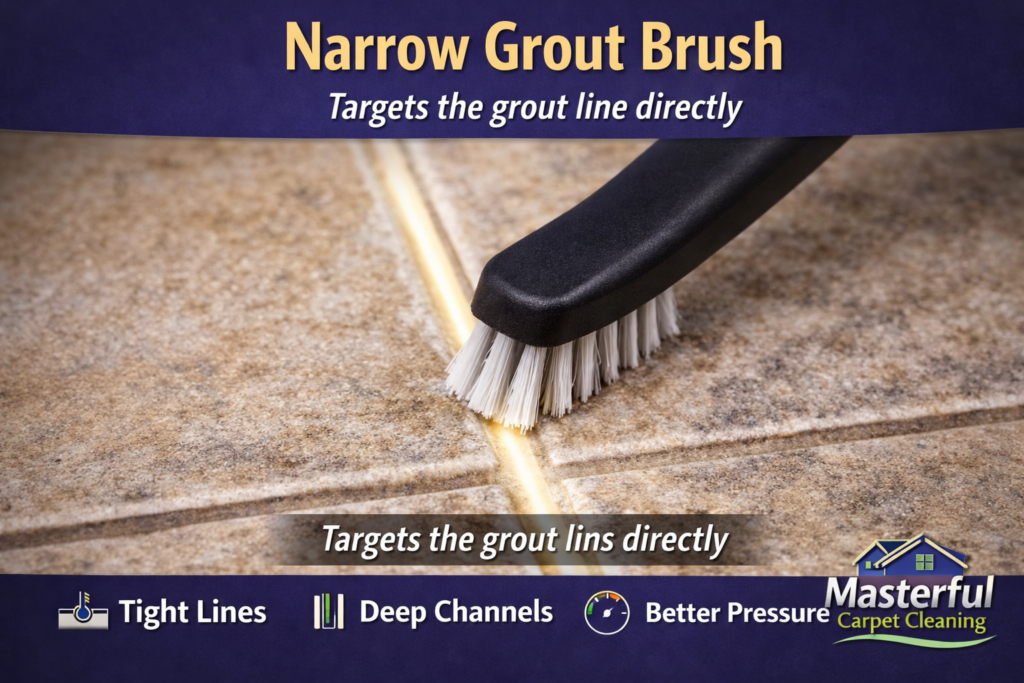
Narrow Grout Brushes: Best for Tight Grout Lines
When the grout lines are tight or recessed, a narrow grout brush usually works better than a general scrub brush.
That’s because a narrow head puts more pressure directly into the grout channel instead of spreading it across the tile. In many cases, this is the difference between grout that gets cleaner and grout that only looks slightly better on the surface.
Best uses for a narrow grout brush
- tight shower grout lines
- closely spaced floor tile
- deep grout channels
- areas where wider brushes skip over the line
Why narrow brushes work better in some areas
A wider brush can clean the tile face well while leaving the grout behind. We recommend narrow grout brushes when the line itself is the problem, not the tile around it.
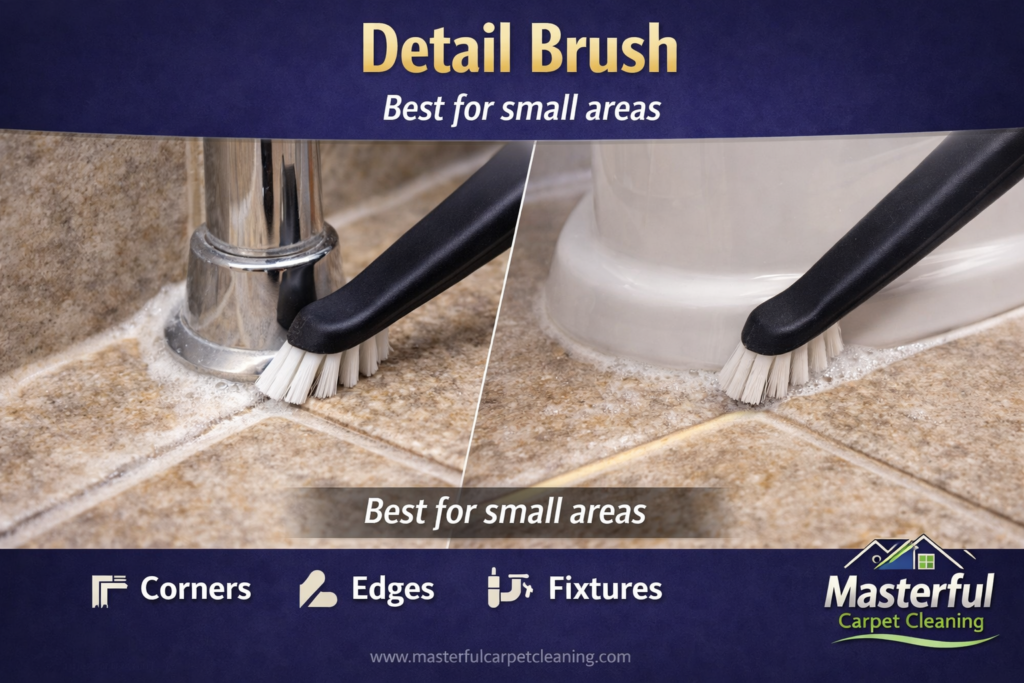
Toothbrushes and Detail Brushes: Best for Small Areas
We don’t recommend a toothbrush for a full grout cleaning job, but we do think it’s useful for detail work.
When you need control more than speed, a small detail brush can help you reach spots that larger grout brushes cannot.
Best uses for a toothbrush or detail brush
- corners
- grout near faucets or fixtures
- around toilet bases
- tile edges
- Touch up cleaning on small stained areas
Where detail brushes fall short
For bigger jobs, they’re simply too slow. The smaller head covers very little ground, and the short handle gives you less leverage. We see them as a support tool, not a primary one.
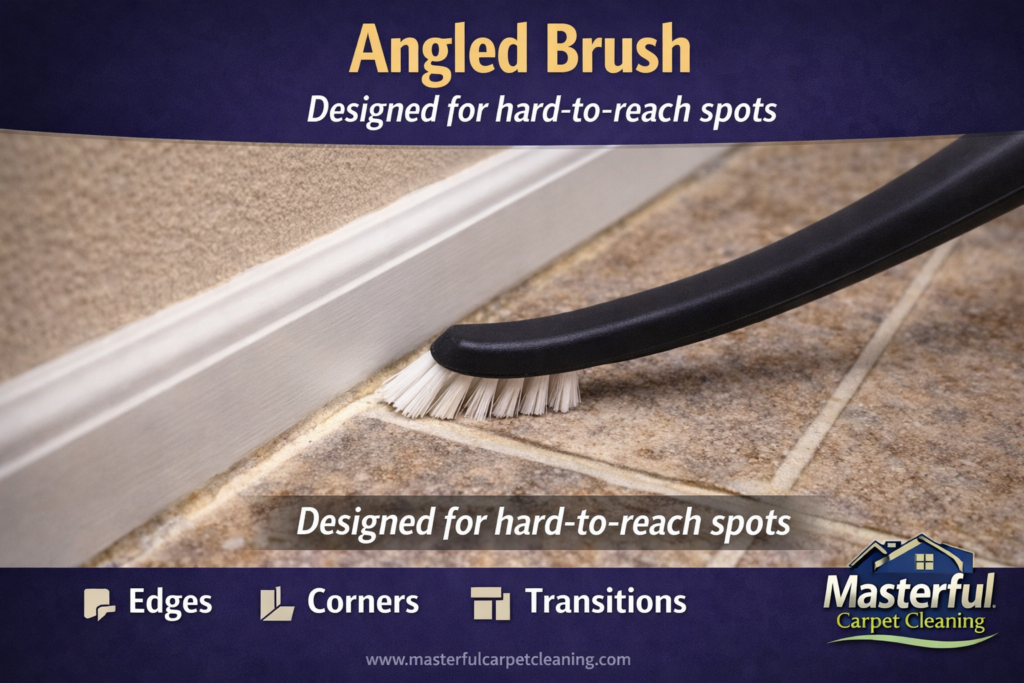
Angled Brushes: Best for Edges and Hard to Reach Areas
Some grout cleaning problems have more to do with access than severity.
That’s where angled brushes come in. We like them for areas where straight brushes feel awkward, especially around edges, fixtures, and tight bathroom layouts.
Best uses for an angled brush
- shower corners
- grout along baseboards
- edges near tubs or vanities
- tile transitions
- hard to reach areas around plumbing fixtures
An angled brush won’t replace your main grout brush, but it can make detail work much easier.
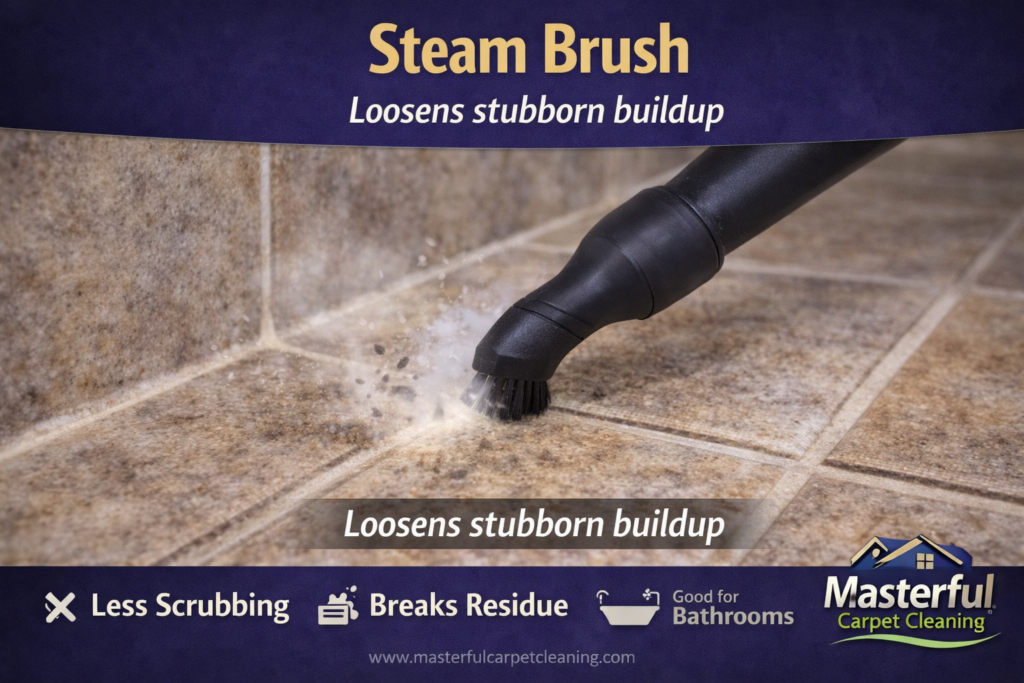
Steam Brush Attachments: Best for Stubborn Grime With Less Force
When buildup is stubborn, steam can help loosen grime before you do the heavy scrubbing by hand.
We like steam brush attachments for bathroom grout, soap scum, and other residue that responds better when heat and moisture break it down first. In some cases, steam can also reduce how aggressive you need to be with manual scrubbing.
Best uses for a steam grout brush
- shower grout
- bathroom tile with soap scum
- sticky or layered residue
- maintenance cleaning where you want to cut back on strong chemicals
Steam is not the answer to every grout problem, but it can make the right brush much more effective.
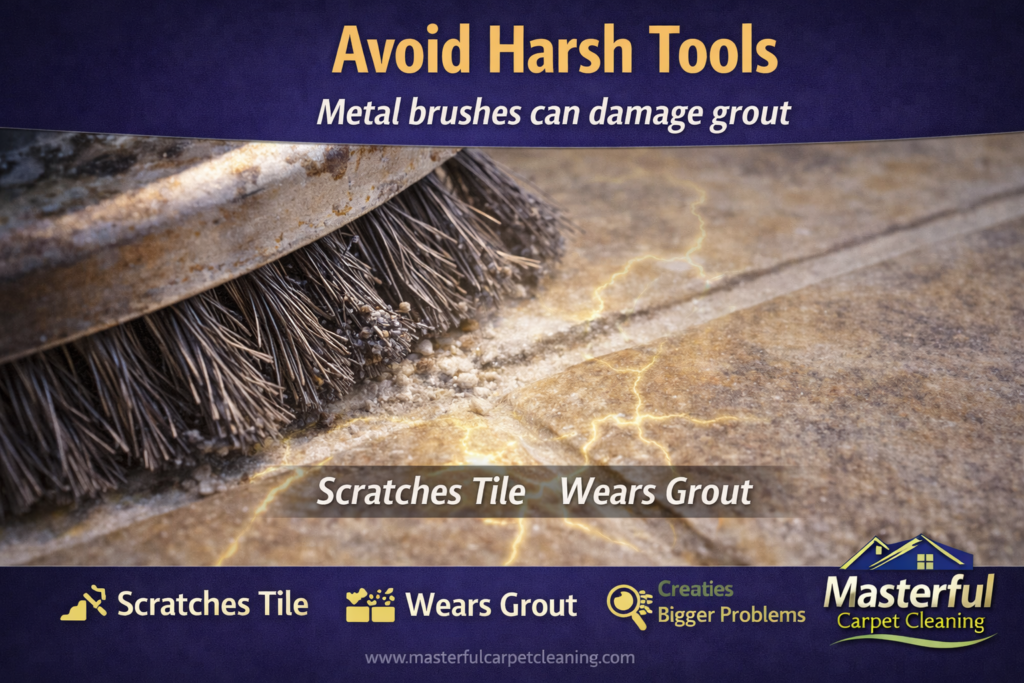
Brushes to Avoid or Use Carefully
One of the biggest mistakes we see is assuming the harshest brush must be the best one.
That usually backfires.
Metal brushes: usually the wrong choice
Wire, steel, and brass brushes are much more aggressive than most grout cleaning jobs require. While they may seem like a quick fix for stubborn dirt, they can scratch tile and wear away grout, especially if the grout is already older or fragile.
For most homeowners, we do not recommend metal brushes for grout cleaning.
Signs your grout is too fragile for aggressive brushing
If you notice any of these signs, stop escalating brush strength:
- sandy or chalky texture
- flaking during scrubbing
- hairline cracks
- recessed grout lines
- visible wear around the tile edges
At that point, the issue may be less about cleaning and more about the condition of the grout itself.
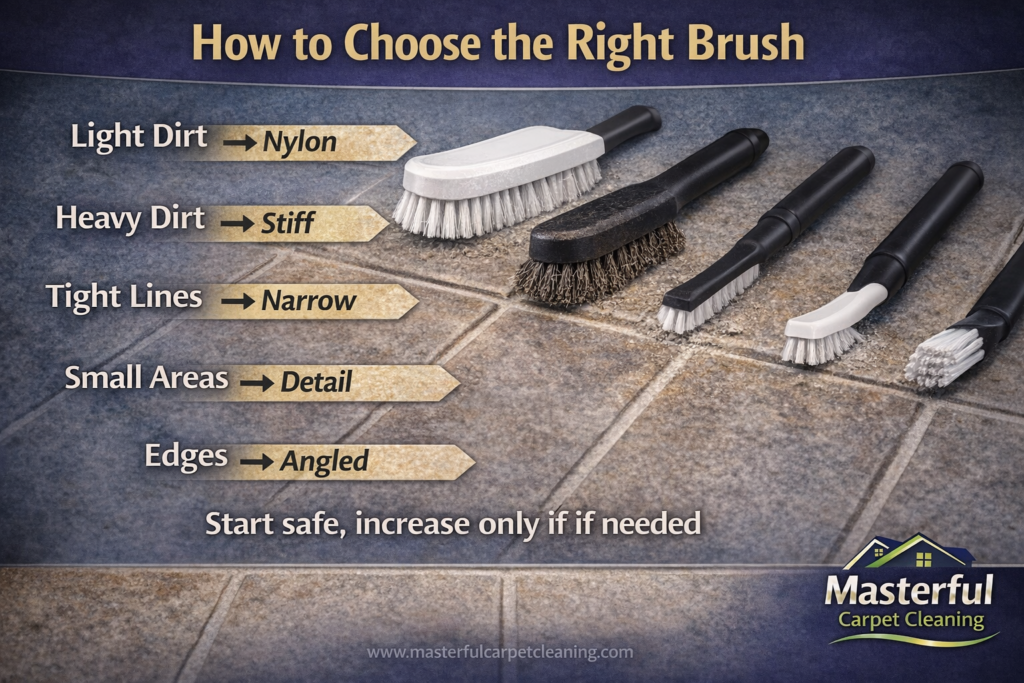
How We Recommend Choosing the Right Brush
The easiest way to decide is to start with the condition of the grout and the size of the space.
Choose a nylon brush if:
- the grout is in decent condition
- you’re doing routine maintenance
- you want the safest all-purpose option
Choose a stiff bristle grout brush if:
- the buildup is heavier
- the area is durable floor grout
- a nylon brush is not strong enough
Choose a narrow grout brush if:
- the grout lines are tight or deep
- you need more precision
- wider heads are not reaching the buildup
Choose a detail brush if:
- the area is small
- the stain is isolated
- you need to clean around fixtures or corners
Choose a steam attachment if:
- the residue is stubborn
- the area is moisture-heavy
- you want to reduce how much force is needed
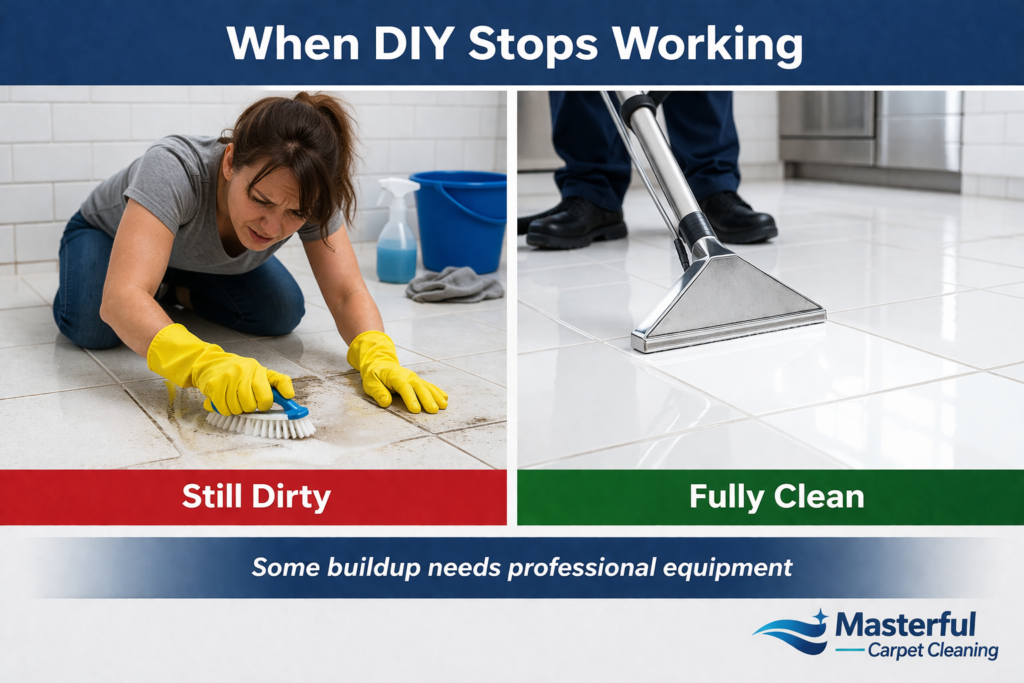
Common DIY Grout Cleaning Mistakes
Even with the right brush, we see a few common mistakes that make grout cleaning harder than it needs to be.
Using the wrong brush size
A brush that’s too wide often cleans the tile better than the grout.
Going too aggressive too early
Starting with a harsh tool can damage grout before you know when a safer brush would have worked.
Using a detail brush for a large job
That usually turns a manageable cleaning task into an exhausting one.
Treating all grout the same
Bathroom grout, kitchen grout, and floor grout don’t all collect the same type of buildup. We always recommend choosing the brush based on the real condition of the area.
When Grout Cleaning Stops Being a DIY Job
Some grout responds well to the right brush. Some doesn’t.
If you’ve used the right tool and the grout still looks dark, patchy, or deeply embedded with residue, it may be time to bring in professional equipment instead of escalating to harsher scrubbing.
At Masterful Carpet Cleaning, we serve homeowners and businesses in Salem, Oregon, and we offer tile and grout cleaning as part of our service lineup. Our site also highlights online booking, free quotes, and a strong review base from local customers.

Need Help With Dingy or Stained Grout?
If your grout still looks dirty after repeated scrubbing, or you don’t want to risk damage from trial and error, we’re here to help.
Contact Masterful Carpet Cleaning to request a quote or book service online. We’ll help you get cleaner grout without the guesswork.
For most grout cleaning jobs, we recommend starting with a nylon brush. From there, a stiff bristle grout brush, narrow grout brush, detail brush, or angled brush may be the better fit depending on the buildup and the space.
The best brush is not the most aggressive one. It’s the one that cleans the grout effectively without creating a bigger problem.
And when DIY methods stop delivering good results, professional grout cleaning is often the smarter next step.
Ready for cleaner tile and grout? Reach out to Masterful Carpet Cleaning today and let us do the hard work for you.
FAQ Section
What type of brush is best for grout cleaning?
We usually recommend a nylon bristle brush because it gives you a strong balance of cleaning power and surface safety.
Is a toothbrush good for cleaning grout?
It can be, but mostly for corners, edges, and small problem spots. For larger jobs, we recommend using a true grout brush.
Can a wire brush damage grout?
Yes. Wire brushes can scratch tile and wear down grout, especially if the grout is older or already fragile.
What brush works best for narrow grout lines?
A narrow grout brush works best because it puts the scrubbing pressure where it belongs: inside the grout line.
When should I call a professional for grout cleaning?
If the grout stays dark after repeated cleaning, the buildup is deeply embedded, or the grout looks too delicate for aggressive scrubbing, it’s usually time to call in professional help.
Author