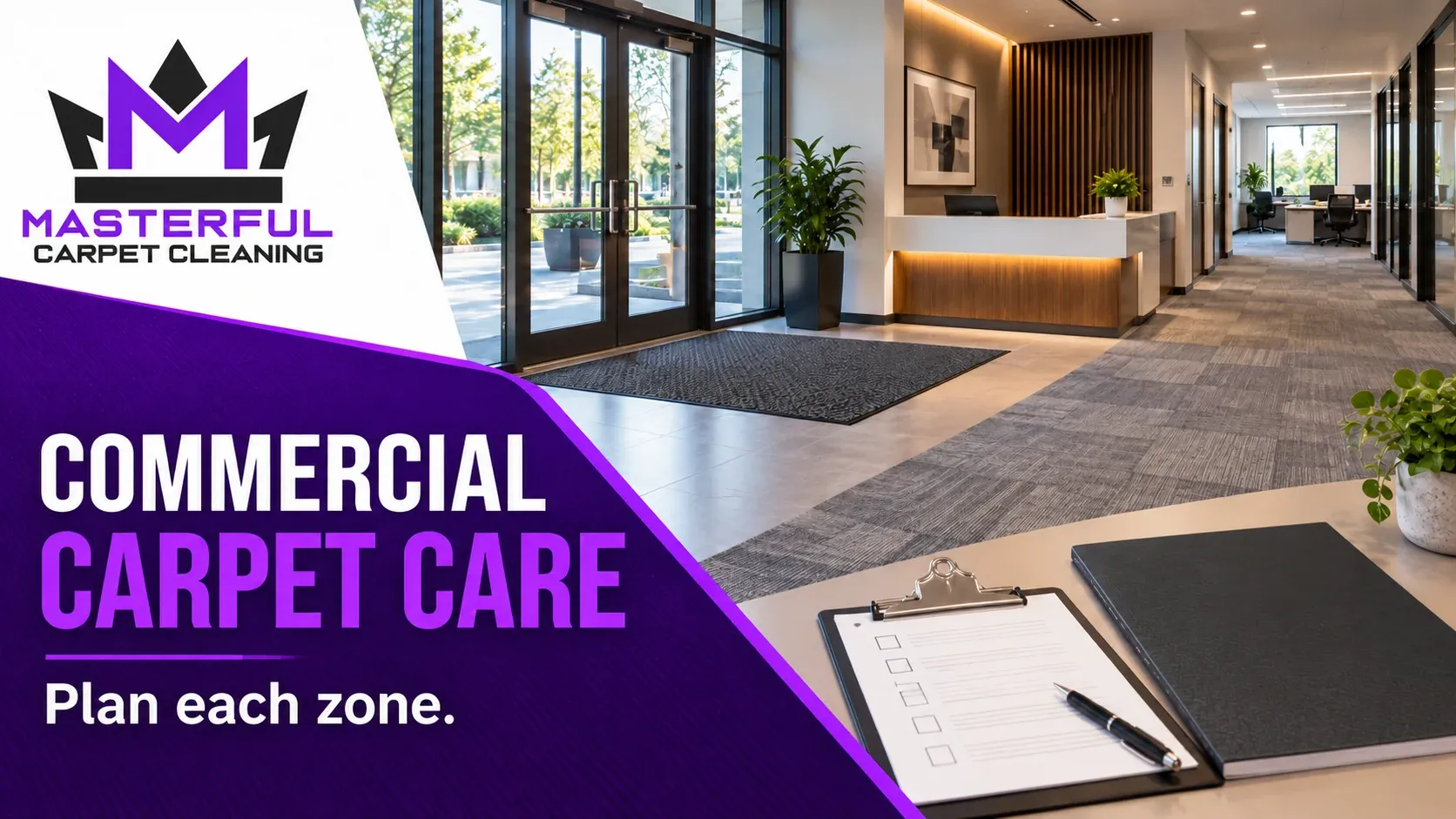
Commercial carpet cleaning contracts give Salem area businesses a recurring cleaning schedule, defined scope of work, and clearer budget for keeping carpet cleaner across the year. A strong plan identifies high traffic zones, cleaning frequency, spot treatment rules, access needs, dry time, and add on services before carpet problems become urgent.
Need a recurring carpet cleaning plan for your business? Contact Masterful Carpet Cleaning to discuss traffic level, cleaning frequency, access, dry time, and scope.
What Is a Commercial Carpet Cleaning Contract?
A commercial carpet cleaning contract is a recurring maintenance plan for a business, office, clinic, retail space, property managed building, church, school, or customer facing facility. Instead of waiting until carpet looks worn or stained, the business sets a cleaning schedule and service scope in advance.
A good commercial carpet cleaning contract can define:
- which carpeted areas are included
- how often service happens
- which high traffic zones need extra attention
- how spots and stains are handled
- how odor concerns are handled
- when cleaning can happen
- how access will work
- how dry time will be planned
- which services are included
- which services need approval as add ons
- how the business will request extra visits
The goal is planned maintenance, not last minute recovery cleaning. Entryways, lobbies, hallways, waiting rooms, corridors, break rooms, and customer facing carpet can look worn faster than private offices. A recurring plan helps those areas stay on schedule.
For a broader service overview, start with Commercial Carpet Cleaning. For a local request, use Carpet Cleaning in Salem, OR.
When a Recurring Carpet Cleaning Plan Is Worth It
A recurring commercial carpet cleaning plan is worth considering when the same carpet problems keep returning. If your business keeps calling for one time cleaning after the carpet already looks bad, a contract can make the work easier to plan and easier to budget.
A recurring plan may be a better fit when:
- entryways darken quickly
- hallway traffic lanes return fast
- waiting rooms or lobbies need to look presentable
- customers see the carpet every day
- staff track soil from outside
- spills happen often
- odor complaints return
- janitorial vacuuming is not enough
- property managers handle several spaces
- seasonal cleaning is hard to schedule at the last minute
- the business wants more predictable cleaning spend
Recurring commercial carpet cleaning is especially useful for spaces with steady foot traffic. Offices, clinics, retail stores, churches, schools, community rooms, managed buildings, and service businesses often need a plan that matches how people move through the space.
One Time Carpet Cleaning vs. Recurring Contract
One time cleaning can work for a yearly refresh, a move in, a move out, or a special event. A recurring contract fits better when carpet wear follows a pattern.
| Situation | One Time Cleaning | Recurring Contract |
|---|---|---|
| Annual refresh | Good fit | May not be needed |
| Regular customer traffic | May fall behind | Better fit |
| Waiting rooms or clinics | Often not enough | Better fit |
| Retail entryways | Reactive only | Better fit |
| Multi tenant building | Hard to manage separately | Better fit |
| Frequent spots or spills | Urgent calls repeat | Planned support works better |
| Budget planning | Uneven spend | More predictable spend |
| High traffic lanes | Cleaned after they look bad | Maintained before they look severe |
| Seasonal mud or rain | Helps after buildup | Can be planned before peak soil |
| Add on services | Handled visit by visit | Can be included or pre approved |
A contract does not need to include every carpeted room on the same schedule. Many businesses use a high traffic zone plan for entries, lobbies, hallways, and waiting areas, with deeper whole space cleaning scheduled less often.
What a Commercial Carpet Cleaning Contract Should Include
A useful contract should be clear enough for the business and the cleaning provider to follow without confusion. It should describe the service areas, schedule, communication process, and approval rules for extra work.
| Contract Item | Why It Helps | Ask Before Starting |
|---|---|---|
| Service frequency | Sets the visit rhythm | Monthly, quarterly, seasonal, or custom? |
| Covered areas | Defines what is cleaned | Which rooms, halls, entries, stairs, and offices are included? |
| High traffic zones | Focuses attention where carpet soils fastest | Are entries, lobbies, hallways, and waiting rooms treated differently? |
| Cleaning method | Matches soil level and business needs | Is hot water extraction, low moisture cleaning, or another method best? |
| Spot treatment rules | Prevents confusion about stains | What is included during routine service? |
| Odor treatment rules | Clarifies special cases | Is odor treatment included or quoted separately? |
| Add on approvals | Controls unexpected costs | Who approves extra work? |
| Access instructions | Reduces scheduling delays | Who opens the building and when? |
| Parking and equipment access | Helps the crew plan the job | Is truck mounted access available? |
| Dry time expectations | Protects business operations | How long before staff or customers use the carpet? |
| Billing contact | Keeps invoicing organized | Who receives invoices and service notes? |
| Service notes | Helps track recurring issues | Will the business receive notes after visits? |
A commercial carpet cleaning contract is not legal advice. It is a practical service plan. For legal contract language, lease requirements, vendor terms, or procurement rules, a business should use its own policy and qualified counsel.
Routine Work, Add Ons, and Special Visits
One of the most important parts of a commercial carpet cleaning contract is the service boundary. The plan should say what is included every visit and what needs separate approval.
Routine work
Routine work may include carpet cleaning for the scheduled areas, high traffic zone attention, basic spot review, normal soil removal, and post service notes.
Periodic deeper cleaning
Some areas may not need cleaning every visit. Private offices, conference rooms, storage areas, and low use spaces may be placed on a quarterly, seasonal, or annual rotation.
Spot and stain add ons
Some stains need extra time, different chemistry, or repeat treatment. Stain removal can be included in the plan or handled as an approved add on.
Related service: Stain Removal and Protection in Salem, OR
Odor treatment
Odor concerns from spills, moisture, pets, food, or heavy use may need separate evaluation. Odor treatment should be discussed before the plan is written.
Related service: Pet Urine and Odor Removal in Salem, OR
Carpet protector
Carpet protector can help high traffic carpet resist spills and soil after cleaning. It is often most useful in entryways, waiting areas, corridors, and customer facing spaces.
Related service: Carpet Protector Application
Emergency visits
A recurring plan should explain how extra visits are requested when a spill, event, leak, odor, or urgent issue happens between scheduled cleanings.
How Often Should Businesses Schedule Carpet Cleaning?
The right schedule depends on business type, foot traffic, carpet color, soil load, customer visibility, weather, spills, and how fast traffic lanes return after cleaning. The table below gives a planning starting point.
| Business Type | Typical Traffic Pattern | Suggested Planning Rhythm |
|---|---|---|
| Small office | Light to moderate staff traffic | Quarterly or seasonal |
| Shared office | Moderate staff and visitor traffic | Every other month or quarterly |
| Retail space | Heavy entry and customer traffic | Monthly or high traffic zone plan |
| Clinic or waiting room | Steady visitor traffic | Monthly or every other month |
| Church or community space | Event based traffic | Before and after busy seasons |
| Property managed building | Mixed tenant and visitor traffic | Custom schedule by zone |
| Restaurant or break heavy space | Spills, oils, food residue | Frequent spot support plus deep cleaning |
| School or training center | Periodic heavy foot traffic | Seasonal or semester based |
| Professional service lobby | Visible customer traffic | Monthly, bi monthly, or quarterly |
| Multi tenant corridor | Repeated shared traffic | High traffic zone plan |
Frequency should be adjusted after service history builds. If traffic lanes return quickly, the business may need shorter intervals in selected zones. If carpet stays clean longer, the plan can focus on seasonal maintenance and spot support.
Which Areas Should Be Included in the Plan?
A commercial carpet cleaning contract should focus on the areas that affect appearance, safety, odor, and customer experience first.
Entryways and lobbies
Entryways carry the heaviest soil load. Dirt, rain, leaves, grit, and outdoor debris often enter here first. Lobbies also create the first visual impression for customers, patients, tenants, or guests.
Hallways and walk paths
Hallways and walk paths collect repeated foot traffic. These areas often develop dark lanes before rooms show obvious soil.
Reception and waiting rooms
Waiting rooms hold customer traffic, food and drink spills, body oils, tracked in soil, and chair movement. Clinics, offices, salons, and service businesses should watch these areas closely.
Conference rooms
Conference rooms may collect coffee spills, food residue, chair marks, and traffic around tables.
Offices and workstations
Workstations can develop chair marks, foot paths, and soil under desks. They may not need the same frequency as entries, but they should be part of a rotation.
Break rooms
Break rooms often collect food residue, drink spills, grease, and sticky spots. These areas may need spot treatment or more frequent cleaning.
Stairs and corridors
Stairs and corridors concentrate traffic. They may need targeted maintenance between full cleanings.
Customer facing zones
Any area seen by customers, patients, tenants, guests, or visitors should be prioritized. Visible carpet affects how clean the business feels.
What Services Can Be Added to a Commercial Carpet Cleaning Plan?
A commercial carpet cleaning contract can include more than routine carpet cleaning. Add ons should match the building’s use, soil load, and customer expectations.
Common add ons include:
Spot treatment
Useful for spills, food marks, coffee, ink, mud, tracked in soil, and isolated stains.
Service link: Stain Removal and Protection in Salem, OR
Carpet protector
Useful for entryways, lobbies, hallways, waiting rooms, and customer facing carpet.
Service link: Carpet Protector Application
Upholstery cleaning
Useful for waiting room chairs, lobby seating, office furniture, and conference room seating.
Service link: Upholstery Cleaning
Rug cleaning
Useful for entry rugs, lobby rugs, waiting area rugs, and decorative rugs.
Service link: Rug Cleaning
Tile and grout cleaning
Useful for hard surface entries, restrooms, break rooms, hallways, and transition areas.
Service link: Tile and Grout Cleaning in Salem, OR
Odor treatment
Useful for musty areas, spills, pet related problems, food odor, or recurring odor complaints.
Service link: Pet Urine and Odor Removal in Salem, OR
Why Contracts Help Control Cleaning Costs
A commercial carpet cleaning contract does not mean every visit is the cheapest possible visit. It means the business has a clearer plan for timing, scope, traffic areas, and budget.
Recurring plans can help control costs by:
- reducing last minute service calls
- cleaning high traffic zones before they look severe
- helping managers plan annual maintenance spend
- keeping service records for recurring issues
- separating routine work from add on work
- reducing overcleaning in low traffic areas
- focusing more attention on entries and walk paths
- helping carpet stay presentable between deeper cleanings
Delayed cleaning can turn routine maintenance into recovery work. Traffic lanes, residue, old spills, and odor concerns often take more effort after they sit for too long.
Trying to budget across the year? Review Carpet Cleaning Cost and then ask Masterful for a commercial plan based on your building, traffic, and service frequency.
Related planning resource: Carpet Care Cycle
Commercial Cleaning Method and Dry Time
The cleaning method should fit the business, carpet type, soil level, schedule, and dry time needs. A busy lobby may need a different plan than private offices or low traffic meeting rooms.
Hot water extraction
Hot water extraction is often used for deeper soil removal. It can help flush soil, residue, and contaminants from carpet fibers when the carpet needs a stronger clean.
Related resource: Hot Water Extraction Carpet Cleaning
Low moisture options
Some commercial spaces may need lower moisture cleaning in selected areas, depending on business hours, carpet type, and dry time needs.
Related resource: Carpet Cleaning Methods
Dry time planning
Dry time should be discussed before service. Businesses may need cleaning after hours, during closed days, before low traffic periods, or in sections so staff and customers can move safely.
Dry time is affected by:
- cleaning method
- carpet density
- airflow
- humidity
- soil level
- building ventilation
- number of areas cleaned
- furniture placement
- time before reopening
Avoid over wetting commercial carpet. Slow drying can create odor concerns and disrupt business use.
Related resource: Over Wetting Carpets: Risks, Mold and Odors
Carpet Residue, Wick Back, and Repeat Spots in Businesses
Commercial carpet often collects repeat spots because of drinks, food, tracked in soil, old cleaner residue, and heavy traffic. A plan should address why spots return, not only how the carpet looks right after cleaning.
Carpet residue
Residue can come from old spot cleaners, too much detergent, poor rinsing, or sticky spills. Sticky carpet attracts more soil and can make traffic lanes look dirty faster.
Read more: Carpet Residue
Wick back
Some spots return after drying because material from deeper in the carpet moves upward. This is common when spills reached the backing or when too much moisture was used.
Read more: Wick Back After Carpet Cleaning
Repeat spill zones
Break rooms, coffee stations, retail counters, waiting rooms, and conference rooms often need spot rules in the plan. These zones should be checked at each visit.
What To Prepare Before Requesting a Commercial Quote
A clear quote request helps Masterful Carpet Cleaning recommend a better plan. Before asking for a commercial carpet cleaning contract quote, gather the basic details.
Commercial Quote Prep Checklist
Prepare:
- business name
- business type
- service address
- square footage if available
- number of carpeted rooms
- entryways and lobby areas
- hallways and corridors
- waiting rooms or customer areas
- stairs
- break rooms
- conference rooms
- high traffic zones
- photos of problem areas
- stain concerns
- odor concerns
- preferred cleaning days
- preferred cleaning times
- after hours access instructions
- parking or equipment access details
- billing contact
- decision maker contact
- desired service frequency
- any upcoming events or deadlines
Photos can help the first conversation. Include wide room photos and close ups of traffic lanes, stains, or worn looking areas.
Contact Masterful Carpet Cleaning to discuss a recurring plan for your business.
Questions To Ask Before Starting a Contract
Before starting a commercial carpet cleaning contract, ask practical questions that prevent confusion later.
Helpful questions include:
- Which areas are included every visit?
- Which areas rotate quarterly or seasonally?
- Which high traffic zones get extra attention?
- What cleaning method fits our carpet and schedule?
- What counts as included spot treatment?
- What needs add on approval?
- How is odor treatment handled?
- What dry time should we plan for?
- Can cleaning happen after business hours?
- What access instructions are needed?
- How are extra visits requested?
- Will we receive service notes?
- Can the schedule change after service history builds?
- Who approves extra work?
- How are recurring invoices handled?
The best plan is simple enough to use and flexible enough to adjust when traffic changes.
Commercial Carpet Cleaning for Different Business Types
Different business types need different cleaning priorities.
Offices
Office carpet often needs attention in entryways, hallways, workstations, conference rooms, and break areas. Private offices may be placed on a slower rotation.
Clinics and waiting rooms
Clinics and waiting rooms have steady visitor traffic. Reception areas, hallways, and seating zones may need more frequent cleaning.
Retail spaces
Retail spaces often need entryway and checkout zone attention. Rain, outdoor soil, and customer traffic can create visible lanes.
Churches and community spaces
Churches and community spaces may need cleaning around events, seasonal use, childcare areas, and shared meeting spaces.
Schools and training centers
Classrooms, corridors, offices, and shared areas may benefit from seasonal cleaning and targeted high traffic work.
Property managed buildings
Property managers may need a plan for corridors, lobbies, tenant spaces, stairs, and shared rooms. Multi tenant buildings often work best with a zone based schedule.
Restaurants and break heavy spaces
Food spills, grease, odors, and drink spills may call for more frequent spot review and deep cleaning.
Local Commercial Carpet Cleaning Service Areas
Masterful Carpet Cleaning provides commercial carpet cleaning and recurring carpet maintenance planning for Salem area businesses and nearby Oregon service areas.
Priority service links:
- Commercial Carpet Cleaning
- Carpet Cleaning in Salem, OR
- Carpet Cleaning in Albany, OR
- Carpet Cleaning in Corvallis, OR
- Carpet Cleaning in Keizer, OR
- Carpet Cleaning in McMinnville, OR
- Carpet Cleaning in Newberg, OR
- Carpet Cleaning in Woodburn, OR
Trust and booking links:
Commercial Carpet Cleaning Contracts FAQ
What is a commercial carpet cleaning contract?
A commercial carpet cleaning contract is a recurring maintenance plan that defines the cleaning schedule, carpeted areas covered, service scope, access needs, billing basics, and add on rules for a business.
How often should a business schedule carpet cleaning?
The right schedule depends on foot traffic, carpet visibility, business type, spills, entry soil, and how fast traffic lanes appear. Small offices may need quarterly service, while retail spaces, clinics, and waiting rooms may need more frequent cleaning.
Is a contract better than one time carpet cleaning?
A contract is often better when carpet problems repeat in the same areas. One time cleaning can work for annual refreshes, but recurring service gives better control over traffic lanes, entryways, spills, and budget planning.
What should be included in a carpet cleaning contract?
A good contract should define service frequency, covered rooms, high traffic zones, cleaning method, spot treatment rules, odor treatment rules, dry time expectations, access, billing, and add on service terms.
Can a commercial carpet cleaning contract include stain removal?
Yes. Stain removal can be included or listed as an add on. The plan should explain what is covered during routine visits and what requires extra time or a separate quote.
Can a plan focus only on high traffic areas?
Yes. Many businesses do not need every carpeted room cleaned on the same schedule. Entryways, lobbies, hallways, waiting rooms, and walk paths often need more frequent attention.
Do offices and retail spaces need the same cleaning schedule?
No. Retail spaces and clinics often have heavier public traffic than private offices. The schedule should match how the building is used, not just the square footage.
What should I prepare before asking for a quote?
Prepare the business type, square footage, carpeted zones, traffic concerns, stains, odor issues, preferred cleaning times, access details, parking information, and billing contact.
Can cleaning be scheduled after business hours?
Many commercial plans can be shaped around access, hours, parking, and dry time needs. Ask about scheduling options before the plan is written.
Does carpet cleaning replace daily janitorial vacuuming?
No. Recurring professional carpet cleaning supports routine maintenance, but daily or regular vacuuming is still important for entryways, hallways, and high traffic areas.
Request a Commercial Carpet Cleaning Contract Quote
Keep your business carpet cleaner with a recurring plan instead of last minute recovery cleaning. Masterful Carpet Cleaning can help you plan service frequency, scope, access, dry time, spot treatment, and add on services for your building.
- Contact Masterful Carpet Cleaning
- Book Online
- Commercial Carpet Cleaning
- Carpet Cleaning in Salem, OR
- Stain Removal and Protection in Salem, OR
- Carpet Protector Application
Related Commercial Carpet Care Resources
- Commercial Carpet Cleaning
- Carpet Maintenance Category
- Carpet Cleaning Cost
- Carpet Care Cycle
- Carpet Cleaning Aftercare
- Hot Water Extraction Carpet Cleaning
- Carpet Cleaning Methods
- Carpet Residue
- Wick Back After Carpet Cleaning
- Over Wetting Carpets: Risks, Mold and Odors
- Upholstery Cleaning
- Rug Cleaning
- Tile and Grout Cleaning in Salem, OR