The useful carpet care technology is the one that performs the job your carpet needs. A robot or upright vacuum collects loose dry soil. A fresh spill needs prompt, careful first steps. An extractor applies liquid and recovers some of it. A professional cleaning visit may be appropriate for embedded soil or a mark that ordinary care leaves behind. A map, app or powerful motor does not turn one job into another.
Before buying a device or cleaner, check the installed carpet’s fiber, pile and care instructions. Then compare the specific model’s head, brush, mop control, solution and maintenance directions with that carpet. Features vary by model and software. No tool can promise that every edge is reached, every stain disappears or a damaged fiber is restored.
Match the carpet problem to the tool’s physical job
Start with the soil or mark, not a list of device features. Loose grit calls for a suitable dry vacuum. A new liquid spill calls for careful containment and blotting. An old mark, broad embedded soil or recurring odor calls for more information before a wet machine is used. Damage or an active water source needs its own assessment.
Scroll the table sideways to compare each tool and its limit.
| Option | Job it can help with | Compatibility check | What it cannot establish |
|---|---|---|---|
| Robot dry vacuum | Collect some loose dry soil on reachable carpet through scheduled passes. | Check pile and fringe limits, brush, transitions, room barriers, bin upkeep and mop settings on the exact model. | A map or completed route does not prove every edge was cleaned or that embedded soil or stains were removed. |
| Conventional vacuum | Collect loose soil with a chosen head, settings and edge attachment. | Match brush, height and suction to the installed carpet and machine directions. | Repeated dry passes cannot remove every sticky residue, old stain or pile change. |
| Clean cloth and approved spot product | Blot a fresh ordinary spill; treat a remaining mark only when permitted. | Identify the spill; check carpet and product labels, hidden test and application directions. | A surface improvement cannot prove that backing, pad or an odor source is clear. |
| Home carpet extractor | Apply approved solution and recover liquid from a suitable carpet. | Confirm carpet permission, machine condition, solution, water recovery and drying plan. | It does not guarantee stain removal, sanitation or a fixed drying time. |
| Professional carpet cleaning inquiry | Assess embedded soil or a mark that suitable home care leaves behind. | Share carpet identity, stain history, prior products, damage and moisture; agree on scope. | Cleaning cannot rebuild missing fiber, restore lost dye or repair a water source. |
Our carpet care tool kit guide lists the small set of items worth keeping for ordinary care. This page explains what newer features change, and what they do not.
Judge a robot vacuum by the carpet and the room
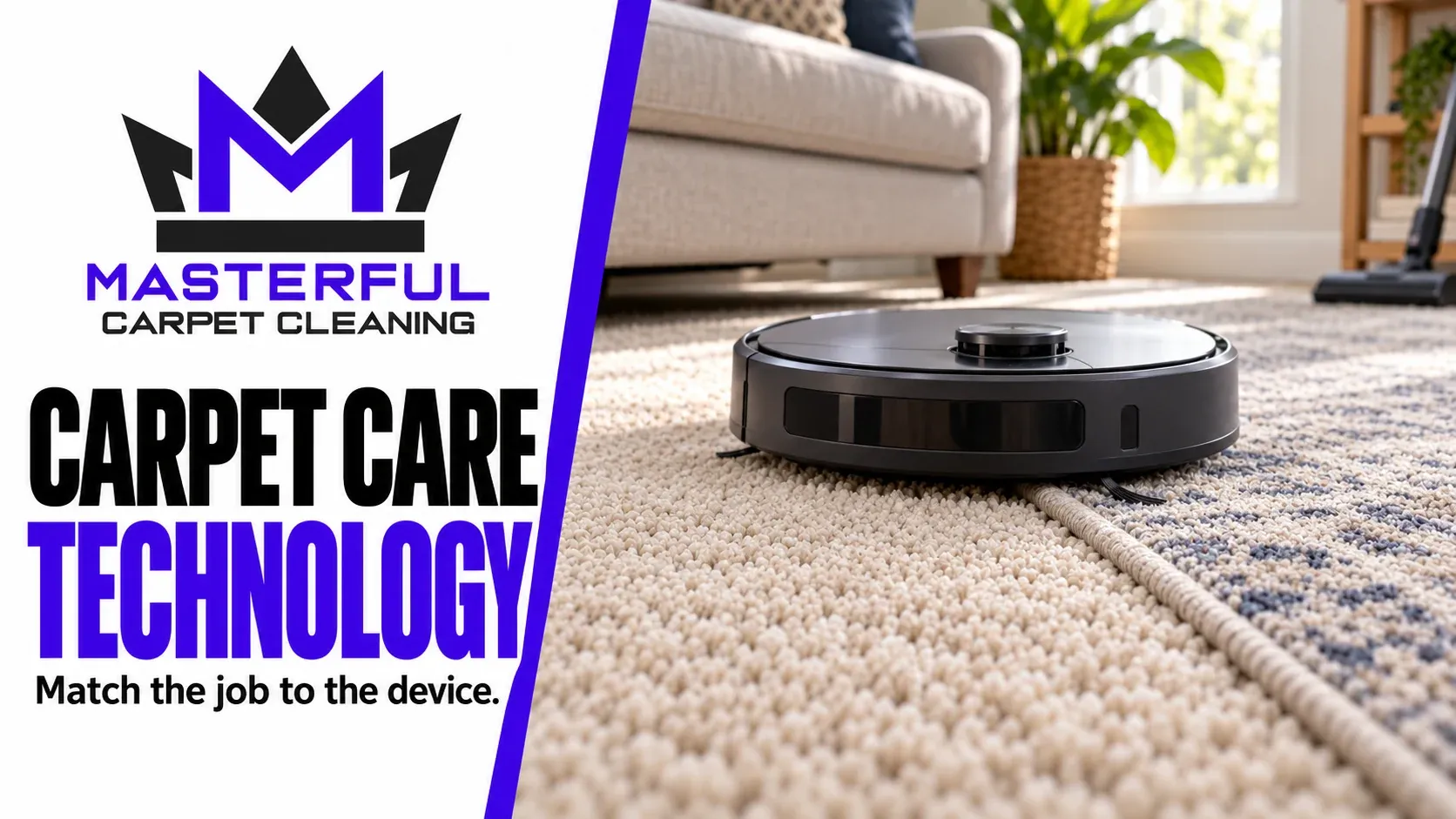
A robot vacuum can reduce the effort of collecting loose soil from accessible paths. It may follow a saved map, scheduled route or chosen zone if the exact model and software support those functions. A map shows where the device intended to travel; it does not measure how much carpet soil it collected. Furniture, cords, thresholds, room edges and a full bin can change what happens on a given pass.
Check the pile before enabling a brush or an automatic suction increase. Long or delicate pile, fringe, loose loops and damaged seams can catch or change texture under an unsuitable roller. A higher suction number is not proof of better care for that installation.
Check the carpet maker’s guidance and the robot manual together. Test a small permitted area and inspect the pile after use; stop if the head drags, snags or changes the surface.
Read the exact model’s control and maintenance details
- Routes and exclusions: Check if the model can save maps, set room or zone schedules and exclude a rug or damaged area. Confirm the setting is active before a run.
- Transitions and edges: Check the height it can cross and the places it cannot reach. You may still need a conventional vacuum and attachment.
- Mop control: For a vacuum and mop model, verify how mopping is disabled, lifted or excluded from carpet. Do not assume automatic recognition always prevents a damp pass.
- Bin and dock: Review emptying, brush cleaning and filter care. An automatic dock can reduce manual emptying, but it still needs maintenance.
- App and connection: Check the controls, account and network requirements you are comfortable using. A scheduled run may depend on saved settings, software and the device being ready.
1. Confirm the setting
Read the exact model’s manual. Verify that the intended route, exclusion and mop controls are available and enabled.
2. Check the carpet
Compare brush and pile limits with the carpet’s care directions. Test only a small permitted area. Confirm that wet mopping is disabled or excluded from carpet before the run.
3. Inspect the run
Check the bin, missed edges and any pile change. Stop if the head snags or the carpet becomes damp; use a suitable alternative for areas the robot misses.
A completed route in an app shows the device’s reported path. It does not measure soil removal or prove that every carpet edge was cleaned.
An “AI” or smart navigation label tells you little about the carpet result by itself. Look for the exact functions the model performs, how a route or exclusion is set, what happens without a connection, and how to inspect the bin and carpet afterward. A sensor can help a device find its way around a room or recognize a surface without identifying the stain on it.
A robot dry vacuum is not a spot treatment or a carpet extractor. If a liquid spill or pet accident occurs, keep the device away until the area has been addressed under the carpet’s care directions. For a new ordinary spill, see our first carpet spill steps.
Compare a conventional vacuum for the areas a robot misses
A conventional vacuum gives you direct control over the head, direction, pace and attachments. It can reach some edges, stairs and places under furniture that a robot cannot. The right setting still depends on the installed carpet. A rotating brush may collect soil on one pile yet disturb another. Adjustable height or brush control is useful only if those settings can be matched to the maker’s care directions.
Check how easily the machine collects visible grit without pulling tufts or leaving debris behind. Maintain the bag or bin, brush and filter as the device instructions require. A clogged tool or full container can reduce pickup. If the carpet changes texture, pulls a loop or a seam opens, stop using that head and seek carpet care or repair advice.
Our vacuuming guide covers pile and setting decisions in greater detail. Neither an upright nor a robot needs to be run on one calendar schedule in every home; adjust routine care to traffic, visible soil and the specific carpet guidance.
Treat a cleaner label as a separate compatibility check
A bottle described as plant derived, fragrance free or environmentally preferable may still be unsuitable for a particular carpet, stain or machine. Check the full product label, intended material, application, test, rinse and drying directions. Check the installed carpet’s instructions as well. A label about a product’s ingredients does not certify the carpet or guarantee a cleaning result.
The EPA Safer Choice label identifies products that meet that program’s criteria, including ingredient review and performance requirements. If a product claims the label, verify the exact product in the EPA product finder. The label does not replace the carpet and machine compatibility checks, and it is not a claim that every user or pet faces no risk.
For an ink, wine, grease or pet mark, identify the source before choosing a product. A new stain and a spot treated three times are different situations. Our difficult carpet stain guide helps with those distinctions. Do not add a household mixture or more cleaner just because a device has a product compartment.
Understand what an extractor does before adding liquid
A home carpet extractor applies water or an approved solution, then recovers some of it. It is not necessarily a vapor steam machine. It does not establish that the carpet was sanitized, and it cannot guarantee that an old stain or recurring odor is gone. Before using one, confirm that the carpet allows the method, the equipment and solution fit, and the user can follow dilution, recovery and drying directions.
Remove loose dry soil first with a suitable vacuum. Apply only the directed amount of the approved solution and use the machine’s recovery passes as instructed. Plan for air movement, limited traffic and furniture handling under the carpet and equipment directions. Drying depends on the fiber, backing, amount of liquid, recovery and room conditions; a generic number is not a promise for your installation.
A wet pad, ongoing leak, color transfer, buckling or open seam is a reason to pause. More liquid may complicate the condition. Stop the water source and seek a moisture or repair assessment where needed.
If a mark remains after suitable care, note every product and machine pass before requesting professional cleaning. A professional may select equipment or method based on the carpet and soil, but no particular machine type should be assumed for Masterful without a service discussion.
Choose a cleaning visit based on the remaining problem
A service inquiry is useful when suitable vacuuming leaves a gray traffic path, an approved first spot step leaves a mark, or the area is too large for a confident home machine treatment.
Send a room photo and a close view. Include the carpet material or product if known, the type and age of the soil or spill, any odor or dampness, and every product or machine already used. That history is more useful than a device feature list.
Ask Masterful Carpet Cleaning what the proposed scope covers, what method suits the carpet, what result is realistic and what drying instructions apply. If an area is worn, faded, torn or wet below the pile, cleaning may remove soil but not restore the damaged material or correct the water source. A repair or moisture assessment may need to come first.
Common questions about carpet care technology
Does a robot vacuum deep clean carpet?
It can collect some loose dry soil from areas it reaches when it suits the carpet. Its route, map or automatic suction setting does not prove embedded soil or a stain was removed. Use a compatible conventional vacuum for missed edges and ask about another cleaning method if soil remains.
Can a vacuum and mop robot wet a rug?
That depends on the exact model, settings and how it handles the rug. Some models have mop exclusion or lift controls, but those features must be verified and enabled. If you cannot confirm that mopping stays off the carpet or rug, exclude that area from the wet run.
Does a green claim or label mean a cleaner suits every carpet?
No. A product claim or certification applies to defined criteria for that product. It does not approve use on every fiber, dye, backing, machine or stain. Check the exact claim, carpet care directions and full product label before applying anything.
Is a carpet extractor the same as steam?
No. An extractor applies liquid and recovers some of it; that does not mean it uses vapor steam. The method also does not prove sanitization or a fixed drying time. Confirm the carpet allows extraction and follow machine, solution and drying directions.
What if a robot cannot reach a high pile area?
Do not force it across a carpet it catches or avoids. Check the pile and device limits, then use another vacuum or attachment permitted for that carpet. If loose soil is removed but the area still looks gray or flattened, ask about a cleaning assessment and the chance that wear will remain visible.