Carpet deodorization stops smells at the source, not by masking them, but by matching the odor source to the right chemistry and extracting it correctly. Depending on what we find, we’ll use an enzymatic deodorizer (ideal for fresh organic odors) or a controlled oxidizing deodorizer (for set residues and tint). If deposits reached the pad, we add a subsurface flush, follow with a neutralizing rinse, and accelerate airflow to prevent wick back. Serving Greater Oregon with clear pricing and dependable arrival windows, book anytime on our Book Online page.
What causes carpet odors?
Different sources demand different chemistry and technique:
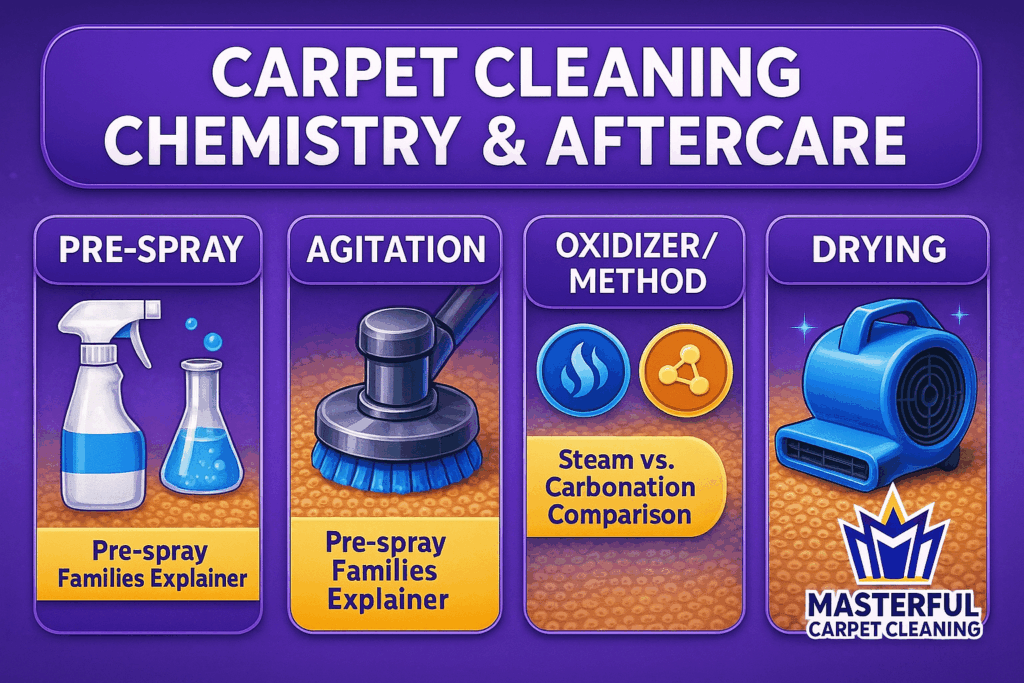
- Protein/organic soils (pet urine, milk, food, vomit) typically respond best to enzymes that digest the odor body, followed by careful rinse and recovery to remove what enzymes break down. If you want to see how chemistry and technique fit together post cleaning, the site’s carpet cleaning chemistry & aftercare guide shows how pre-spray families, neutralization, and airflow protect results.
- Oxidizable residues (age set urine yellowing, certain wine/juice chromophores, light smoke residues) can respond to oxidizers that change the odor molecule itself.
- Residue-driven smells (leftover surfactants/deodorizers from DIY) usually need a balanced rinse and complete extraction, not more fragrance.
The key is diagnosis first, chemistry second, airflow always.

Enzyme deodorization: where it wins
What enzymes do: Enzymes are catalysts that digest odor causing compounds (proteins/fats/starches). By breaking soils into smaller, non odorous fragments that are easy to extract, they stop off gassing rather than perfuming over it.
When we choose enzymes: Fresh accidents (urine, vomit), food/milk spills, nursery/bedroom issues, and rooms that “wake up” with odor as temperatures rise, classic organic signatures.
What success requires:
- Map deposits (UV/blacklight and moisture checks) so we treat the full field, not just the spot.
- Even application & proper dwell, enzymes must remain damp to stay active.
- Gentle agitation to improve contact without roughing the pile.
- Thorough extraction so residues don’t wick back.
- Airflow (HVAC or airmovers) to speed dry and stabilize the result.
Curious how we decide which chemistry families to use on the pretreat side? This explainer covers enzymatic, solvent infused, and oxygenated pre-sprays and when each one belongs in the process.
Oxidizer deodorization: when we use it
What oxidizers do: Carpet safe oxidizers break molecular bonds in odor compounds and certain stains. Used correctly, after testing and with precise contact time, they neutralize lingering odor bodies and visible discoloration.
When we choose oxidizers: Older urine with visible yellowing, tinted drink spills that survived cleaning, or light smoke residues on fiber faces (if the fiber/dye system tests safe).
Why control matters: We test colorfastness, manage pH and dwell, provide ventilation, then rinse and neutralize. If you’re weighing restorative hot water extraction against lighter maintenance methods (and wondering why some “quick cleans” don’t hold), the steam vs. carbonation comparison explains where each approach shines, and where it doesn’t.
Guardrail: Don’t place oxidizer directly on fresh enzyme, it can inactivate it. If both are needed, we phase them: enzyme path → extraction → controlled oxidizer (if indicated) → neutralize → dry.

Our on site decision tree (how we choose, fast)
- Identify the source with UV, moisture, and nose level verification. Is it fresh urine, set urine, a food/fat/protein spill, or a color-body issue?
- Check fiber & construction (nylon/poly/olefin; loop/berber vs. cut pile). Loops and dense constructions often hide pad level contamination that demands a subsurface flush.
- Select chemistry that matches the source and the risks.
- Neutralize & extract to reduce residue and protect texture.
- Accelerate airflow so moisture leaves evenly and wick back is less likely.
Seeing fast gray out in busy rooms? Residue and traffic go hand in hand, our high traffic areas guide maps prevention and maintenance so lanes stay clean longer.
Why DIY perfumes often backfire
Retail deodorizers and heavy fragrance products usually add residue and trap moisture, two things that make odors and soils hang around. If a lot’s been sprayed already, we’ll begin with a neutralizing rinse to reset the field before deodorization. For a clear, practical overview of what helps (and what hurts) when spots happen, save our carpet stain removal guide.
Pet urine odor: mapping → subsurface flush → recovery
Urine migrates. Once it reaches backing/pad, topical sprays can’t fix it. We treat urine as a subsurface problem:
- Map the field with UV to confirm deposit shape and depth.
- Treat the source with enzyme (or, if indicated after extraction, a controlled oxidizer for discoloration).
- Subsurface flush with controlled introduction and immediate recovery, no flood rings.
- Neutralize & extract to return pH and remove dissolved residues.
- Airflow + recheck to guard against wick back.
If you’re sensitive to fragrances or want to minimize chemistry while maintaining hygiene, our steam cleaning dust mites without chemicals article shows how we manage temperature, rinse, and airflow in low odor setups.

Pricing, windows, and on-site needs (so you can plan)
Everything here mirrors the online booking tool:
- Arrival windows: choose 8-12 or 12-4; we confirm the exact ETA the day before and text when we’re en route.
- Access: reserve one parking spot and ensure a working faucet within ~50 ft, this supports full suction and precise flush.
- Minimum: online pricing lists a $156 minimum, typically covering up to two rooms (≤200 sq ft each). Tiered room bundles and add-ons are available at checkout.
Need fast help for an office, retail floor, or venue? Our playbook for timing, access, and disruption control is here: emergency carpet cleaning for businesses.
Safety & fiber notes (why we always test)
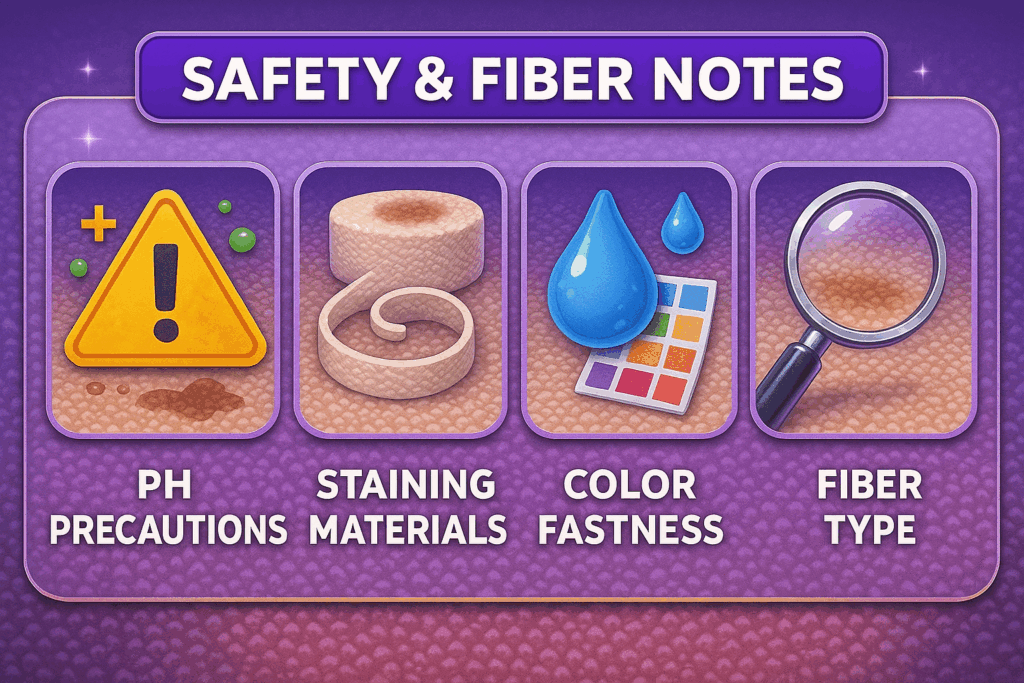
- Wool & richly dyed textiles: we run colorfastness tests, use low pH/low heat, and limit oxidizer contact when dyes could shift.
- Loop/berber & patterns: agitation and dwell are tuned to avoid distortion or snagging; airflow avoids uneven dry.
Want a quick look at how specific fibers behave (e.g., why oily soils love certain synthetics)? Start with our concise olefin carpet cleaning explainer.
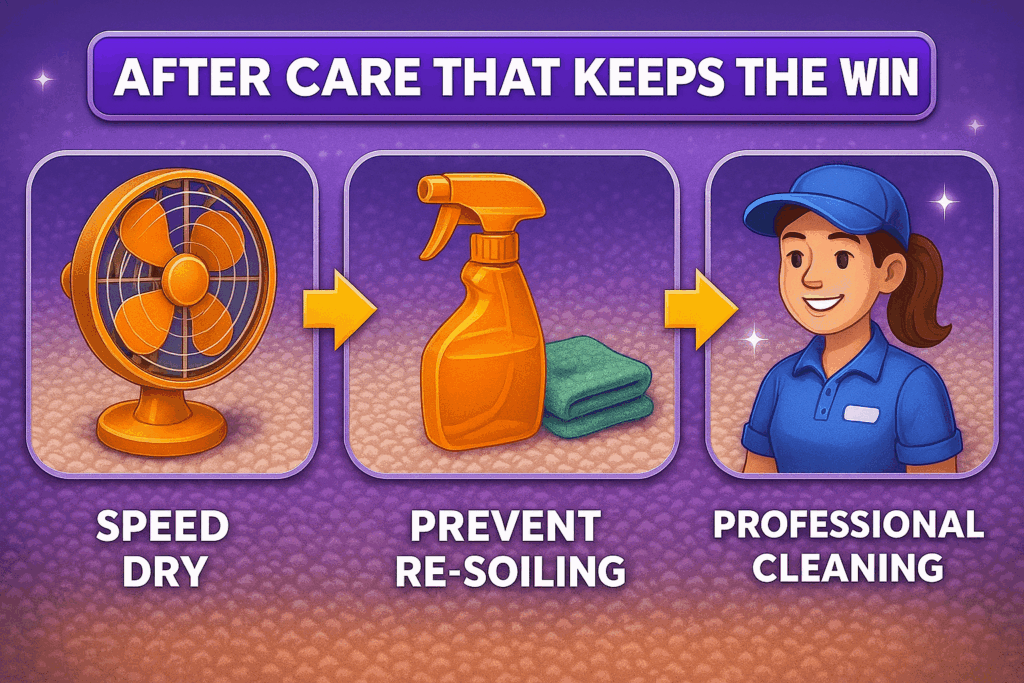
After care that keeps the win
- Ventilate rooms so evaporation is even; airmovers or HVAC help.
- Avoid traffic until fully dry to the touch, especially on treated areas.
- Groom the pile so fibers set uniformly.
- Watch for wick back. If odor or a yellow edge resurfaces as carpet dries, remaining material likely migrated from the pad. Book a follow-up flush promptly so we can capture it before it sets again.
For the complete picture, how chemistry, neutralization, and airflow lock in results, revisit the carpet cleaning chemistry & aftercare overview.

FAQs
Is enzyme or oxidizer better for pet urine? Most fresh organic odors respond best to enzymes; if tint or set odor remains, we phase in a controlled oxidizer after extraction and testing.
Why do odors come back after cleaning? That’s wick back, dissolved material rises from backing/pad during dry. We counter with subsurface flush → neutralize → airflow and recheck.
Will oxidizers bleach my carpet? We test first, control pH/contact, and limit or avoid oxidizers on wool or unstable dyes.
Do I need a neutralizing rinse after deodorizing? Yes. A balanced rinse returns pH to neutral and reduces residue that would otherwise attract soil or dull the hand.
How long will it take to dry? Most rooms feel dry the same day with airflow; deeper subsurface work can take longer, avoid traffic until dry.
What’s included in the minimum? The $156 minimum typically covers up to two rooms (≤200 sq ft each); larger rooms count as two. Extra heavy soil/pet hair may add cost at checkout.
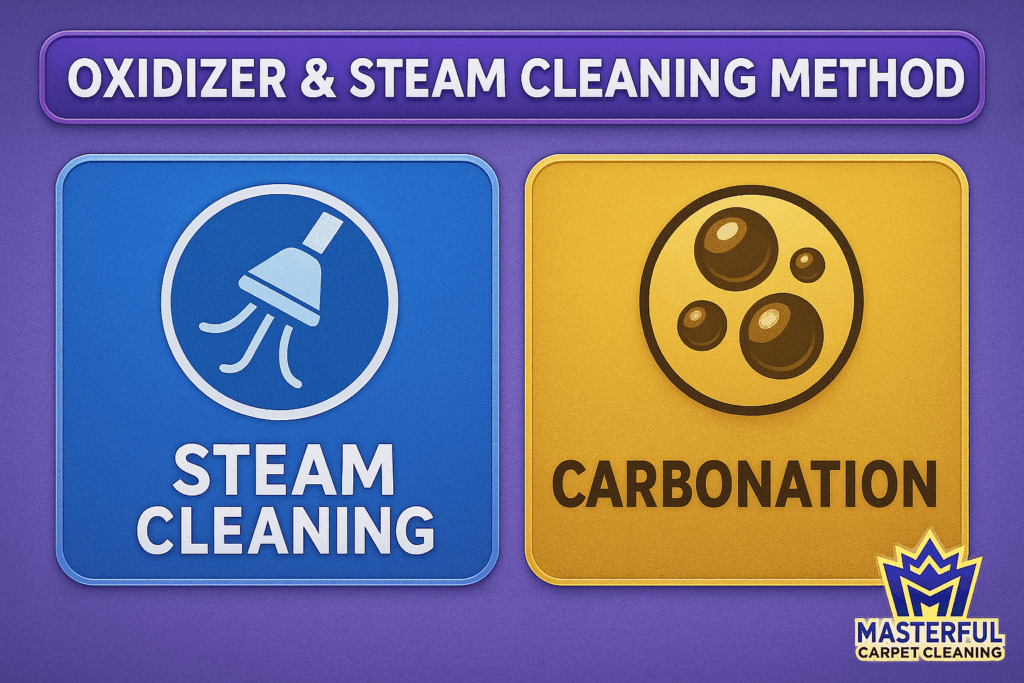
When odor work ties into whole home cleaning
Bad smells rarely travel alone, sticky lanes and rapid resoil often appear nearby. If you’re deciding between restorative HWE and lighter maintenance passes (and wondering why “quick cleans” don’t stick), the steam vs. carbonation comparison lays out method tradeoffs clearly. And if you’re battling stubborn lanes, our high traffic areas guide shows how to reduce gray and slow resoil with schedule changes and right fit chemistry.
For emergency spill triage, prevention, and what to try before calling us, keep the carpet stain removal guide handy.
For families with allergies or scent sensitivity
We can design a low odor plan that still reaches hygienic temperatures and strong recovery. If you’re curious about using temperature, rinse, and airflow strategically, with minimal fragrance, see steam cleaning dust mites without chemicals.

For property managers and operations teams
Need persistent carpet odors handled with minimal downtime? We pair interim low moisture passes for appearance with targeted enzyme/oxidizer work and scheduled restorative HWE. Our scheduling and access approach for multi-tenant/retail/venue spaces is documented in emergency carpet cleaning for businesses.
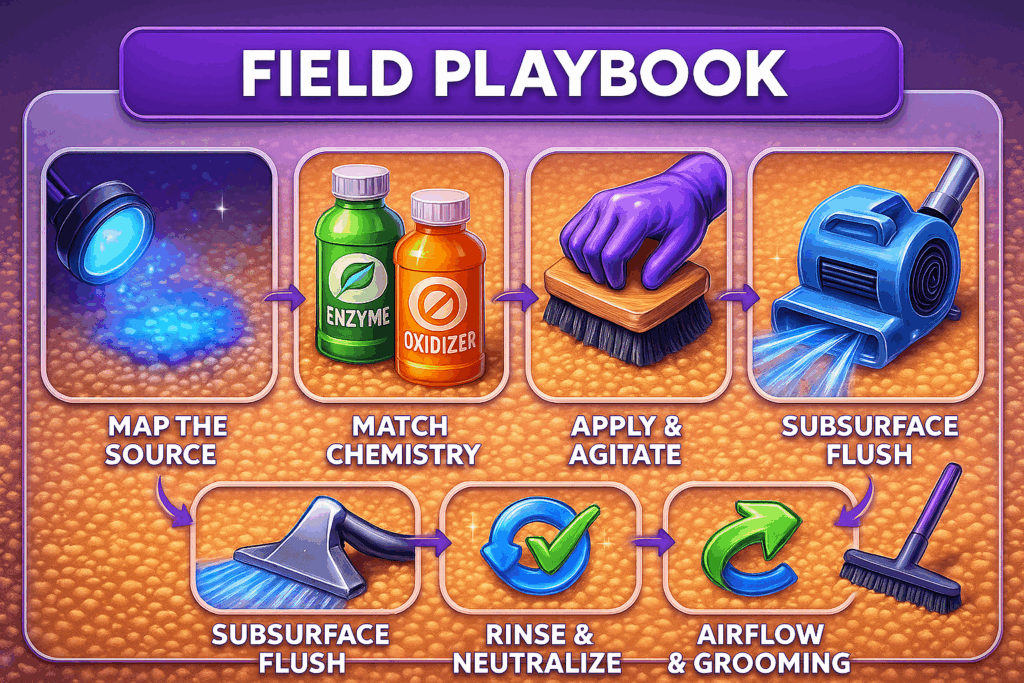
Field playbook (the short version)
1) Map the source with UV and moisture checks; verify organic vs. oxidizable vs. residue.
2) Match chemistry to the source and fiber/dye risks; set the room and protect nearby surfaces.
3) Apply & agitate evenly; maintain enzyme dwell when chosen.
4) Subsurface flush when the pad’s involved; recover immediately to avoid ring-outs.
5) Rinse & neutralize to return pH and reduce residue.
6) Airflow & grooming for even dry and pile set; recheck if the spill was severe.
Why our results hold
- Diagnosis first. We confirm source and depth before choosing chemistry.
- Right method, right order. Enzymes for fresh organics; oxidizers (if indicated) only after extraction and tests, never stacked.
- Triad that prevents returns. Subsurface flush → neutralize → airflow is how we beat wick-back.
- Care for sensitive fibers. Wool/patterned installs get low pH/heat and test-first handling.
- Aligned with checkout. Pricing and arrival windows match what you’ll see when you reserve on Book Online.
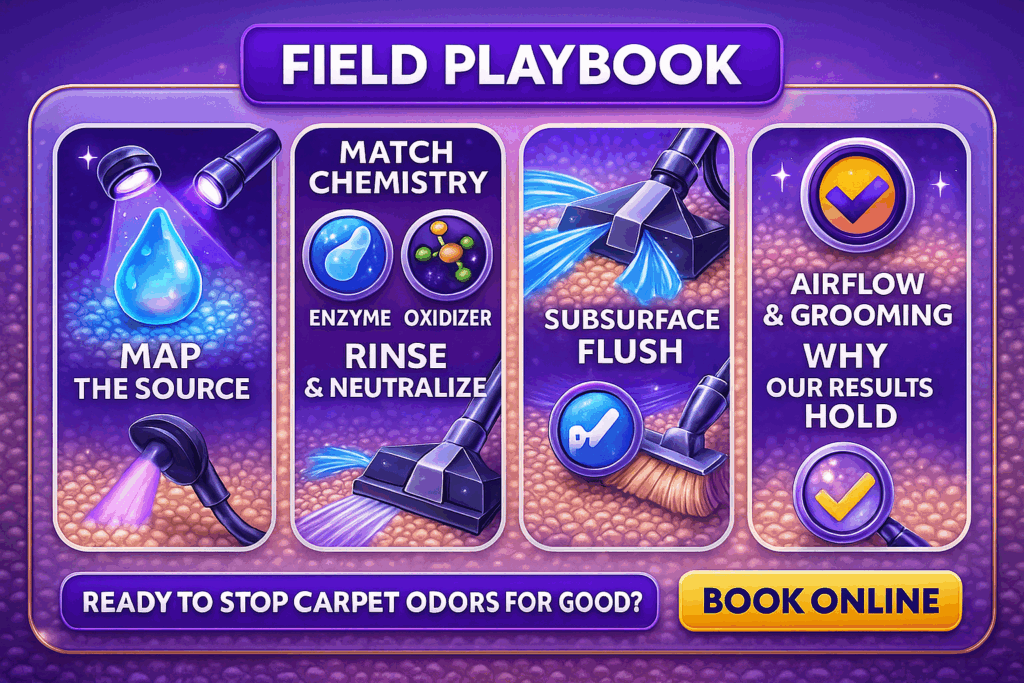
Ready to stop carpet odors for good?
Lock in a time slot, see your window options, and view pricing now on Book Online. If you prefer to explore the chemistry and process first, skim the carpet cleaning chemistry & aftercare overview, then hop back here and schedule. Either way, we’ll test, map the true source, and fix it so the smell stops, and stays stopped.
Author