Sisal, jute, and seagrass are natural fiber floor coverings, so cleaning them is mostly about strict moisture limits. In many cases, dry compound cleaning is preferred because even small amounts of water can spread through the weave and leave marks. If you want the safest outcome, the priorities don’t change: natural fibers first, moisture second, and “dry” methods whenever possible.
If you’re in Oregon and dealing with a high value natural fiber install, or you already have a spill, ring, or odor, Masterful Carpet Cleaning can advise on the safest next step and provide a fast estimate.
What are sisal, jute, and seagrass carpets?
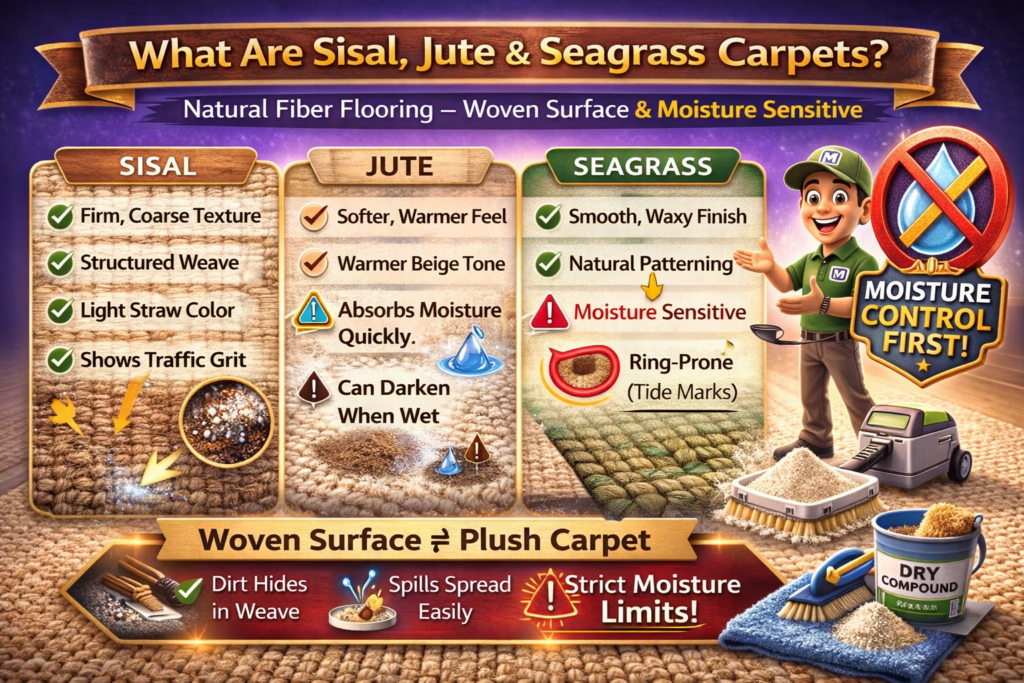
Sisal, jute, and seagrass are typically woven from plant fibers (or plant derived fibers), which gives them that distinctive woven texture and natural look. They’re popular because they feel durable and “organic,” but they don’t behave like synthetic wall to wall carpet when moisture is introduced. That’s why “normal carpet cleaning” advice can accidentally make natural fiber flooring look worse.
A quick way to recognize natural fiber carpet or rug styles like these:
- The surface looks woven rather than fluffy or plush.
- The fibers feel textured and firm, not soft like cut pile.
- You may see a more structured pattern (weave lines) even when it’s a solid color.
- Dirt can sit between weave points and show up as grit in traffic lanes.
- Spills can create rings or tide marks as they spread and dry unevenly.
When your flooring is a fully installed carpet or a large area rug, the same principle applies: treat it as a natural fiber surface with strict moisture limits.
Why strict moisture limits for natural fibers
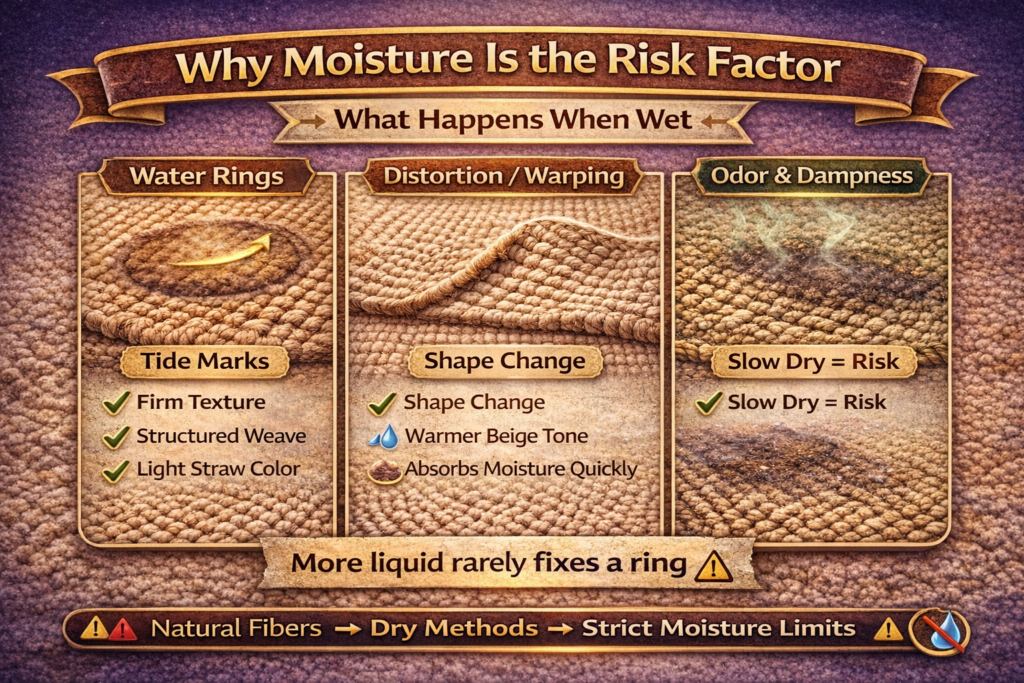
Strict moisture limits are not a “nice to have” for sisal, jute, and seagrass, they’re the core rule that prevents most damage.
Why moisture behaves differently here
Natural fiber flooring tends to wick and spread moisture laterally through the weave. On a plush carpet, a small spot might stay fairly contained. On a woven natural fiber surface, that same liquid can spread outward, then dry in a way that leaves a visible boundary.
The most common moisture driven problems
Here’s what you’re trying to avoid:
- Water rings / tide marks: The classic “it looks worse now” outcome. A small spill or spot clean can create a larger visible mark once it dries.
- Distortion / warping: Woven construction can change shape when wet and then dry unevenly.
- Shrinkage: Some natural fiber constructions can tighten or change dimensions after moisture exposure.
- Odor and lingering dampness: If moisture gets into the weave or backing and doesn’t dry quickly, the smell can linger.
- Fraying or rough texture: Over handling during a wet cleanup can raise fibers or roughen the weave.
A simple rule that prevents most regret
If a cleanup step requires you to add liquid to “fix” a problem, pause and reconsider. On natural fibers, more moisture is often the wrong direction, especially if you’re trying to remove a ring or stain that already spread.
This is why the safest approach usually starts with dry soil removal and stays as dry as possible.
Preferred method: dry compound cleaning (and what to expect)
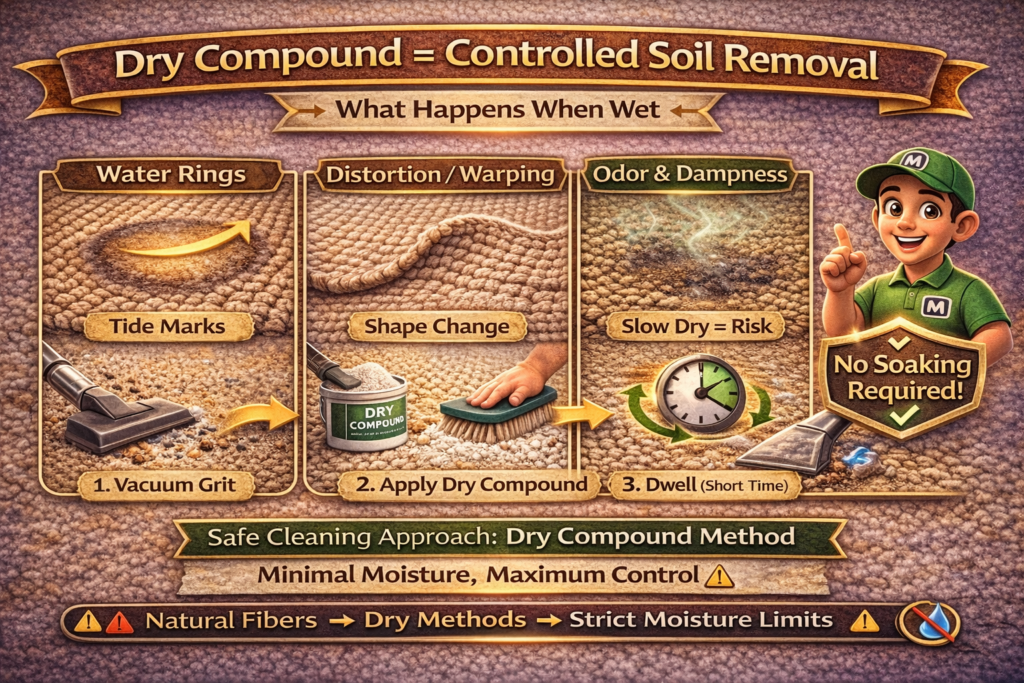
For many sisal, jute, and seagrass situations, dry compound cleaning is preferred because it supports strict moisture limits while still lifting soil.
What dry compound does
Dry compound products are designed to absorb and bind soil. The process generally looks like:
- Remove loose grit (vacuum)
- Apply dry compound lightly
- Work it through the surface carefully
- Allow brief dwell time (so it can bind soil)
- Vacuum thoroughly to recover the compound and soil
The “magic” isn’t a harsh chemical reaction, it’s controlled absorption and recovery that avoids soaking the weave.
Why dry compound fits natural fibers
Dry compound supports the two goals::
- Minimal moisture added
- Minimal risk of spreading stains into larger marks
When you keep moisture low, you reduce the chance of rings, distortion, and slow drying, exactly what natural fibers need.
What to expect (so you’re not disappointed)
Dry compound cleaning is not a one pass miracle. Realistic expectations:
- It often takes multiple vacuum passes for thorough recovery.
- Heavy grit areas may need repeat cycles over time (especially in entry paths).
- The goal is a cleaner, brighter surface without creating moisture damage.
If your flooring is heavily soiled or has set in marks, professional handling means more than “stronger product.”
Spill & spot triage: what to do (and when to stop)
Most damage on sisal, jute, and seagrass happens in the first 10-30 minutes after a spill, when people panic, add liquid, scrub hard, and spread the problem.
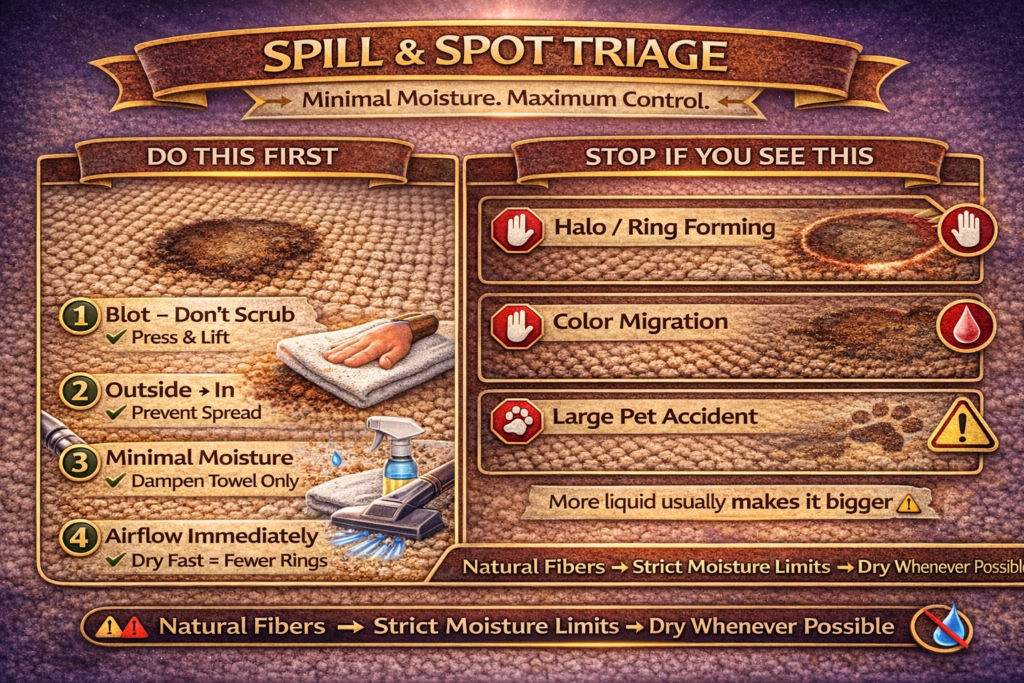
Here’s a safer “triage” approach that respects strict moisture limits.
Immediate steps (first 5 minutes)
- Blot, don’t scrub.
Use a clean white towel and press firmly to lift liquid. Scrubbing drives moisture into the weave and can roughen fibers. - Work from outside in.
This helps limit spread. - Use minimal moisture.
If you must use anything, use the smallest amount possible, often by dampening the towel rather than pouring product on the fiber. - Create airflow immediately.
A fan aimed across the surface (not straight down) speeds evaporation and reduces ring formation. - Stop if a ring begins to appear.
Continuing with more liquid often makes the boundary larger.
Spill type decision guide (quick stop points)
Clear water (small spill):
Blot thoroughly → airflow → stop once the towel is coming up mostly dry. If you see a ring forming, stop and consider professional help.
Colored liquids (coffee, wine, juice, soda):
Blot fast → minimal intervention → if the color spreads or begins forming a halo, stop and call a pro. Natural fibers can “carry” dye outward.
Grease/oil based spills:
Avoid wet cleaners. Blot and use dry absorption steps only. If the area becomes dark or tacky, this is a pro job.
Pet urine / vomit:
Treat as a “call a pro now” scenario. It’s not only a surface issue; moisture + contamination can sink into the weave and backing and create odor problems that DIY can worsen.
Why “spot cleaning” is risky on natural fibers
On plush carpet, you can often clean a small spot with water-based solutions and blend it. On woven natural fiber, spot cleaning can create a cleaner circle (or a ring) that stands out more than the original stain. That’s not because you did nothing, it’s because the material reveals boundaries.
Routine care: vacuuming, grit control, and traffic protection
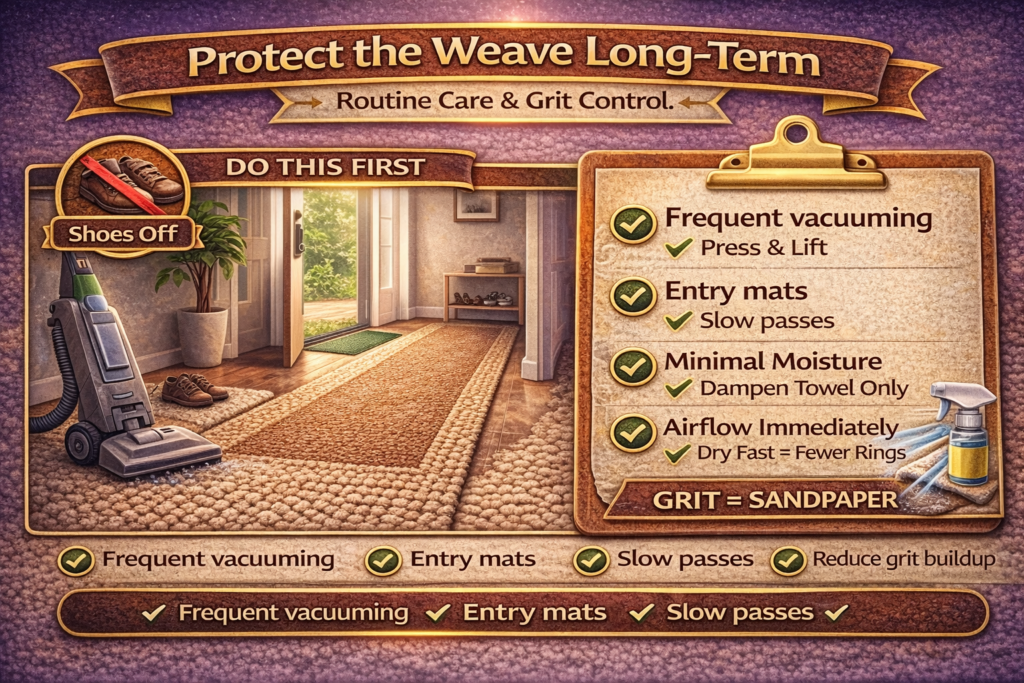
Natural fiber flooring often looks “fine” until grit builds up. Then traffic lanes start to darken, and the surface can feel rougher. Routine care is less glamorous than spot removal, but it’s what keeps sisal/jute/seagrass looking good long-term.
Vacuuming basics (simple, safe)
- Vacuum frequently in high traffic lanes (entry paths, hallways, near seating).
- Go slow so suction can lift grit from the weave.
- If your vacuum is overly aggressive and begins pulling fibers or fuzzing the surface, adjust settings or use a gentler configuration.
- Avoid “wet vac” thinking, this is about dry soil removal.
Grit control: the highest ROI habit
- Place mats at entrances and encourage shoes off where practical.
- Use runners in known traffic corridors.
- Address the “sandpaper zone” early, once grit is embedded, it’s harder to remove without risk.
Furniture and wear prevention
- Use furniture protectors where appropriate.
- Rotate rugs (if applicable) to distribute wear.
- Keep heavy traffic from grinding the same path repeatedly.
None of this replaces professional cleaning when needed, but it reduces how often you need it, and reduces the risk of aggressive interventions.
What a professional does differently for sisal, jute, and seagrass
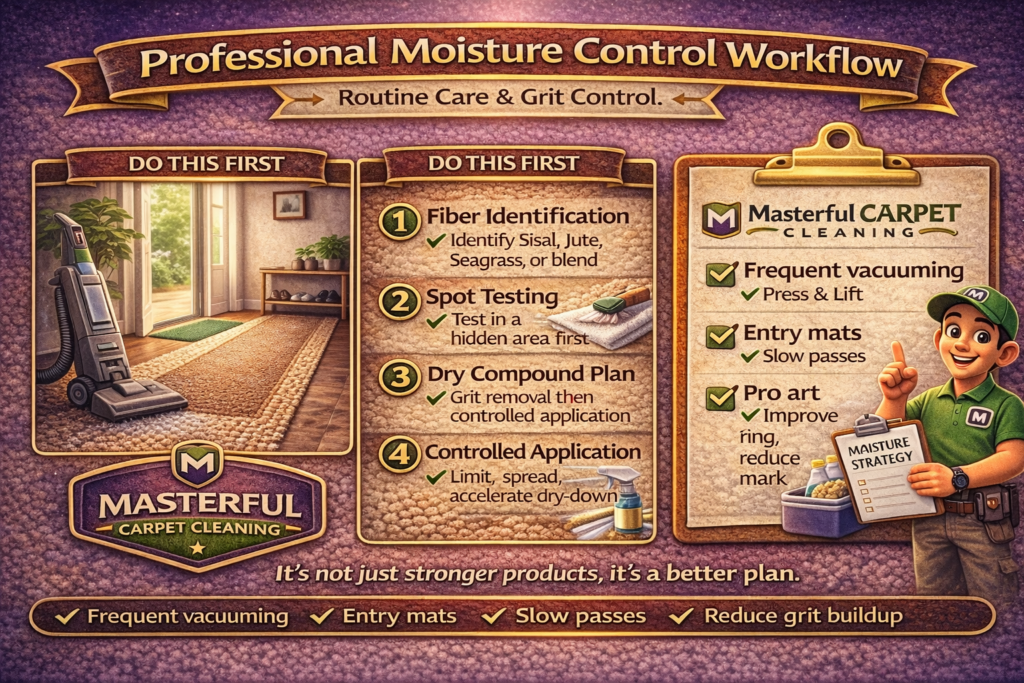
A good professional approach isn’t “we use stronger stuff.” It’s: we manage moisture, test first, and choose a method that matches the fiber.
Here’s what “professional difference” should look like for natural fibers:
1) Inspection and identification
- Confirm whether it’s sisal, jute, seagrass, or a blend.
- Check weave tightness, backing, edges, and installation constraints.
2) Spot testing (non-negotiable)
- Test in an inconspicuous area for color stability and surface reaction.
- Decide if a mark can be improved without creating a larger visible boundary.
3) Controlled dry compound workflow
- Vacuuming and grit removal first
- Dry compound applied and worked in carefully
- Thorough recovery with the right vacuum strategy
4) Moisture minimizing mindset
If any moisture is used (even minimally), the plan includes:
- limiting application
- controlling spread
- accelerating dry-down
- preventing rings and boundary marks
5) Transparent expectations
A trustworthy cleaner will tell you when:
- a stain may lighten but not disappear
- a ring may reduce but not fully blend
- replacement/repair is more realistic than “perfect” restoration
If someone promises flawless results on every natural fiber stain, treat that as a red flag.
When to call a professional for natural fiber carpet cleaning
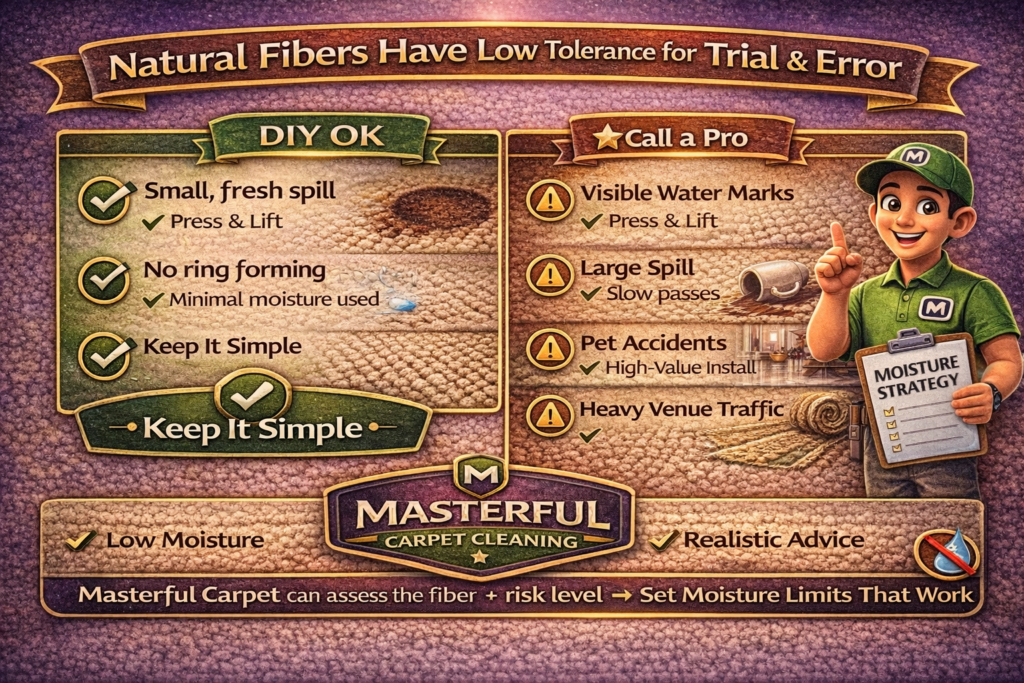
Natural fibers reward cautious care. They punish improvisation. If any of the following applies, professional help is usually the safest route:
- You already see water marks / tide marks / rings
- The weave looks distorted or the carpet feels uneven
- There’s a large spill or repeated DIY attempts
- You have pet accidents (urine, vomit) with odor risk
- The flooring is high value or difficult to replace
- It’s in a commercial setting (lobbies, offices, venues) where appearance matters and traffic is heavy
If you’re in Oregon, Masterful Carpet Cleaning can evaluate the fiber type, the risk level, and the best low moisture plan, starting with dry compound where appropriate and staying inside strict moisture limits.
Sisal, jute & seagrass cleaning FAQ
Can you steam clean sisal carpet?
In most cases, it’s not recommended. Sisal is a natural fiber surface where strict moisture limits matter, and steam/wet extraction can increase the risk of marks, distortion, or shrinkage. Dry methods are typically safer.
Can you steam clean a jute rug?
Jute is highly absorbent. Wet cleaning can lead to warping, odor, and visible boundaries as it dries. If you must address an issue, keep moisture minimal and consider professional guidance.
Is seagrass carpet safe to wet clean or shampoo?
Seagrass is still moisture sensitive. Wet cleaning can create rings and uneven appearance. A dry process is often preferred, especially for overall cleaning.
Why do natural fibers need strict moisture limits?
Because moisture can spread through the weave and dry unevenly, leaving rings or tide marks. It can also distort the construction and create lingering odor if drying is slow.
Is dry compound cleaning better for sisal, jute, and seagrass?
Often, yes. Dry compound cleaning supports strict moisture limits while lifting soil through absorption and recovery. It’s one of the safest “general” approaches for these fibers.
What happens if sisal gets wet?
Sisal can show water marks, change appearance as it dries, or distort depending on the construction and exposure. The safest response is fast blotting, airflow, and avoiding repeated wetting.
How do you remove a small spill without leaving a ring?
Blot immediately, use minimal moisture, avoid scrubbing, and dry quickly with airflow. If you see a halo forming, stop, adding more liquid usually enlarges the boundary.
How often should natural fiber carpet be professionally cleaned?
It depends on traffic and soil load. High traffic areas may need periodic professional attention; lower traffic installs may need less frequent service. The key is to avoid letting grit build up until aggressive cleaning becomes tempting.
How do I vacuum sisal/jute/seagrass without damaging fibers?
Vacuum slowly and focus on removing grit from the weave. If your vacuum is pulling fibers or fuzzing the surface, reduce aggression or adjust settings. Consistent, gentle vacuuming beats occasional aggressive interventions.
When should I call a professional instead of DIY?
Call a pro for rings, large spills, pet accidents, high value installs, commercial traffic lanes, or anytime you’re unsure. Natural fibers have low tolerance for trial and error.
Oregon natural fiber carpet cleaning help (next step)
If you want the safest result on sisal, jute, or seagrass, keep the framework simple: natural fibers + strict moisture limits + dry compound preferred.
For Oregon homes and facilities, Masterful Carpet Cleaning can assess your flooring type, the risk level, and the safest approach, then provide a clear estimate and scheduling options.
Author