Over wetting carpets occurs when excess moisture remains trapped below the carpet surface after cleaning, saturating the padding or backing instead of evaporating evenly. This hidden moisture creates conditions for mildew odor, mold growth, wick back, and long term structural damage. Over wetting is a moisture control failure, not a surface level issue.
Many carpet problems blamed on “bad cleaning” are actually the result of moisture behaving in ways most people never see. Knowing how and why over wetting happens helps explain delayed odors, recurring discoloration, and premature carpet wear.
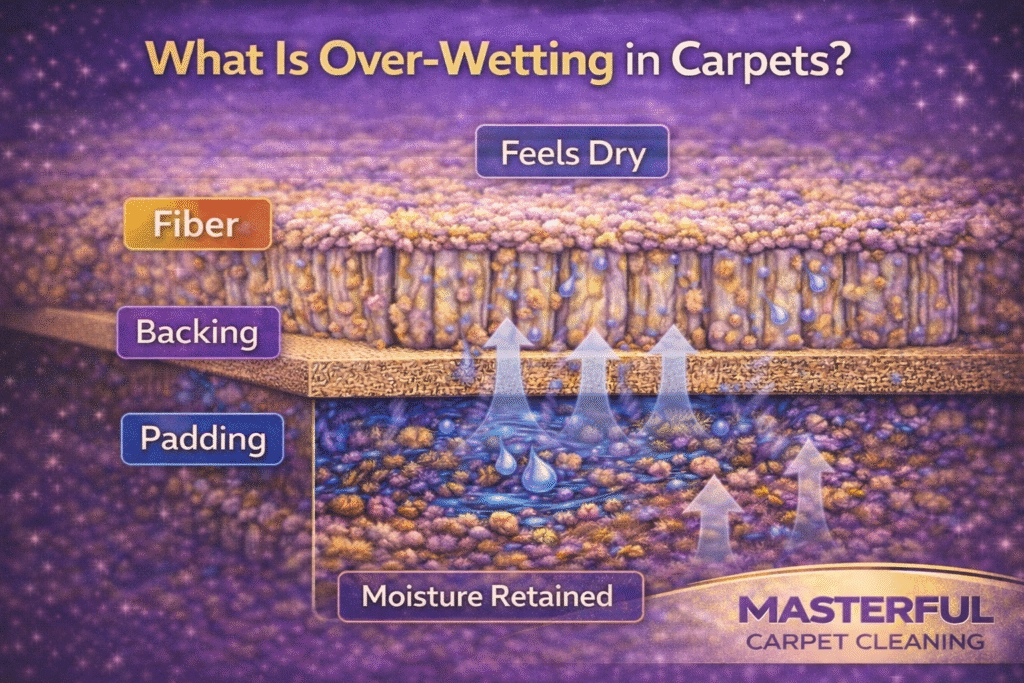
What Is Over Wetting in Carpets?
Over wetting in carpets is a saturation failure where moisture penetrates deeper than the carpet system can safely release through normal evaporation. Even when carpet fibers feel dry, water can remain trapped in padding, backing, or lower pile layers.
This condition is often misunderstood because it is rarely obvious right away. Over wetting is defined by where moisture remains, not by how wet the surface looks.
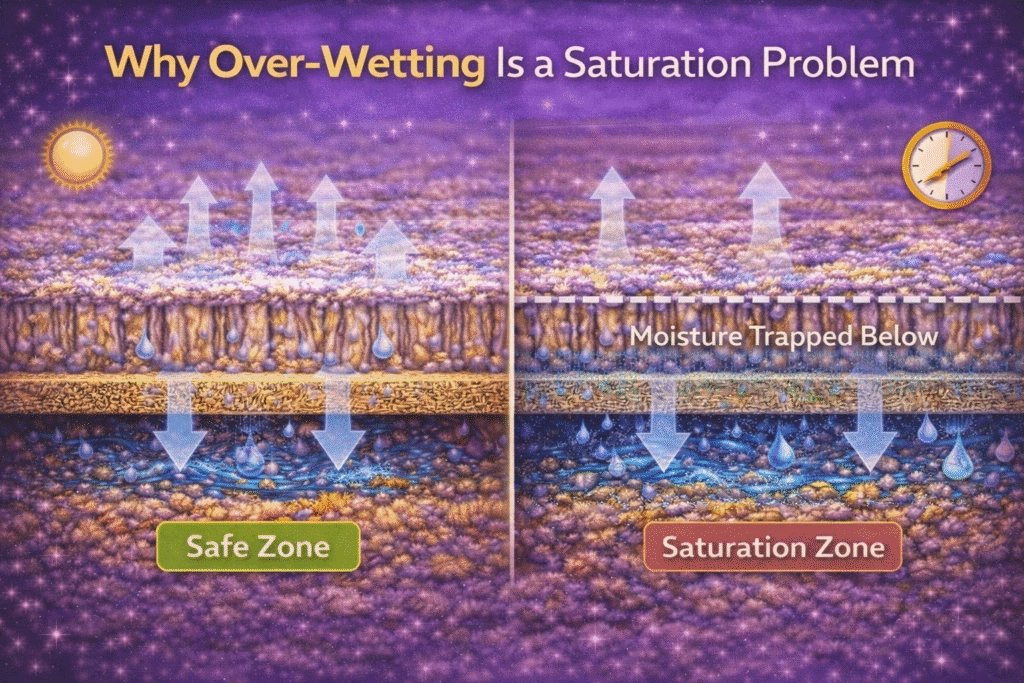
Why Over Wetting Is a Saturation Problem, Not a Surface Issue
Carpet systems are designed to tolerate limited moisture at the fiber level. Problems begin when moisture reaches deeper layers that release water much more slowly. Dense fibers, thick padding, and backing materials absorb moisture and restrict evaporation.
When moisture exceeds the system’s ability to dry evenly, saturation occurs. This is why carpets can feel dry while still holding moisture below the surface. Over wetting is therefore a system level moisture imbalance, not a cosmetic condition detectable by touch alone.
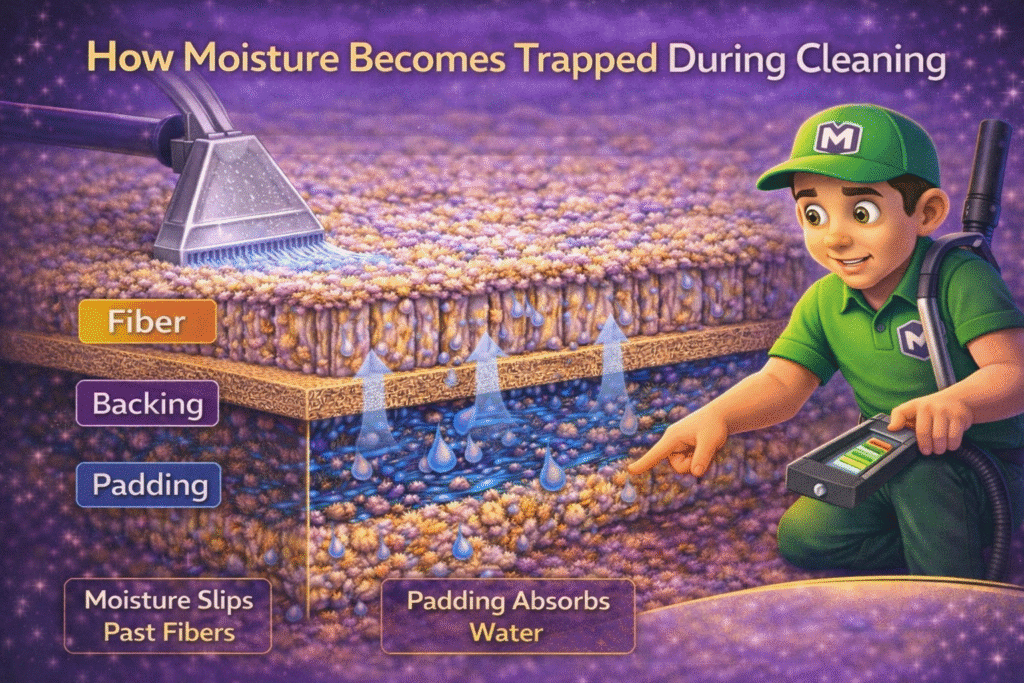
How Over Wetting Happens During and After Cleaning
Over wetting carpets happens when moisture introduced during cleaning exceeds what the carpet system can safely release through evaporation. This can occur during cleaning or in the hours that follow when drying conditions are insufficient.
The defining factor is not water use itself, but how long moisture remains trapped below the surface.
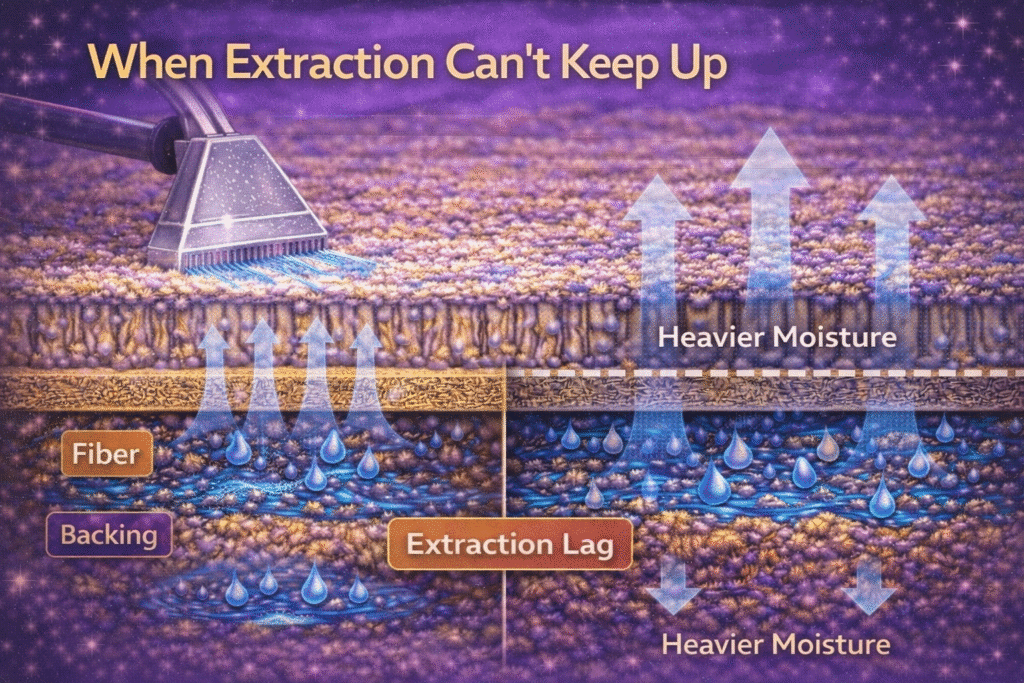
Excess Moisture and Inadequate Extraction
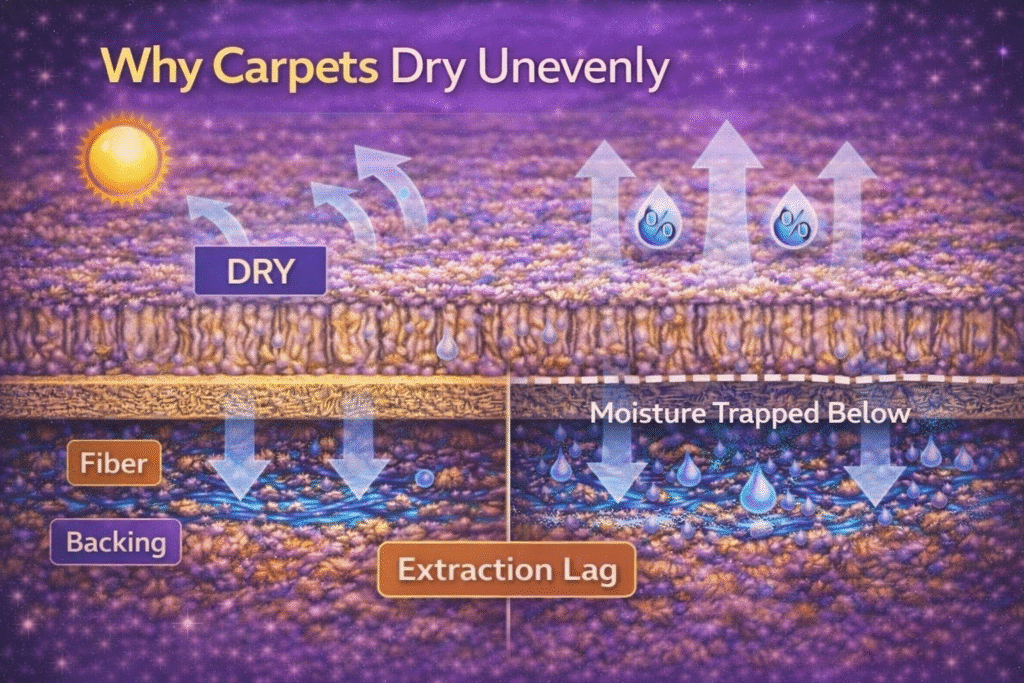
During professional cleaning, water is used to suspend and remove soil. Over wetting occurs when excess moisture is not fully removed and instead migrates downward into padding and backing.
Padding acts as a moisture reservoir, holding water far longer than surface fibers. Even moderate moisture can cause saturation when extraction is incomplete, particularly in dense carpet systems. This explains why over wetting is often invisible immediately after cleaning.
Improper Drying and Evaporation Imbalance
After cleaning, evaporation begins at the surface where air exposure is greatest. If airflow is limited or indoor humidity is high, the surface dries faster than deeper layers. This creates an evaporation imbalance.
When moisture cannot escape evenly, it becomes trapped below the surface. Over time, this delayed drying allows moisture related problems to develop even though the carpet initially appears dry.
Why Over Wetting Leads to Mold and Odors
Over wetting carpets creates an environment where moisture remains present long enough to support microbial activity and odor formation.
Trapped moisture below the surface is the direct link between over wetting, mold risk, and persistent carpet odor.
How Trapped Moisture Creates Conditions for Mold Growth
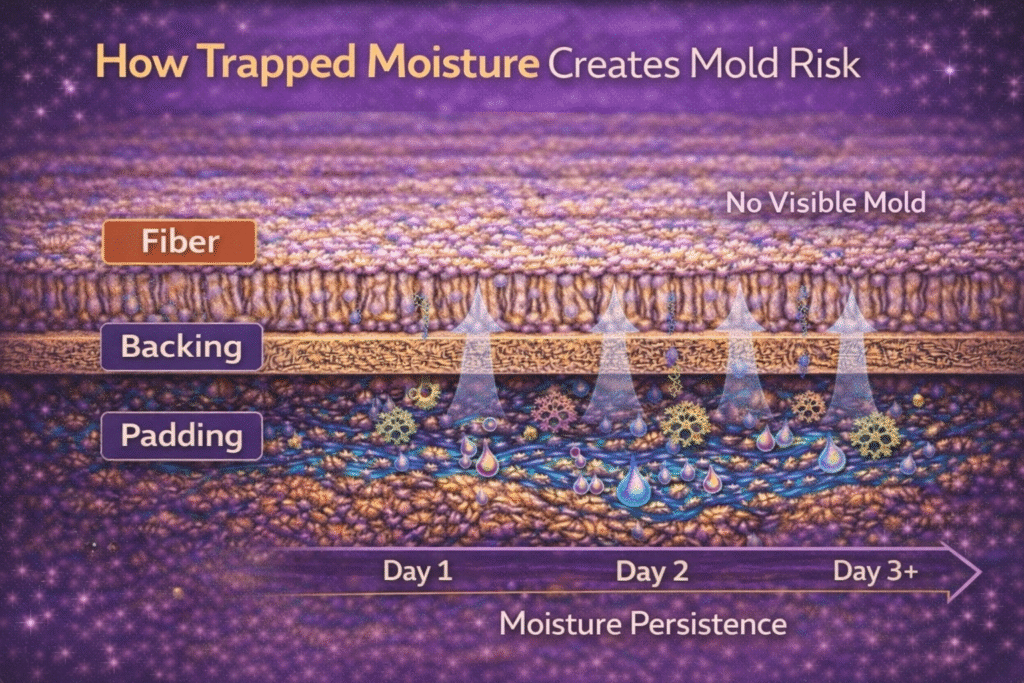
Mold growth does not begin on dry carpet fibers. It begins when moisture remains trapped in dark, low airflow areas such as padding, backing, or the carpet to subfloor interface.
Over wetting creates these conditions by allowing moisture to persist beyond normal drying windows. Mold risk increases long before visible signs appear, which is why over wetting is often discovered late.
Why Mildew Odor Appears After Carpets Feel Dry
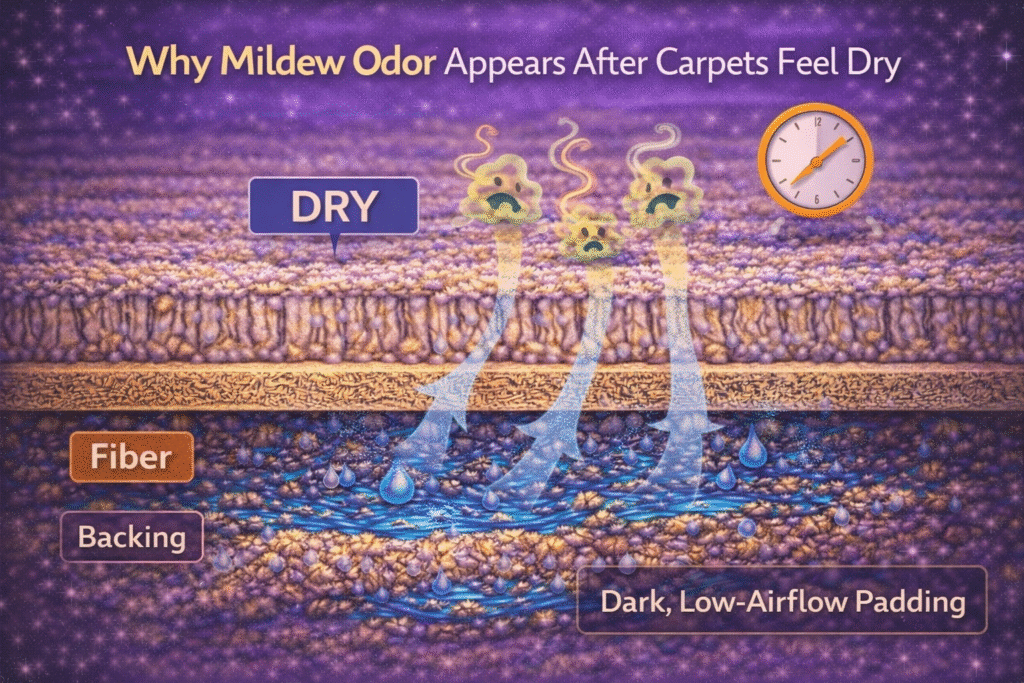
Mildew odor is typically a delayed warning signal, not an early one. By the time odor becomes noticeable, moisture has usually remained long enough to support microbial activity below the surface.
Because odor originates from deeper layers, it can persist even when fibers are dry. This disconnect between appearance and smell is one of the most common sources of confusion after carpet cleaning.
Knowing moisture behavior is a key part of carpet cleaning aftercare, which helps prevent over wetting issues before they develop.
Why Problems from Over Wetting Often Appear Days Later
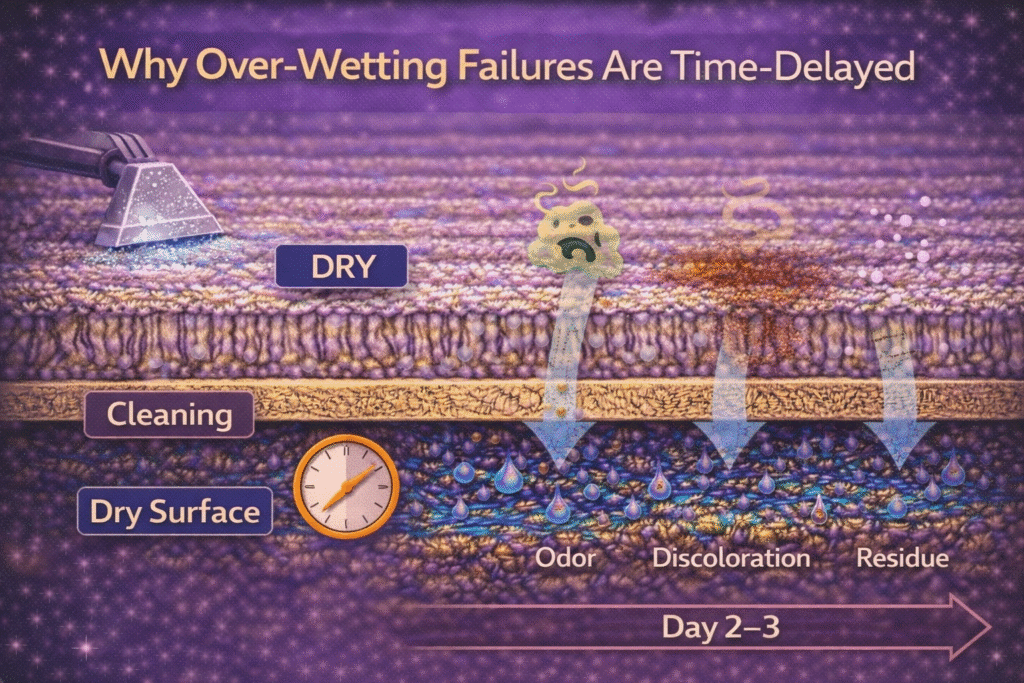
Over wetting carpets rarely causes immediate failure. The most serious issues usually appear after the carpet feels dry, once moisture has migrated or remained trapped out of sight.
Hidden Moisture and Delayed Evaporation
When carpets are over wetted, moisture does not evaporate evenly. Surface fibers dry first, while moisture in padding and backing evaporates slowly.
This hidden moisture can remain for days, allowing odor, microbial activity, or discoloration to develop later. The problem existed from the beginning, it simply took time to reveal itself.
How Moisture Migration Causes Wickback
As surface fibers dry, deeper moisture moves upward through capillary action. This moisture carries dissolved residue to the surface. When evaporation occurs, residue is left behind, creating discoloration known as wickback.
Wickback is not a new stain and not a cleaning failure. It is a predictable symptom of saturation and uneven evaporation. For a deeper explanation, see wick back after carpet cleaning.
Structural and Material Damage Caused by Over Wetting
Over wetting carpets affects more than appearance or odor. Prolonged moisture retention compromises the structural components of the carpet system.
Damage to Carpet Fibers, Padding, and Backing
Padding holds moisture longer than fibers, extending exposure time. Over time, this weakens padding structure and reduces its ability to support the carpet.
Backing materials and adhesives are also vulnerable. Extended moisture exposure can soften adhesives and lead to backing separation or delamination. These changes often occur before visible surface damage appears.
How Moisture Reaches the Subfloor and Adhesives
When saturation is severe or prolonged, moisture can move beyond the carpet system and reach the subfloor. This can degrade adhesives and contribute to long term structural issues.
Structural damage often begins well before fibers show wear, making over wetting an asset level risk, not just a comfort issue.
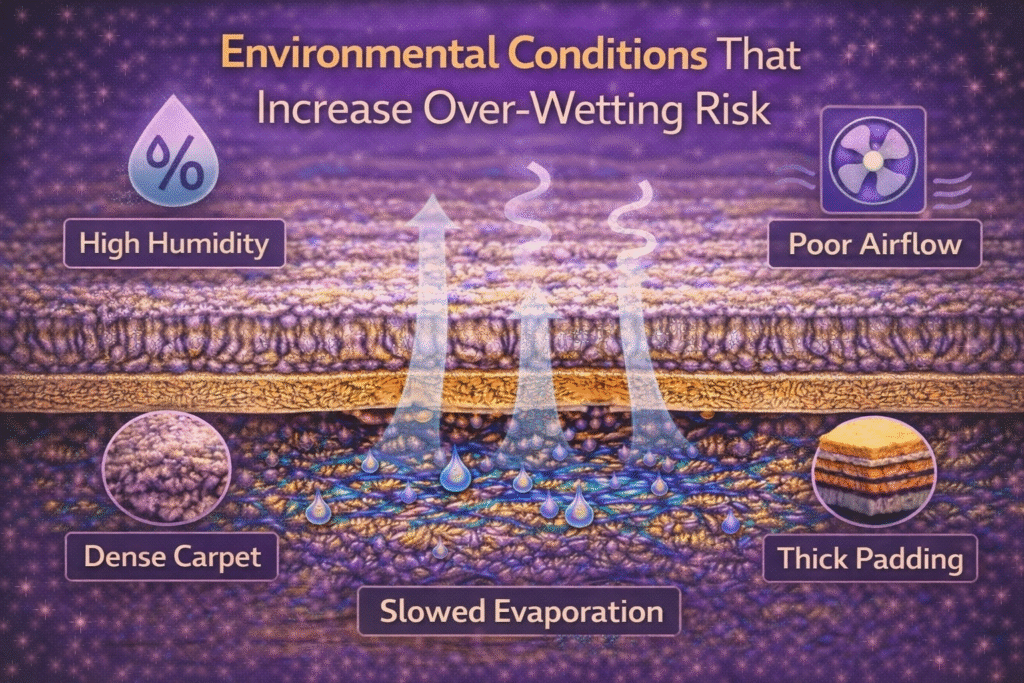
Environmental Factors That Increase Over Wetting Risk
Environmental conditions determine how long moisture remains trapped once saturation occurs.
| Factor | Effect |
|---|---|
| High indoor humidity | Slows evaporation |
| Poor air circulation | Traps moisture |
| Dense carpet | Increases moisture retention |
| Thick padding | Extends wet conditions |
| Premature use | Pushes moisture deeper |
In moisture prone climates, indoor conditions can significantly delay drying, increasing the likelihood of delayed odor, mold risk, and material degradation.
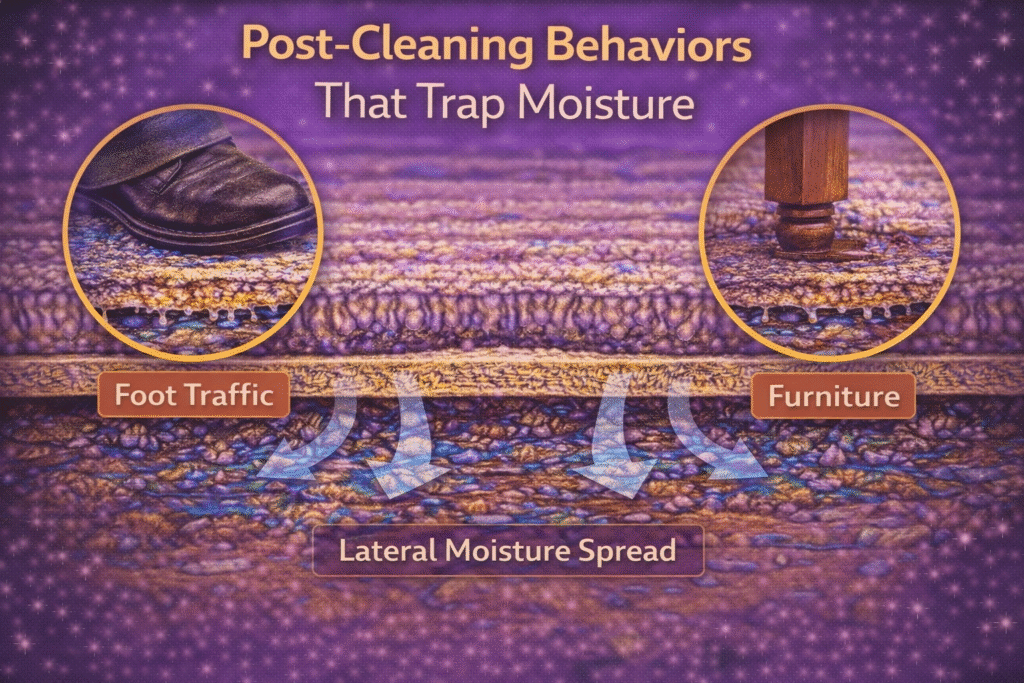
Behavioral Factors That Make Over Wetting Worse
Human behavior often extends the wet state after moisture has already entered the carpet system.
Foot Traffic During the Wet State
Foot traffic compresses damp fibers and padding, reducing airflow and pushing moisture deeper. Repeated traffic spreads moisture laterally, expanding the affected area.
Furniture Placement and Trapped Moisture
Furniture placed on damp carpet creates pressure points that trap moisture beneath legs and bases. These areas dry more slowly and often become sources of odor or discoloration later.
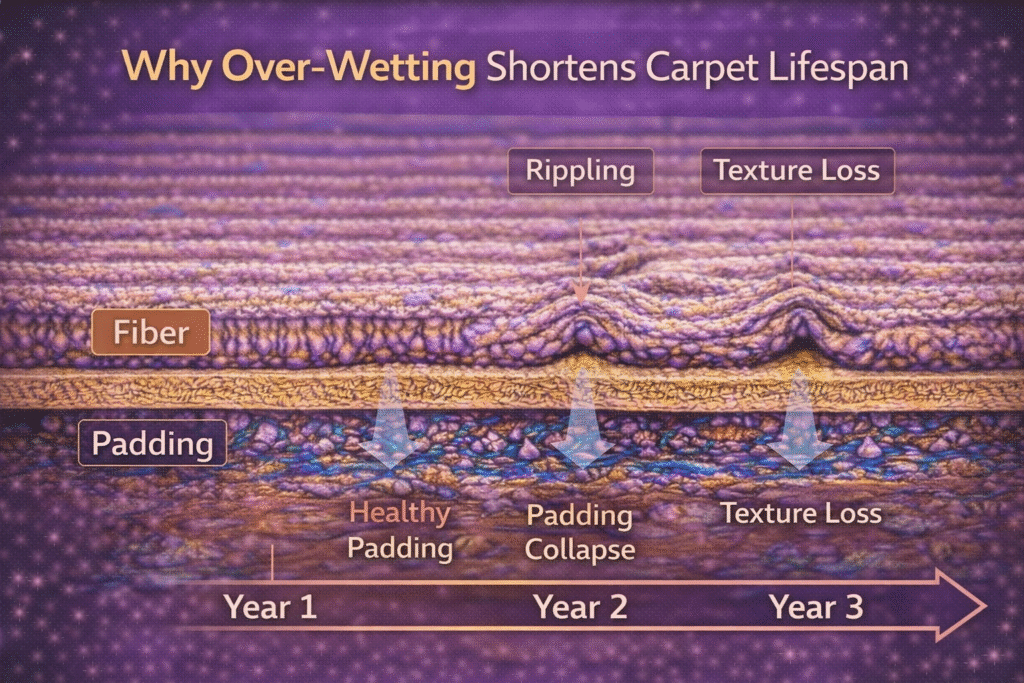
Why Over Wetting Shortens Carpet Lifespan
Over wetting accelerates progressive damage that reduces carpet lifespan long before visible wear appears.
Progressive Damage That Isn’t Immediately Visible
Moisture retained below the surface weakens padding, backing, and adhesives over time. Carpets may look acceptable while their structural integrity declines, leading to rippling, texture changes, or premature failure.
Warranty and Professional Standards Considerations
Most carpet warranties assume moisture exposure during cleaning is brief and controlled. Prolonged saturation can place carpets outside expected performance conditions and reduce warranty protection.
When moisture problems extend beyond normal drying, professional carpet evaluation helps determine if padding or backing layers have been affected.
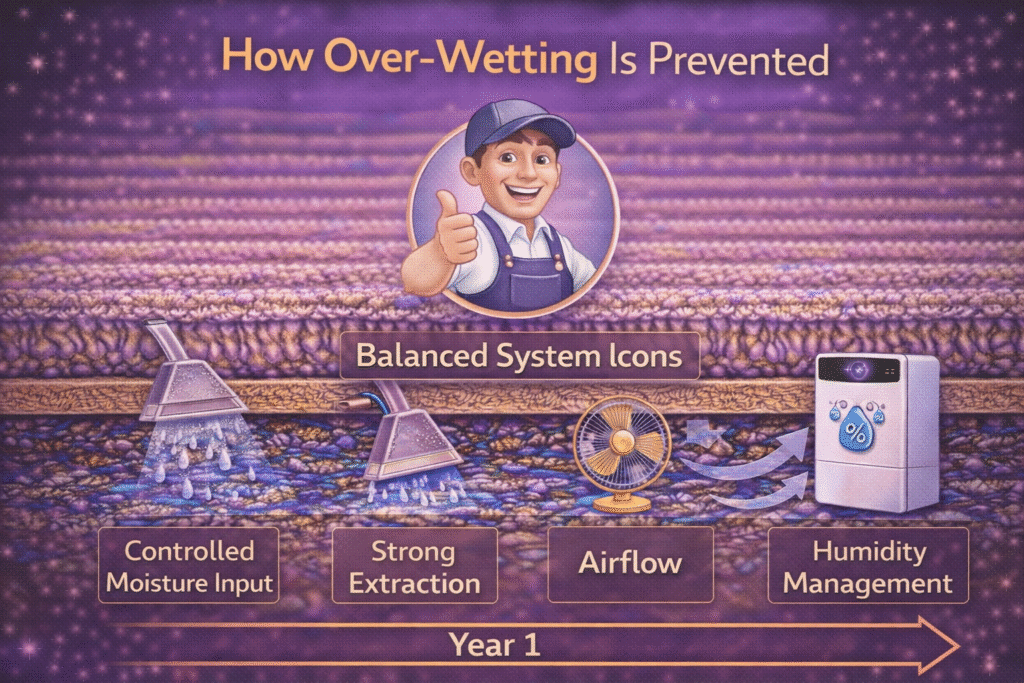
Professional Perspective on Over Wetting Risks
From a professional standpoint, over wetting carpets represents a system failure, not a cosmetic issue. Excess moisture changes how materials behave, how long carpets last, and how reliably they perform.
Masterful Carpet Cleaning approaches over wetting as a risk prevention issue rooted in moisture behavior, environmental conditions, and material interaction. For homes and facilities in Oregon, guidance from experienced carpet professionals can clarify if moisture related risks are present and what protects long term carpet performance.
For situations where moisture exposure escalates beyond normal conditions, professional carpet cleaning support provides assessment and stabilization without unnecessary disruption.
Key Takeaways About Over Wetting Carpets
- Over wetting is a saturation failure, not surface wetness
- Hidden moisture causes delayed odor and mold risk
- Wickback is a moisture migration symptom
- Behavior and environment amplify damage
- Structural damage begins before visible carpet failure
Author