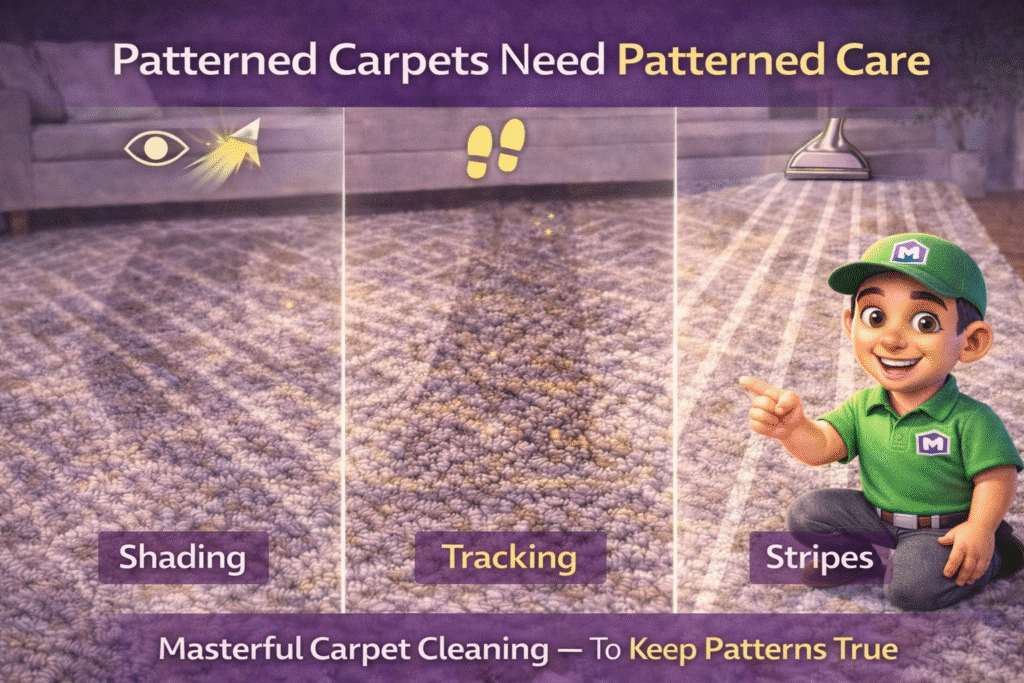
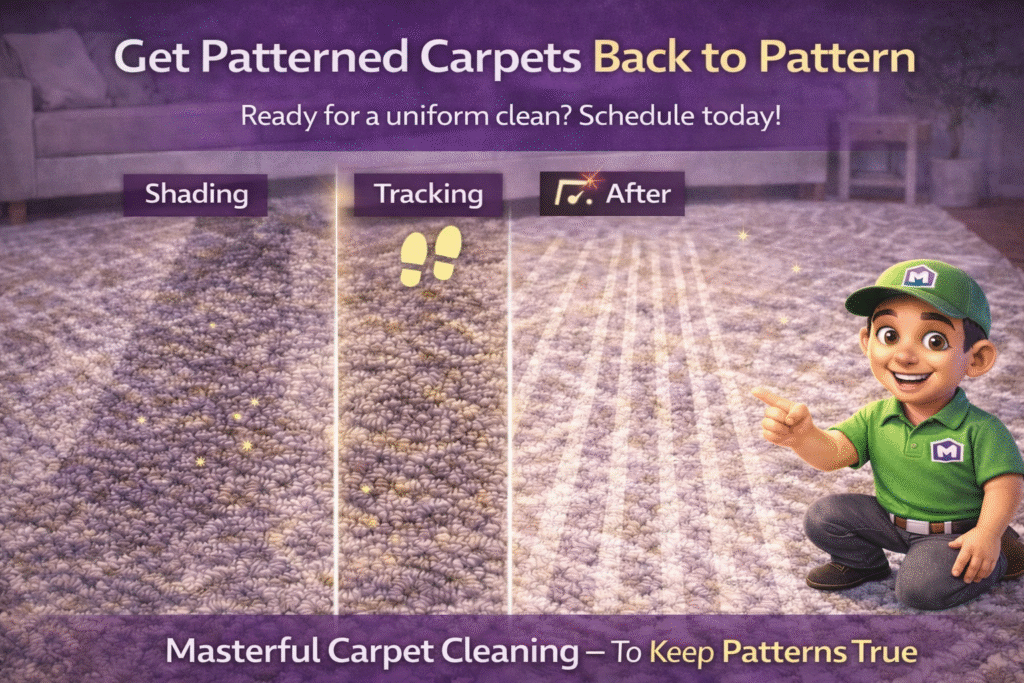
Patterned carpet cleaning isn’t just about getting soil out, it’s about keeping the pattern true. If your carpet shows shading, tracking in walk paths, or even stripes/lines after cleaning, the fix usually comes down to control: a balanced rinse and even passes to keep results uniform across the pattern. If you’re in Greater Oregon, Masterful Carpet Cleaning can help you get a clean finish without making the design look “off.”
Need patterned carpet cleaned without shading or tracking? Get a Fast Quote → Serving Greater Oregon.
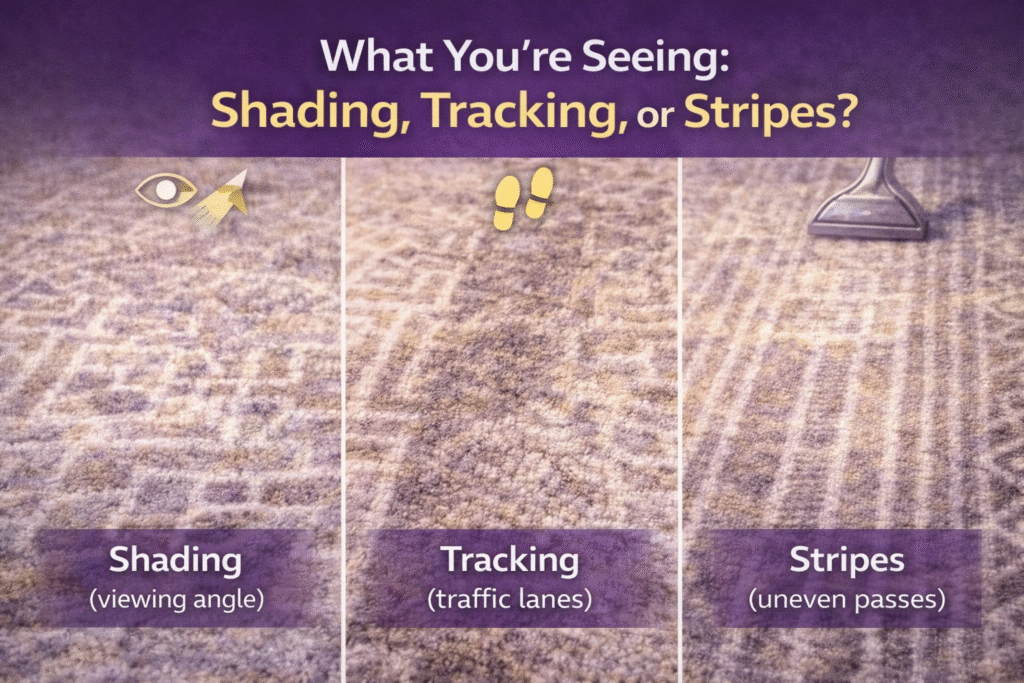
What You’re Seeing: Shading, Tracking, or Stripes?
Use this quick check to figure out what’s happening before you try to “fix” it, patterned carpet can look uneven for different reasons, and the next step depends on what you’re seeing.
- If it changes by viewing angle (light vs dark as you move): This is often related to pile direction / pile lay. Try gently grooming the pile in a single direction and viewing it from the same angle. If the uneven look is mostly “directional,” professional cleaning can help improve uniformity, but some appearance effects are part of how the pile reflects light.
- If it looks like water stain patches (pooling/watermarking) that don’t brush out: This may be pile reversal (also called pooling or watermarking). In many cases it’s considered an appearance phenomenon and may not be fully corrected by cleaning, but a professional assessment can tell you what’s realistic and what improvements are possible.
- If you see straight lines/stripes after cleaning: This is commonly a coverage issue, passes that didn’t overlap evenly, or areas left wetter than others. Let the carpet dry fully, then aim for even passes (consistent overlap and pace). If the stripes persist, it’s usually faster (and safer for the pattern) to have a pro correct it than to keep experimenting.
Pattern still looks uneven? Jump to Get a Fast Quote and tell us if you’re seeing shading, tracking, or stripes/lines.
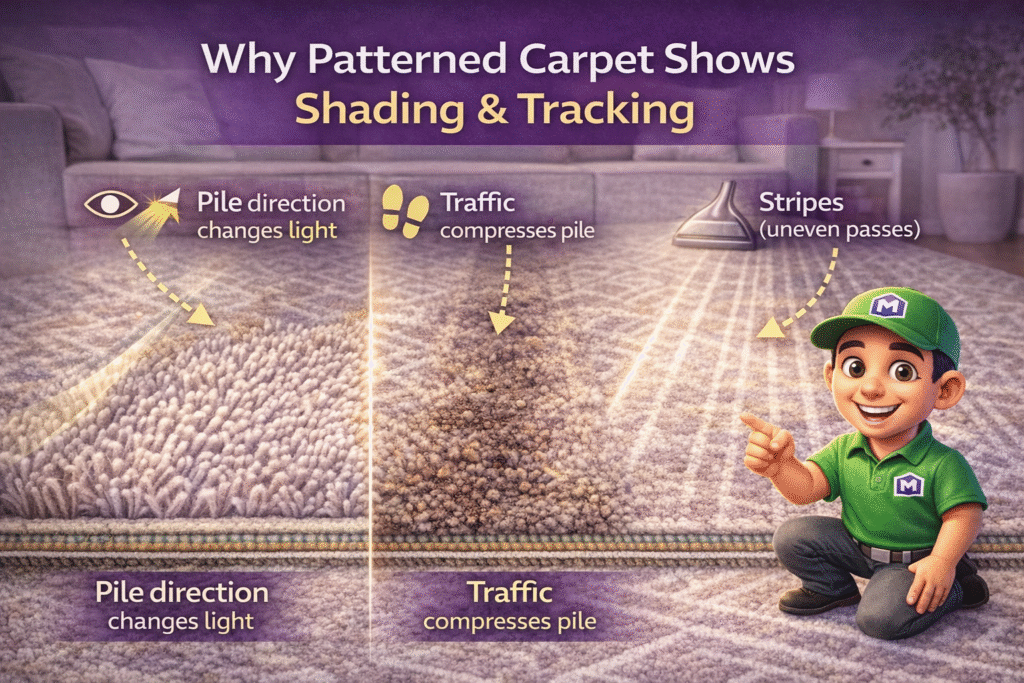
Why Patterned Carpet Shows Shading & Tracking
With patterned carpet, “uneven” doesn’t always mean “still dirty.” Patterns can read differently when the carpet pile sits in slightly different directions, light hits it one way and you see it as lighter, then you step to the side and the same area looks darker. That’s why shading can look dramatic on patterned installs, even after a proper cleaning.
Tracking is similar, but it shows up most in walk paths (traffic lanes) where the pile gets pressed down more often. Over time, those lanes reflect light differently and collect soil faster, so the pattern can look inconsistent, especially right after a DIY spot clean that creates “clean fields” next to untouched areas.
The goal of patterned carpet cleaning is simple: make the finish as uniform as possible across the pattern, so shading and tracking don’t jump out. That’s why the two biggest controls are a balanced rinse (for a clean, even finish) and even passes (for consistent coverage).
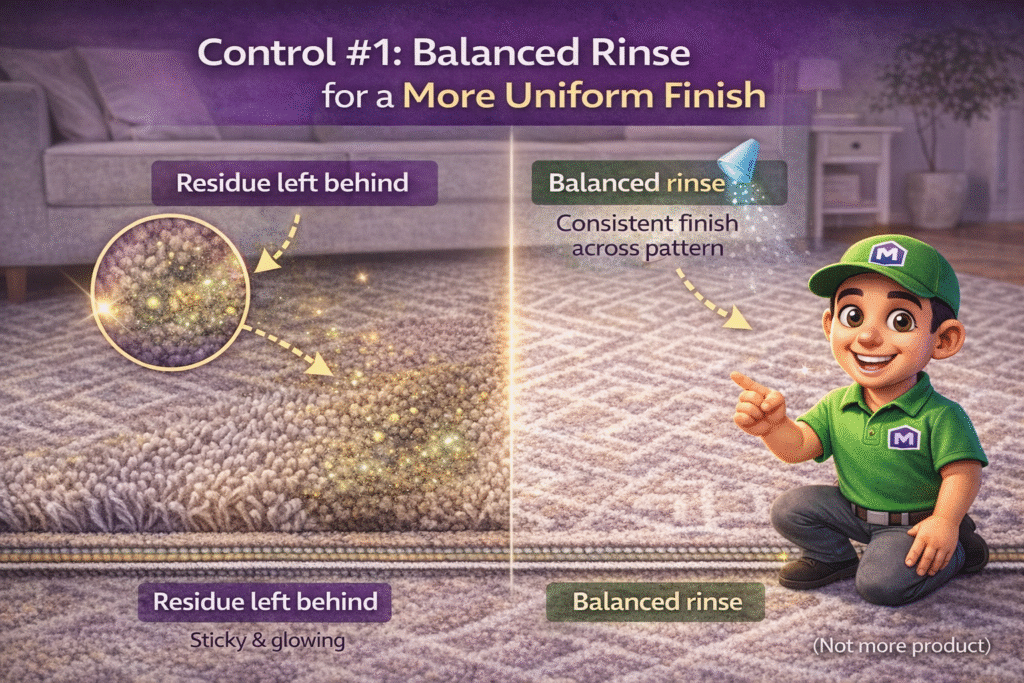
Control #1: Balanced Rinse for a More Uniform Finish
A balanced rinse is about finish consistency, not dumping more product into the carpet. Patterned carpet tends to “show” differences, so if one area is left with more cleaner residue than another, you can end up with patchy looking sections or faster resoiling in traffic lanes.
Here’s what a balanced rinse does for patterned carpet:
- Helps remove leftover cleaner residue so the surface feels and looks more consistent across the pattern.
- Reduces the chance resoiling in the lanes that already get the most foot traffic.
- Supports a more uniform appearance so the carpet doesn’t look “light here, dark there” simply because the finish is uneven.
If you’ve ever had a carpet look good for a week and then the walk paths look dull again, residue can be part of the story.
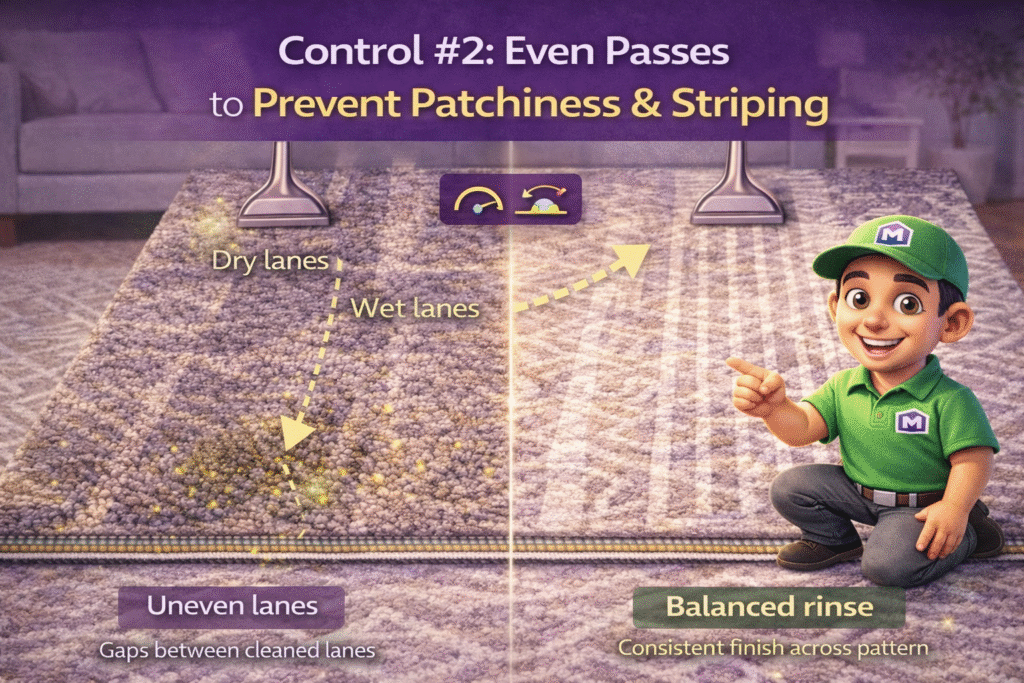
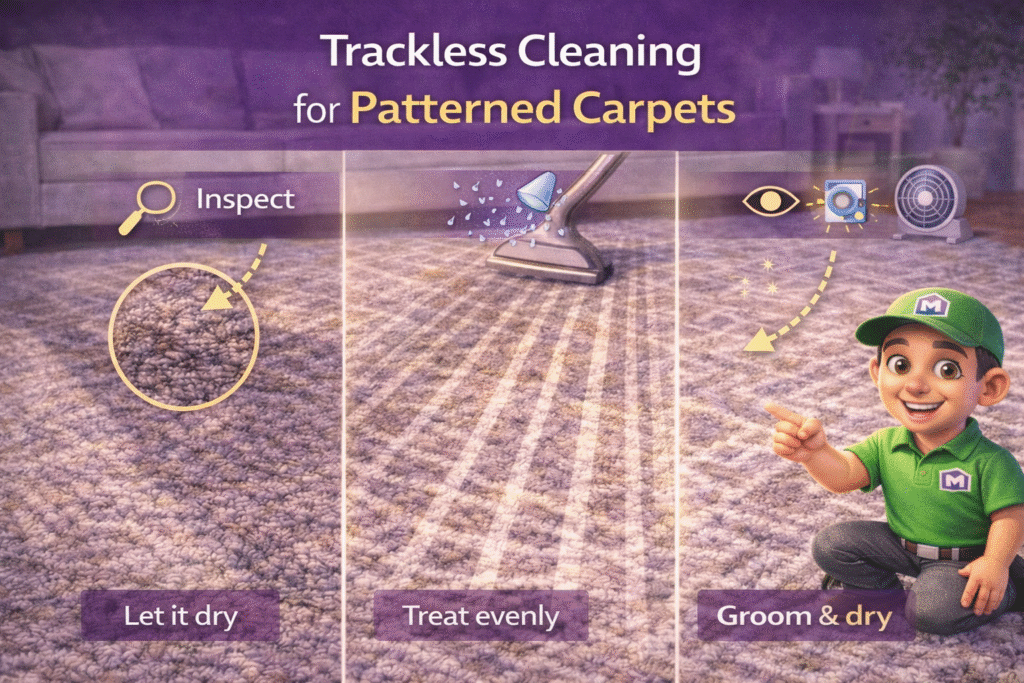
Control #2: Even Passes to Prevent Patchiness & Striping
On patterned carpet, results can look “off” when cleaning coverage isn’t consistent across the pattern fields. Even passes means we clean with a steady pace and consistent overlap so one section doesn’t get a heavier clean (or stay wetter) than the next. This is one of the biggest reasons people see lines, stripes, or patchy contrast after DIY cleaning.
Even Pass Standard (What We Aim For)
- Overlap passes so there aren’t gaps between cleaned lanes.
- Keep a steady pace (rushing can leave uneven moisture and uneven extraction).
- Extraction focused finishing passes to reduce lingering damp zones that dry differently.
- Light grooming / pile setting to help the carpet dry with a more uniform look, especially helpful on patterned surfaces.
If your patterned carpet is already showing stripes, the fastest improvement usually comes from correcting coverage and extraction rather than adding stronger product.
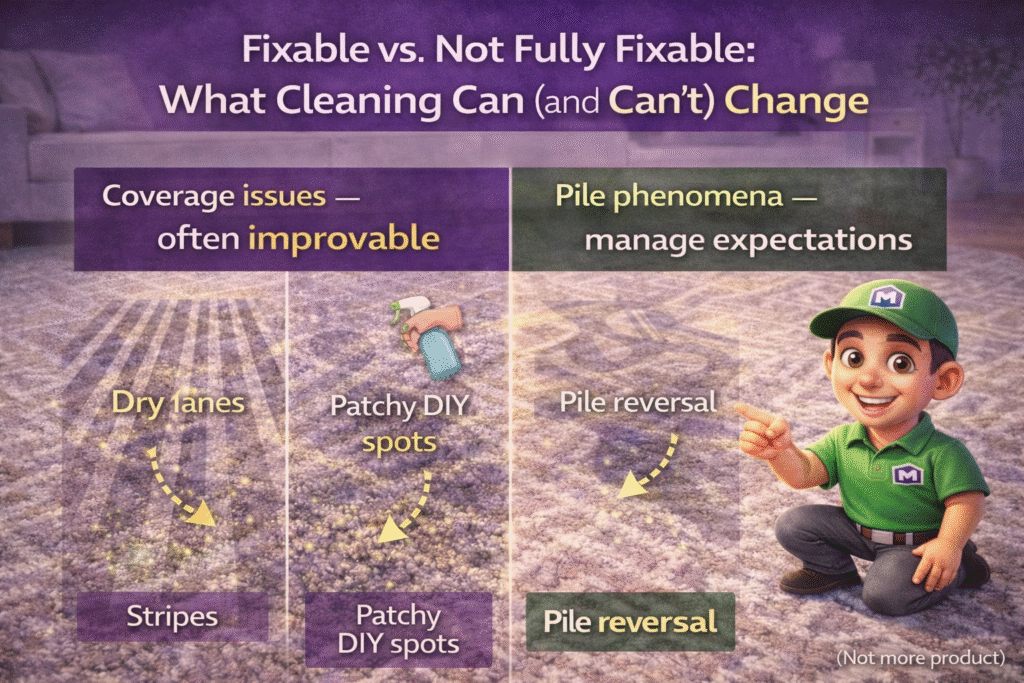
Fixable vs. Not Fully Fixable: What Cleaning Can (and Can’t) Change
One reason patterned carpet causes frustration is that a few different issues can look similar. Here’s the quick truth: some unevenness is coverage related and fixable, while other appearance changes are tied to pile direction and may not disappear completely.
| What you’re seeing | What it means | Best next step |
|---|---|---|
| Stripes/lines after cleaning | Coverage overlap or uneven extraction | Often improvable with even passes + extraction focused finishing |
| Patchy contrast after DIY spot cleaning | “Clean fields” next to untreated areas | Rebalance the finish with uniform coverage and a balanced rinse |
| Shading that changes by viewing angle | Pile direction / light reflection | Groom/pile set and manage expectations; cleaning can improve uniformity |
| Pooling / watermarking / pile reversal look | Appearance phenomenon tied to pile lay | May not be fully corrected; best move is an assessment and realistic expectations |
Important: If you suspect pile reversal (pooling/watermarking), cleaning may improve overall uniformity, but it may not fully remove the appearance change. The right next step is making sure you’re not chasing the wrong “fix” with repeat DIY cleaning.
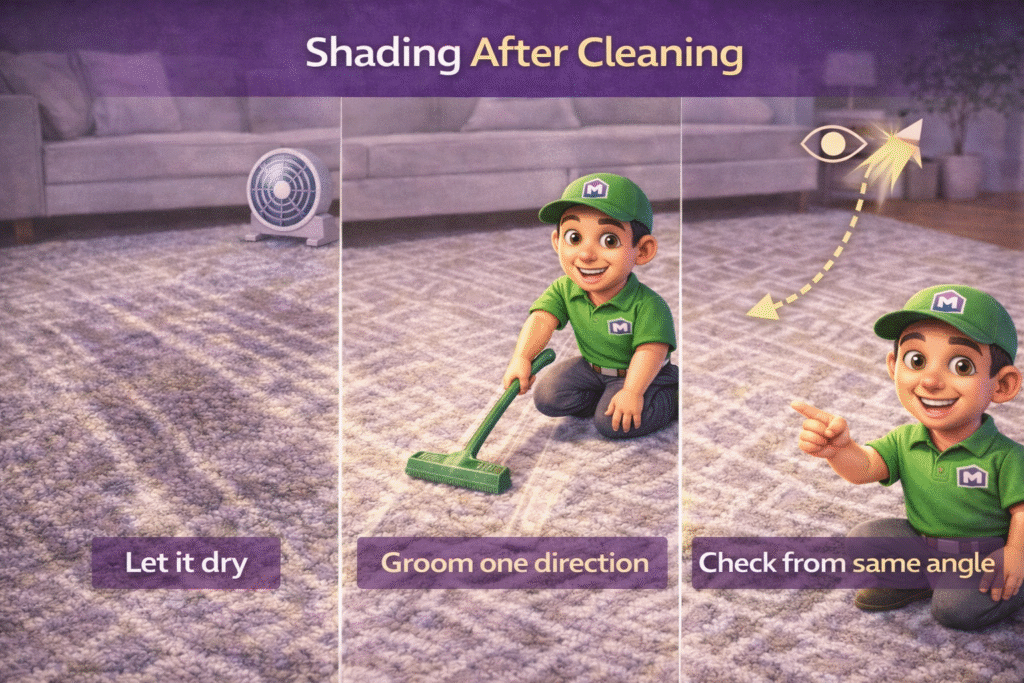
What to Do if Patterned Carpet Still Looks Uneven
If your patterned carpet looks worse after cleaning, don’t keep throwing products at it. First, identify what you’re dealing with, shading, tracking, or stripes/lines, then use the right next step.
Shading After Cleaning
What it usually is: Shading often comes from pile direction and how light hits the carpet. On patterned carpet, that change can look more dramatic than it is.
What to try next:
- Let it dry fully (appearance can shift while damp).
- Lightly groom the pile in one consistent direction (a soft brush or carpet rake helps).
- View the carpet from the same angle and lighting before judging the result.
Call a pro if: the shading looks like large “fields” that don’t respond to grooming, or you’re unsure if it’s shading vs. pooling/pile reversal. We can tell you what’s realistic before you spend more time on DIY fixes.
Tracking in Walk Paths
What it usually is: Tracking shows up most in traffic lanes, where the pile is pressed and soiling happens faster. After cleaning, those lanes can still read darker because the pile reflects light differently and the fibers have more wear.
What to try next:
- Keep traffic light until fully dry.
- Vacuum routinely once dry (traffic lanes respond best to consistent maintenance).
- If you’ve done spot cleaning in lanes, consider having the full area cleaned evenly so the pattern doesn’t show “clean patches.”
Call a pro if: the walk paths look noticeably different across the pattern, or you’ve tried spot cleaning and now the contrast is worse.
Stripes or Lines After Cleaning
What it usually is: Straight lines usually point to uneven passes, not enough overlap, moving too fast, or leaving some lanes wetter than others. As those lanes dry differently, the pattern can look striped.
What to try next:
- Let the carpet dry completely before deciding it “didn’t work.”
- If you reclean, use overlapping, even passes at a consistent pace.
- Focus on extraction (getting moisture out) so you don’t leave wet zones that dry unevenly.
- Light grooming can help the surface dry with a more uniform look.
Call a pro if: stripes persist after full drying, or you’re worried repeated DIY cleaning will distort the look. It’s easy to make patterned carpet look patchier with repeated spot attempts.
Pattern still looks uneven? Request an assessment and tell us if you’re seeing shading, tracking, or stripes/lines.
Before You Spot Clean: A Quick Colorfastness Check
Patterned carpet can be more sensitive to dye transfer, especially if you’re using a new spot remover or scrubbing aggressively. Before you spot clean, do this quick check in a hidden area.
- Pick an inconspicuous spot (inside a closet edge or under furniture).
- Dampen a clean white cloth with plain water (not soaking wet).
- Gently blot and rub the hidden spot for 10-15 seconds.
- Check the cloth for color transfer.
- If you see dye on the cloth, stop, don’t keep cleaning that area. That’s a sign you should use a professional approach to avoid fading or bleeding.
If you’re unsure, it’s safer to get help than to create a permanent “clean patch” that stands out against the pattern.
Patterned Carpet Cleaning in Greater Oregon
If you want your patterned carpet to look clean without the pattern looking uneven, the process matters. Our approach is built around two controls that protect appearance across pattern fields: a balanced rinse for a consistent finish, and even passes for uniform coverage, so you’re less likely to end up with noticeable shading, tracking, or striping after the carpet dries.
When it makes sense to hire a professional
Consider calling a pro if any of these are true:
- You’re seeing pooling/watermarking and you want a realistic assessment of what cleaning can improve.
- DIY cleaning created patchy “clean fields” that stand out in the pattern.
- Traffic lanes still look darker even after you’ve cleaned them.
- You keep getting stripes/lines and don’t want to risk making the pattern look worse.
If you’re in Greater Oregon, Masterful Carpet Cleaning can assess what you’re seeing, explain what’s normal vs. fixable, and recommend the safest next step for your specific carpet and pattern.
Pricing: Carpet cleaning cost & add-ons
FAQ: Patterned Carpet Cleaning, Shading & Tracking
What causes shading on patterned carpet?
Shading often comes from pile direction and how light reflects off the carpet surface. On patterned carpet, that change can look more dramatic because the design highlights contrast. A balanced rinse and even passes help reduce patchiness by keeping the finish and coverage consistent.
What is pile reversal (pooling/watermarking)?
Pile reversal, sometimes called pooling or watermarking, is an appearance change where areas look lighter from one direction and darker from another. It’s related to the way the pile lays and reflects light. In many cases it’s considered an appearance phenomenon and may not be fully corrected by cleaning.
Can cleaning fix pile reversal?
Sometimes cleaning can improve overall uniformity, but pile reversal/pooling may not fully go away. The best next step is an assessment so you know whether you’re dealing with a fixable coverage issue (like striping) or an appearance change that needs expectation setting.
Why are there stripes or lines after carpet cleaning?
Stripes or lines usually happen when cleaning passes aren’t consistent, too little overlap, moving too fast, or leaving some lanes wetter than others. Let the carpet dry fully, then focus on even passes and extraction if recleaning. Light grooming can also help the carpet dry with a more uniform look.
What does “balanced rinse” mean in carpet cleaning?
A balanced rinse is a controlled rinse step designed to leave a consistent finish across the carpet, especially important on patterned installs that show contrast. It helps reduce leftover residue that can contribute to uneven appearance and faster resoiling in traffic lanes.
Why do even passes help on patterned carpet?
Patterned carpet can highlight small differences in coverage. Even passes (steady pace, consistent overlap) help prevent patchy sections, striping, and “clean fields” that stand out across the pattern.
How do I test colorfastness before spot cleaning?
Test in a hidden area with a lightly damp white cloth. Gently blot/rub for 10-15 seconds and check for dye transfer. If you see color on the cloth, stop and avoid further spot cleaning, professional help is safer to prevent fading or bleeding.
How long should patterned carpet take to dry?
Dry time depends on airflow, humidity, and how much moisture was used, but the best practice is to keep traffic light until it’s fully dry. For faster drying and better appearance, use airflow (fans) and follow aftercare steps, uneven dampness can make patterns look patchier while drying.

Author