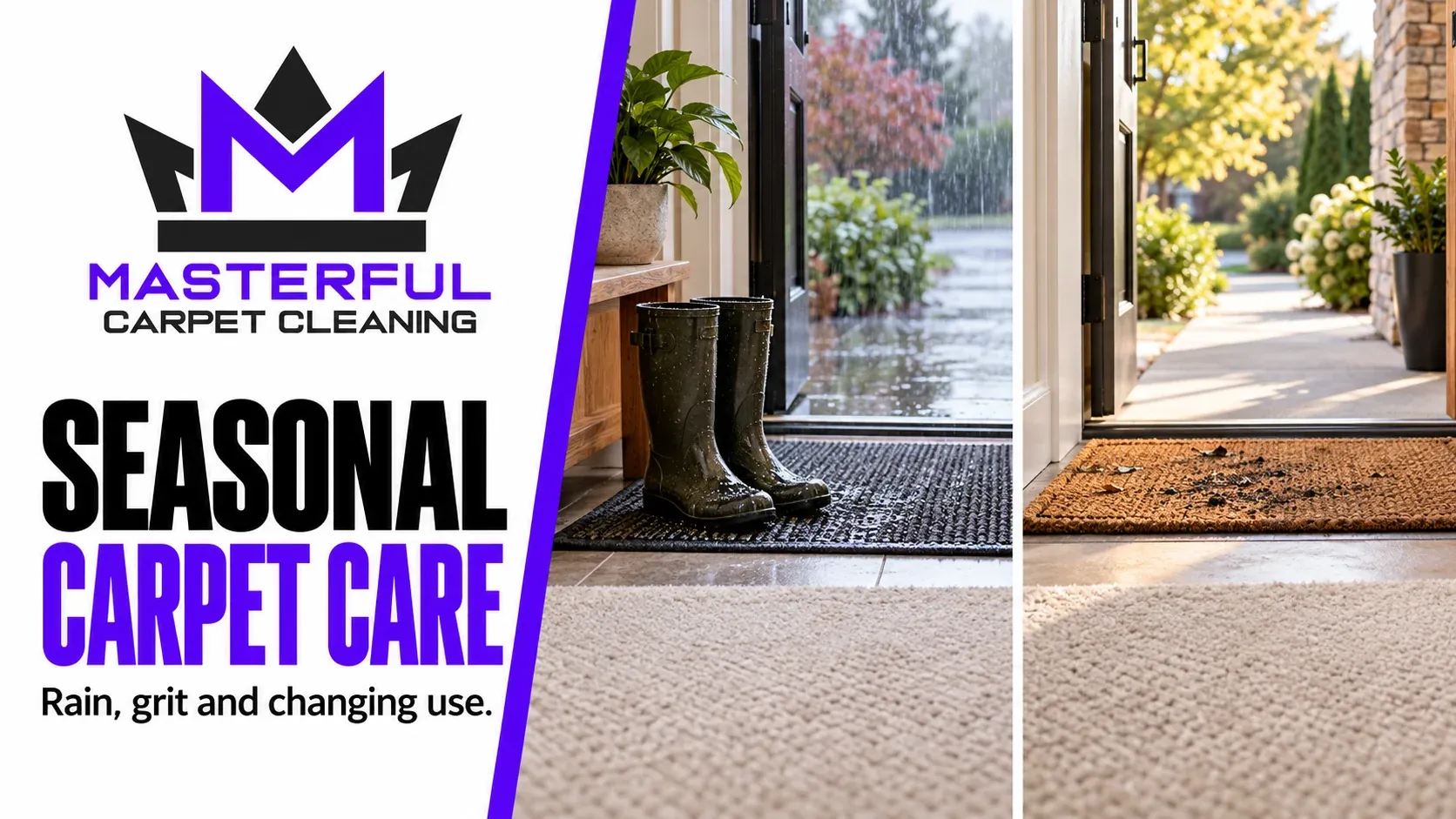
Change your carpet care when the conditions at your door change. During wetter stretches in the Willamette Valley, focus on wet shoes, mud and any moisture that stays in the carpet. When the weather is dry and outdoor activity rises, watch for grit along entries and busy paths. Keep the carpet maker’s care instructions as your baseline. The season tells you what to inspect; the carpet’s condition tells you what to do.
Match the work to what reaches the carpet
The Willamette Valley has a broad pattern of milder, wetter winters and warmer, drier summers, as described by Oregon’s Willamette Valley state wildlife plan. The pattern is a useful prompt, not a cleaning schedule. A covered entry, household habits, pets, foot traffic and the weather on a particular day can change what reaches an individual room. Check the entrance and the busiest path before adding any task to your normal routine.
| Condition to check | What may reach the carpet | What to do now | When to ask for help |
|---|---|---|---|
| Wet autumn days | Mud, wet leaves and grit at the doorway | Clean mats; keep wet shoes off carpet; lift loose mud; follow the maker’s spot directions. | Mud persists or busy paths stay dull after vacuuming. |
| Winter rain and indoor traffic | Wet shoes, tracked soil and concentrated use of halls or family rooms | Check mats and the entry; dry small wet marks, then vacuum loose soil. | Carpet or pad stays wet, odor returns, or a leak is possible: seek moisture assessment. |
| Spring after wet weather | Soil left in entries, stairs or other busy paths | Compare busy and quiet carpet; check spots and dampness; vacuum suitably. | Soil remains or a maker service requirement is due. |
| Dry summer and outdoor activity | Sand, dust or gritty soil carried in from outside | Maintain mats and vacuum paths with visible grit. | Lanes remain soiled after routine care: request a cleaning assessment. |
These are examples, not promises that every home has the same soil in each season. One rainy weekend can bring more soil than a month of dry weather. Entrance mats, suitable vacuuming in busy areas and prompt spot care can help limit soil carried indoors.
During rain and mud, protect the entrance first
An outside mat can remove some heavy dirt before a shoe reaches the door; an inside mat catches more of what remains. Clean the mats when they fill with soil. If a mat stays soaked, dry or replace it so it does not hold moisture against nearby flooring.
A shoe tray or a place for wet footwear can keep muddy water away from carpet. Move the mat back into position after cleaning so guests have an obvious place to step.
For a fresh muddy track, pick up any loose clumps without grinding them into the pile. Once the remaining surface soil is suitable to vacuum, use a machine appropriate for the carpet construction. If a distinct spot remains, follow the carpet maker’s instructions and the product label. Do not rub hard or pour a general household detergent into an unknown carpet.
A cleaning product can leave residue, change color or wet the backing if it is unsuitable. Follow the directions for your own carpet, since products and methods vary.
A small wet footprint after an ordinary rainy arrival is different from a carpet that stays wet. Note how far the moisture extends and its likely source: footwear, a spill or a building leak. If the carpet or pad does not dry promptly, stop treating it as an ordinary mud spot and address the moisture source.
Use spring to inspect what the wet months left behind
When the weather shifts, look at the entry, the route to the kitchen, stairs and the rooms that had the most use. Compare a traffic path with a quieter patch of the same carpet in similar light. A darker lane may contain soil that needs cleaning. A flat or shiny lane may include pile wear that cleaning cannot reverse. Take a photograph if the difference is hard to describe when asking for a quote.
Check the edges near doors and windows for moisture or a recurring odor. A returning damp patch calls for a source check, not a spring cleaning package. If the carpet is dry and routine vacuuming brings the appearance back, continue the normal plan. Our carpet maintenance routine covers the tasks that stay useful across the year. The seasonal check is a chance to adjust that routine where conditions changed.
Spring outdoor activity can also bring new grit through an open door or a busy entry. Clean the mats and target the affected path. There is no need to treat every room simply because it is spring, and ordinary carpet cleaning should not be sold as a medical or allergy treatment.
During dry weather, catch grit before it spreads
Dry days can mean more visits to a yard, garden, trail or playground. Fine grit tends to collect along the doorway and the route people take through the house.
Shake or clean the exterior mat as its care instructions allow, keep the inside mat free of collected debris, and vacuum the carpet where visible soil is accumulating. If a household uses an entry without a mat, place one where people can use it without creating a trip risk or blocking the door.
Do not increase vacuuming in every room by a fixed amount just because it is summer. A busy entry may need attention sooner than a little used bedroom.
Choose a vacuum setting and attachment suited to the pile, particularly for loops or delicate fibers. If a dry, gritty lane still looks dull after careful vacuuming, ask a professional cleaner to assess the embedded soil. Our busy carpet path article explains how to recognize soil and the appearance limits caused by wear.
What if wildfire smoke is present?
Smoke is an indoor air concern with its own public health advice. During a smoke event, The US Environmental Protection Agency advises avoiding vacuuming during wildfire smoke unless the vacuum has a HEPA filter, because vacuuming can put particles back into indoor air.
Follow current local air guidance and the equipment directions. Routine carpet cleaning is not a substitute for reducing smoke entry or addressing an air quality problem. After the event, describe any unusual deposit or odor before requesting carpet service so the team can discuss the appropriate scope.
Know when the problem is moisture, not ordinary soil
Rain outside does not by itself mean a carpet is wet below the surface. A plumbing leak, water entering at a door or window, standing water, or repeated dampness is different.
The US Environmental Protection Agency’s moisture advice calls for fixing the water source and drying wet materials promptly; its general guidance says wet materials should be dried within 24 to 48 hours when feasible. Carpet backing and pad can hold water that is not obvious from the top of the pile.
If the source is active, stop it when safe and seek qualified water damage assessment. Tell the assessor how long the material has been wet and how far the water may have spread. Do not use a routine carpet appointment as a replacement for leak repair, pad inspection or drying of the building.
A persistent musty odor, visible growth or a mark that repeatedly returns after the surface dries also deserves a source check. More shampoo, fragrance or a humidifier will not fix a continuing water source.
Ordinary drying after a professional cleaning is a different situation. Follow the cleaner’s instructions for ventilation and use of the carpet, and tell the company if an area remains unusually wet or smells different after the expected drying period. Our carpet drying article explains that distinction in more detail.
Book because the carpet needs service, not because the season changed
Professional cleaning is worth discussing when traffic lanes stay soiled after suitable vacuuming, multiple spots remain, or a carpet maker’s care or warranty requirement is due. The professional cleaning frequency article explains how to weigh the maker’s directions, last visit, traffic and condition.
It is possible to clean an affected room or group of rooms without declaring every carpet in the home due at once. Ask how treating one area may look beside an older, untreated area.
Before booking, note which rooms are affected, the carpet maker and fiber if known, the date and method of the last professional cleaning, any warranty requirement, and products already used on spots. Tell the team about pets, a recurring odor, a leak, a loose seam or a wet pad.
A clear history helps separate a cleaning quote from a repair or moisture problem. Photographs of busy lanes and distinct marks can help with the first conversation.
Ask which rooms, spot treatments and furniture moves are included, what process is proposed for your carpet, and what drying instructions will apply. A cleaning visit may remove suitable soil and improve the appearance of a lane. It cannot guarantee removal of every stain or restore worn pile. If there is active moisture or structural damage, get that assessed before choosing a routine clean.
Common questions about seasonal carpet care
Does carpet need professional cleaning every spring?
No. Look at the carpet’s condition, the maker’s instructions and the last service date. If routine care has kept the carpet in good condition and no warranty requirement is due, spring alone is not a reason for another appointment. Persistent soil or spots are a better reason to ask for an assessment.
Can I vacuum mud immediately?
Lift loose clumps carefully without pressing them in. If the remaining material is still wet and sticky, avoid smearing it across the fibers or through the machine. Follow the carpet and vacuum makers’ directions. Once suitable to vacuum, remove loose soil; treat any remaining spot with a product approved for that carpet.
What changes if we use the yard more in summer?
Focus on the entry and the route people use. Clean mats, reduce tracked soil where practical and vacuum the paths that accumulate grit. There is no automatic need to clean a quiet room more often because the weather is dry.
Will professional cleaning fix a wet or musty carpet?
It cannot fix a leak or prove that backing and pad have dried. Seek a moisture assessment and address the source first. Once the materials are sound, ask what cleaning, if any, is suitable.
Should I use a humidifier to protect carpet in winter?
Do not add humidity as a blanket carpet care step. Indoor moisture depends on the building and its conditions. The EPA advises controlling moisture and keeping indoor relative humidity below 60%, ideally between 30% and 50%. If the room is already damp, added moisture can make the problem worse.