If your grout lines look dark, blotchy, or “always dirty,” the fix usually isn’t just buying a grout sealer, it’s cleaning the grout properly first, then sealing it with the right sealer type. Masterful Carpet Cleaning provides tile & grout cleaning and grout sealing in Salem, Oregon, and we’ll help you choose the best option for your floors or shower: penetrating (impregnating), topical, or color sealer.
Schedule Tile & Grout Cleaning + Sealing (Salem, OR)
For most homes, a penetrating (impregnating) grout sealer is the best all around choice because it soaks into porous grout and helps block stains and moisture without leaving a film. Topical sealers sit on the surface and can wear unevenly in busy or wet areas. Color sealers work best for grout that stays stained. Clean first, then seal.

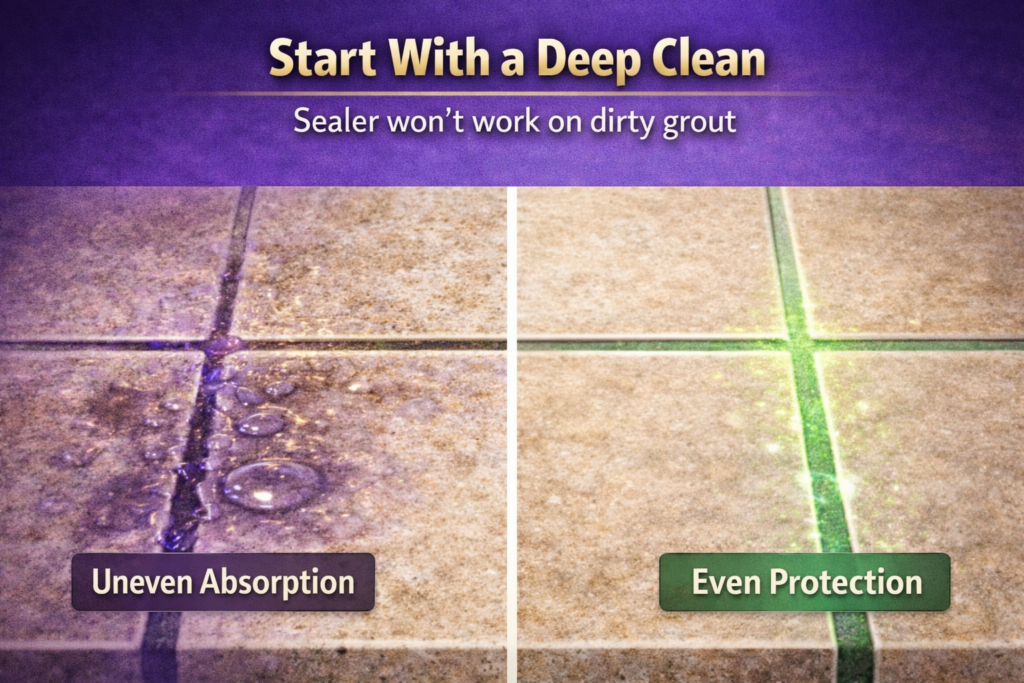
Not Sure Which Grout Sealer You Need? Start With a Deep Clean
A grout sealer can’t do its job if it’s applied over embedded dirt, soap residue, or leftover cleaner. That’s why people often end up with grout that looks patchy, some areas absorb sealer, others don’t, and stains show back up fast.
Here’s the simple rule that makes sealing last: deep clean the grout lines first, let them dry fully, then seal. Professional tile & grout cleaning removes the grime that household mopping leaves behind, especially in showers, kitchens, and high traffic floors. Once the grout is clean and dry, the right sealer (penetrating, topical, or color sealer) goes on evenly and performs the way it should.
Common signs you should clean before sealing:
- Grout looks darker in certain spots (especially near sinks, stoves, and shower corners)
- Water darkens the grout quickly when it gets wet
- The grout feels rough or looks “cloudy” even after scrubbing
- Past sealing attempts didn’t last or looked uneven
Want clean grout lines and the right sealer applied the right way?
Get a quote for tile & grout cleaning + grout sealing in Oregon.
The 3 Main Types of Grout Sealer (Penetrating vs Topical vs Color)
Choosing the right grout sealer comes down to how your grout behaves and where the tile is installed. Grout is usually the porous part of the system, so the “best” sealer is the one that matches your daily conditions, water, traffic, and stains.
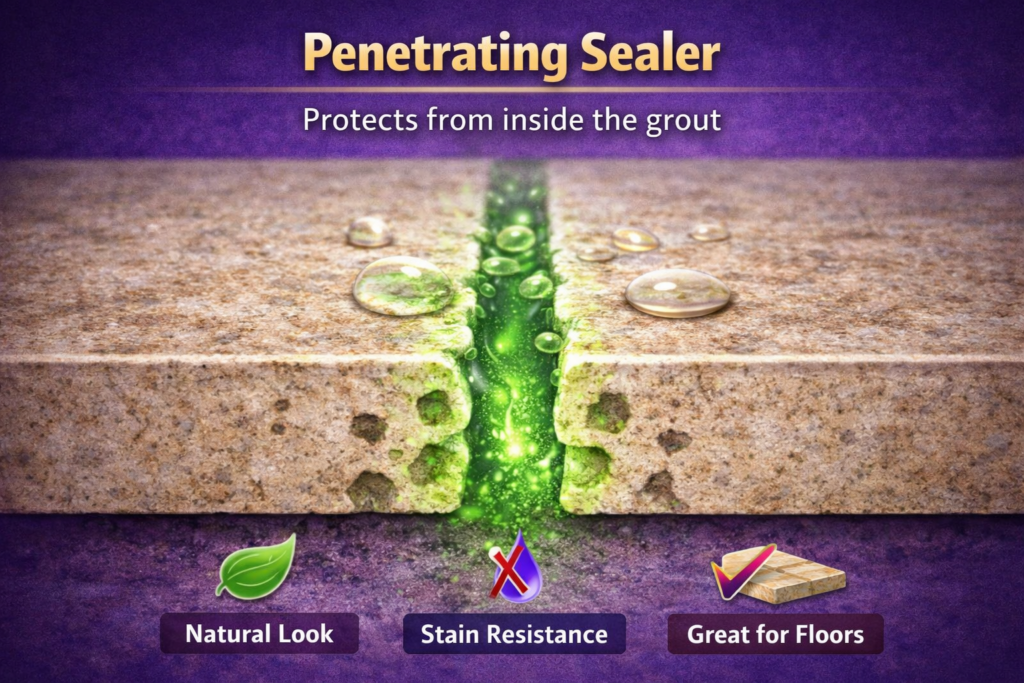
1) Penetrating (Impregnating) Sealer
A penetrating grout sealer soaks into the grout’s pores and protects from within. It’s the most common choice for homeowners because it:
- keeps a natural look (no surface shine)
- helps reduce staining from spills and everyday mess
- holds up well in many high traffic areas
Best for: most tile floors, kitchens, hallways, and many bathrooms.
Good fit when: grout darkens quickly when wet, or you want protection without changing appearance.
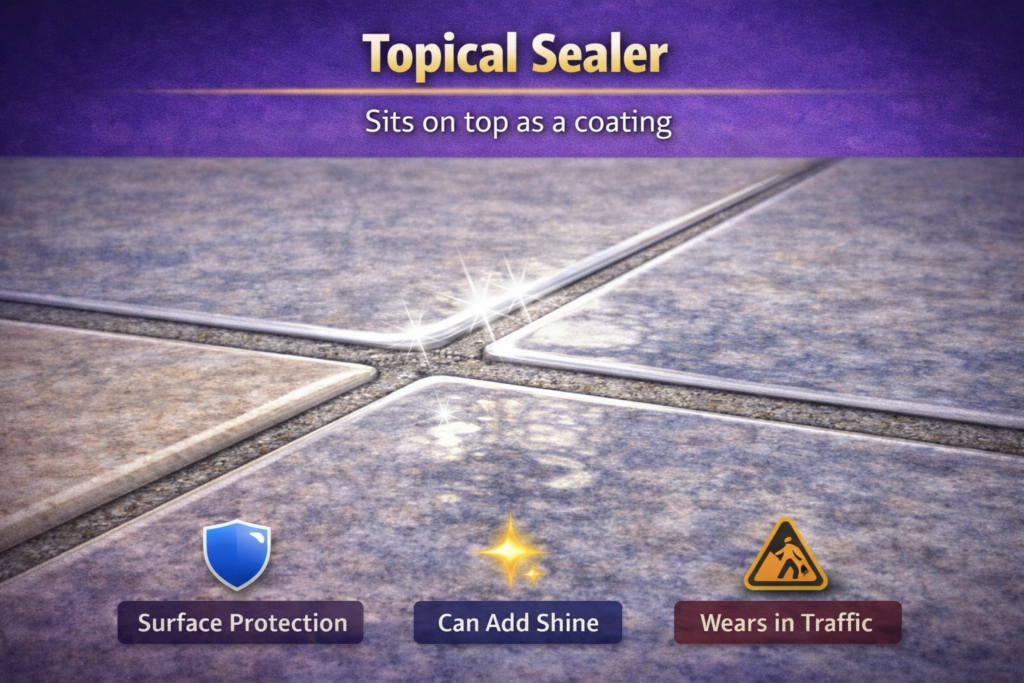
2) Topical Sealer (Surface Coating)
A topical sealer sits on top of the grout as a coating. Some people choose it for a certain finish, but it can be less forgiving if the area sees heavy traffic or constant moisture.
Best for: select low traffic areas where a coating is desired.
Watch outs: topical coatings can wear in walk paths, look uneven if prep is off, and may need more consistent upkeep.
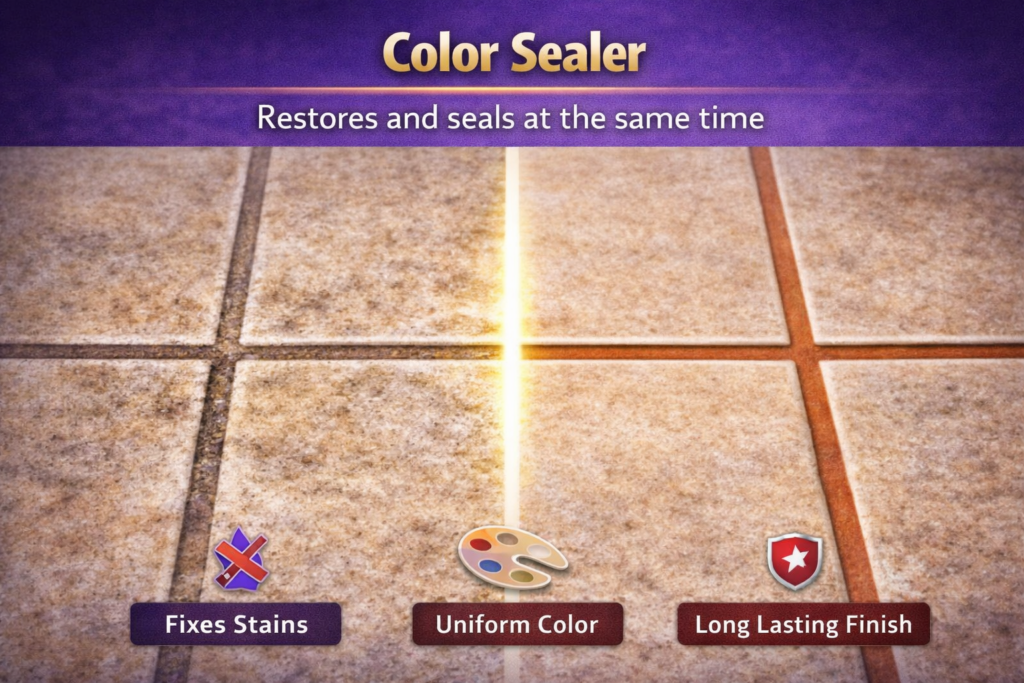
3) Color Sealer (Grout Colorant + Seals)
A color sealer does two jobs: it changes or restores grout color and also seals. If grout is permanently discolored, or it cleans unevenly, this is often the most practical way to get a uniform look again.
Best for: grout that stays stained, blotchy, or mismatched after cleaning.
Good fit when: you want grout lines to look “new” again without regrouting.
Quick rule of thumb:
- Want invisible protection? Penetrating sealer.
- Want a surface coating? Topical sealer (with the right prep).
- Want a color reset? Color sealer.
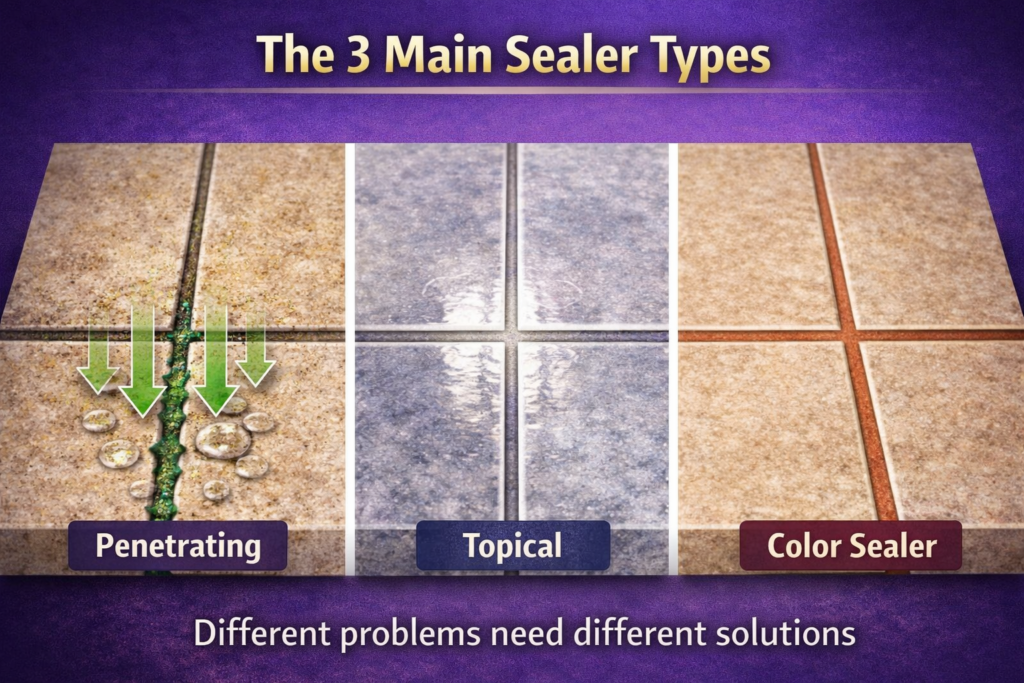
Grout Sealer Comparison Table (Choose Faster)
| Grout Sealer Type | Best For | Look | Maintenance | When to Call a Pro |
| Penetrating (Impregnating) | Most tile floors, kitchens, many showers | Natural / invisible | Wears gradually; reapply as needed | If grout is deeply dirty, absorbs unevenly, or stains return fast |
| Topical (Surface Coating) | Decorative or low-traffic areas | Can add sheen | Can wear/peel if traffic/moisture is high | If an old coating is flaking, streaking, or leaving patchy shine |
| Color Sealer (Colorant + Seals) | Permanently stained or blotchy grout | Uniform grout color | Durable when applied correctly | If grout won’t brighten evenly or you want a consistent grout-line color |
If you’re stuck between two options, don’t guess based on the bottle label alone. The deciding factor is usually what’s already in the grout lines and whether the area is wet, busy, or both. That’s why we recommend this order: deep clean first, then seal.
Not sure which one fits your tile? Masterful Carpet Cleaning can deep clean your grout lines first and recommend the right sealer for your shower or floors in Salem, Oregon.
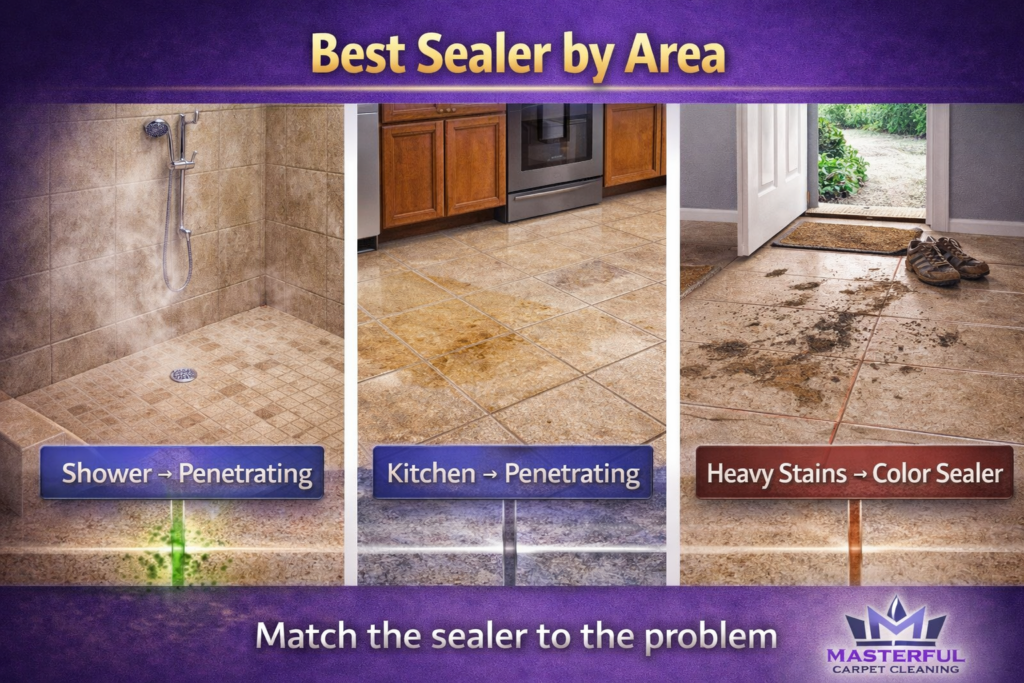
Best Grout Sealer by Tile Area (Shower vs Kitchen Floor vs High Traffic)
Now that you know the three main sealer types, the next step is matching them to where the tile actually lives. The same grout can behave very differently in a shower than it does on a kitchen floor.
Shower & Bathroom Grout
Bathrooms deal with constant moisture, soap residue, and temperature swings. For most homes, a penetrating (impregnating) grout sealer is the most practical choice because it protects porous grout without creating a surface film that can look uneven over time.
A color sealer is often the better move when:
- grout stays blotchy even after scrubbing
- the shower corners look permanently dark
- you want a uniform grout color without regrouting
If your shower grout never looks fully clean, book tile & grout cleaning + grout sealing in Salem, Oregon so the sealer goes on evenly and holds up.
Kitchen Floors
Kitchen grout takes hits from grease, spills, and foot traffic. A penetrating grout sealer is usually the safest fit because it soaks in and protects from within, ideal for everyday messes without changing the look of the tile.
Topical coatings can be harder to maintain in busy spaces (wear paths show up fast), so most homeowners prefer a penetrating option unless there’s a specific finish goal.
Entryways & High Traffic Tile
Entryways and hallways collect dirt and grit that work into grout lines. Again, a penetrating sealer is typically the most durable, low maintenance choice for protection that wears gradually rather than failing in patches.
If your grout is already dark in traffic lanes, don’t seal over it, clean first, then choose the sealer.
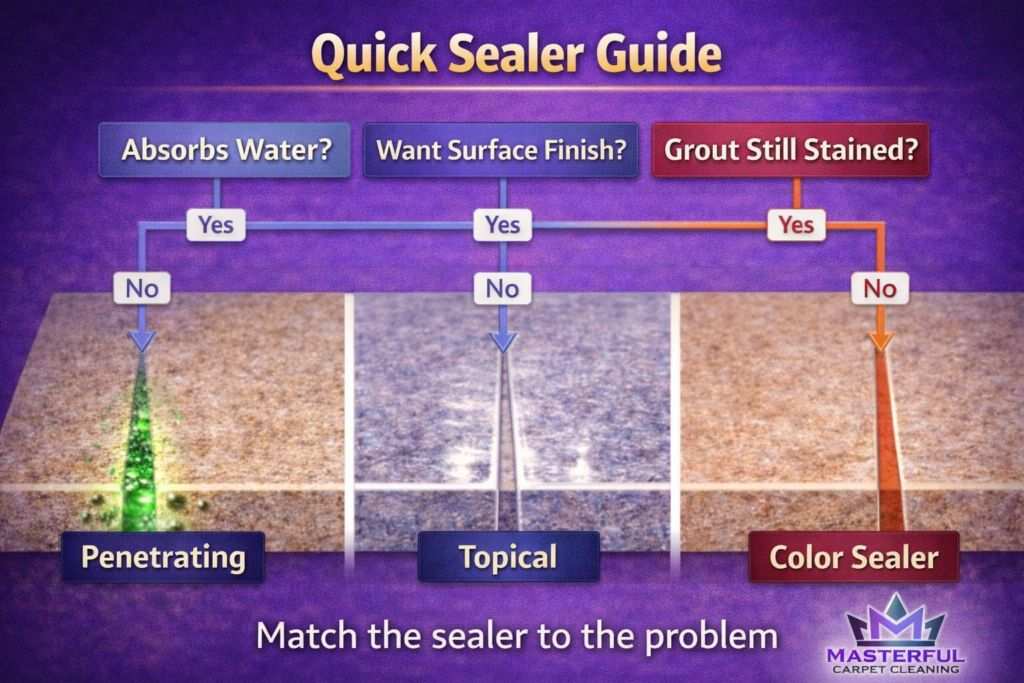
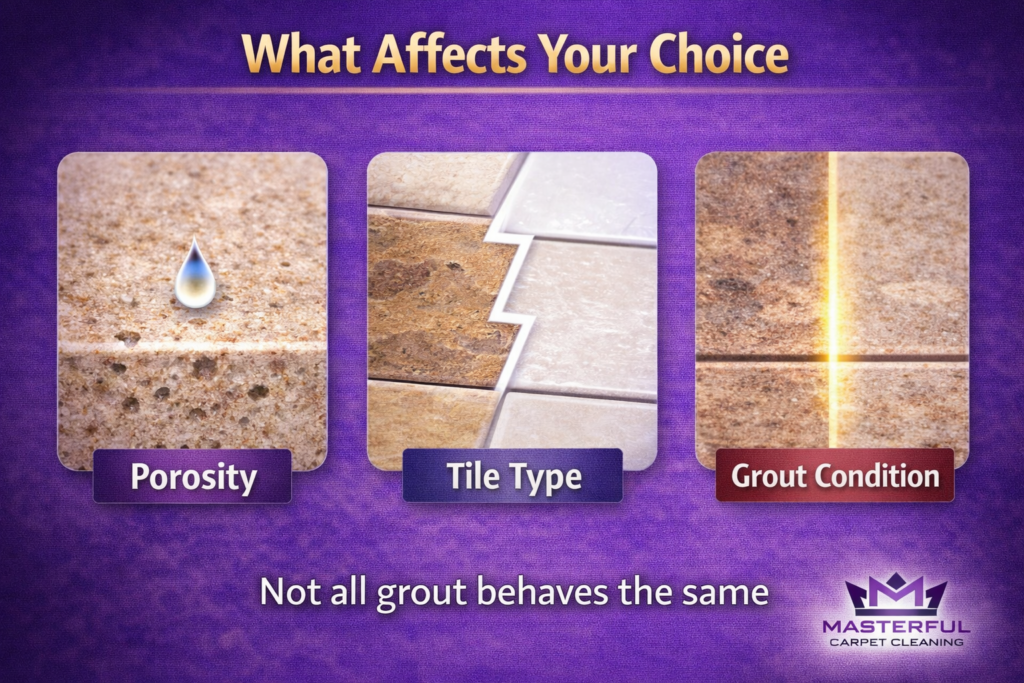
What Changes the Right Answer (Porosity, Tile Type, Grout Condition)
When people pick the “wrong” grout sealer, it’s usually because they didn’t account for porosity and existing buildup in the grout lines. Use this quick checklist to make the decision easier.
Quick Checklist: If this… then this…
- If grout darkens immediately when wet: it’s likely porous → a penetrating (impregnating) sealer is usually the best starting point.
- If grout looks stained or uneven even after cleaning: consider a color sealer to reset the look and protect at the same time.
- If grout already has a shiny coating that’s peeling or streaking: that’s often a failing topical sealer → it may need proper removal and prep before resealing.
- If previous sealing “didn’t last”: the issue is often residue or moisture trapped in the grout when the sealer was applied → deep cleaning and full dry time fixes the root problem.
Tile type too (fast, practical notes)
- Porcelain and ceramic tile usually don’t need sealing, but grout lines do.
- Natural stone can be more sensitive and may require different products and gentler methods, if you’re not sure what you have, we can identify it during your tile & grout cleaning.
This is where most DIY sealing jobs go sideways, prep and dry time are easy to underestimate.
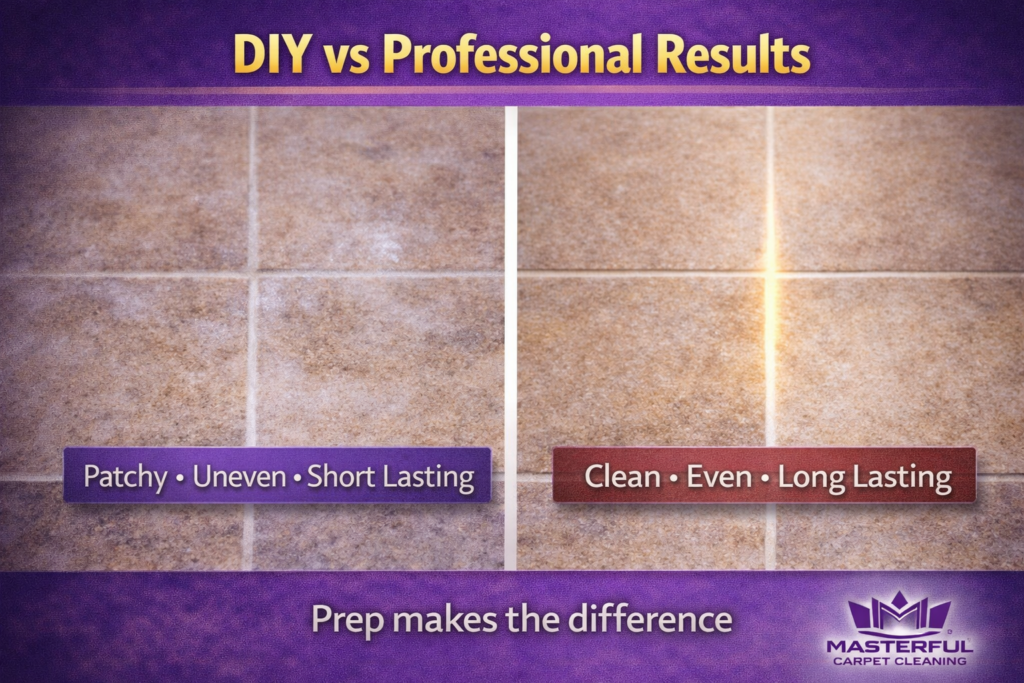
DIY Sealing vs Hiring a Pro (What Goes Wrong)
DIY grout sealing sounds simple, until the results come out blotchy, sticky, or short lived. Most “bad sealer” stories aren’t about the product. They’re about prep.
The most common DIY failure points
- Sealing over residue: If cleaner, soap film, or grease is still in the grout, the sealer won’t absorb evenly, so protection ends up patchy.
- Sealing before grout is fully dry: Moisture trapped in grout can lead to uneven color, weak bonding, and early wear.
- Uneven application: Too much sealer in one area and not enough in another can leave visible lines, haze, or inconsistent protection.
- Wrong sealer for the location: A coating style sealer in a busy or wet space can wear in traffic lanes or look uneven faster.
- Trying to “seal in” stains: Sealer is not a cleaner. If grout is already dark, sealing can lock that discoloration in place.
When hiring a pro makes the most sense
- Your grout is darker in traffic lanes or around sinks/stoves
- The shower grout looks permanently stained or blotchy
- You’ve tried sealing before and it didn’t last
- You want the right sealer chosen based on the space, not guesswork
Skip the trial and error. Book Masterful Carpet Cleaning for tile & grout cleaning + grout sealing in Salem, Oregon, so the grout is truly clean and the sealer performs the way it should.

Masterful’s Tile & Grout Cleaning + Grout Sealing Process (Oregon)
If you want grout that stays easier to maintain, the order: clean first, then seal. Here’s how we handle it for homes across Salem, Oregon and nearby areas.
Our process (simple, effective, and built for real life tile)
- Inspect tile + grout condition
We look for porosity, staining patterns, and any signs of old coatings or problem areas (showers, traffic lanes, kitchen grout). - Deep clean tile and grout lines
We focus on lifting embedded soil and residue that normal mopping leaves behind, especially in grout lines where stains start. - Confirm proper dry time
Sealer needs dry grout to bond evenly. We’ll guide you on dry time for your specific area (floor vs shower). - Recommend the right grout sealer
Based on your tile area and grout condition, we’ll recommend penetrating, topical (when appropriate), or color sealer if grout needs a uniform reset. - Apply grout sealer for even protection
Sealer is applied cleanly and consistently so protection is uniform, then we’ll share practical care tips to keep grout looking better longer.
Get a quote for Tile & Grout Cleaning + Grout Sealing in Salem, OR
Tile & Grout Cleaning Service Area in Oregon
If you’re searching for tile & grout cleaning near me in Oregon, Masterful Carpet Cleaning serves Salem and surrounding communities with professional tile & grout cleaning and grout sealing. When your grout is stained in traffic lanes, your shower corners stay dark, or your kitchen grout won’t brighten evenly, we’ll help you get it truly clean first, then apply the right grout sealer for longer lasting protection.
Common tile areas we service:
- Showers and tub surrounds
- Kitchen floors and backsplashes
- Entryways, hallways, and high-traffic tile floors
- Bathrooms and laundry rooms
Schedule Tile & Grout Cleaning + Sealing in Salem, OR
Grout Sealer FAQs
What is the best grout sealer for tile floors?
For most homes, a penetrating (impregnating) grout sealer is the most practical choice because it absorbs into porous grout and protects without leaving a surface film. If your grout lines are already dark or uneven, start with professional tile & grout cleaning so the sealer can bond evenly.
Penetrating vs topical grout sealer: what’s the difference?
A penetrating sealer soaks into grout pores for invisible protection, while a topical sealer sits on the surface as a coating. Penetrating sealers usually make more sense for busy floors and many wet areas, while topical coatings can wear in traffic paths if prep and upkeep aren’t consistent.
What grout sealer is best for showers?
In many showers, a penetrating sealer is a strong fit because it protects grout without adding a surface coating. If your shower grout stays blotchy or stained even after cleaning, a color sealer can restore a uniform look while also sealing.
Can color sealer fix permanently stained grout lines?
Often, yes. If grout stains don’t lift evenly after cleaning, a color sealer can create consistent grout color and add protection at the same time. We typically recommend cleaning the grout lines first so the color sealer applies evenly.
Do I need to clean grout before sealing it?
Yes. Sealing over residue or moisture can cause patchy coverage and early failure. A deep tile & grout cleaning first, then full dry time, gives the sealer the best chance to last.
How long should grout dry before applying sealer?
Dry time varies by location and conditions (floors vs showers). The key is that grout needs to be fully dry before sealing so absorption is even and the finish isn’t blotchy. When we perform tile & grout cleaning and sealing, we’ll guide you on the right timing for your space.
How often should grout sealer be reapplied?
It depends on traffic, moisture exposure, and cleaning habits. High traffic floors and frequently used showers usually need attention sooner than low use areas. After we clean and seal your grout, we can recommend a practical reapplication schedule based on how your tile is used.
Author