Wick back is the reappearance of a spot after cleaning as deeper moisture carries discoloration up into the face yarn while the carpet dries. Control it by limiting deep wetting, using slow extraction strokes, adding extra vacuum only passes, setting a balanced rinse to a neutral state, placing absorbent pads on heavy spills, moving air across the area, and following simple aftercare.
Wick back is frustrating because the carpet looked great at finish time, then a shadow crept back as the room dried. This guide explains what’s happening inside the carpet system, which conditions raise the odds, and how to stop it before it starts. You’ll also get field tested recovery steps if a spot reappears.
What wick back really is
During drying, moisture migrates from the backing and cushion toward the tips of the yarn. If dissolved discoloration or sticky residue lives below the face yarn, that upward movement can deposit color at the surface again. It looks like the spill “came back,” when in reality the spill was hiding deeper than the visible fibers.
Three ingredients set the stage:
- Depth – the original spill reached backing or cushion.
- Solubility – color bodies or residues dissolve into cleaning solution.
- Movement – as the carpet dries, that solution travels upward and leaves a faint ring or full spot.
The fix is simple in concept: reduce depth wetting, remove more liquid during extraction, and draw remaining moisture out of the zone while it dries.
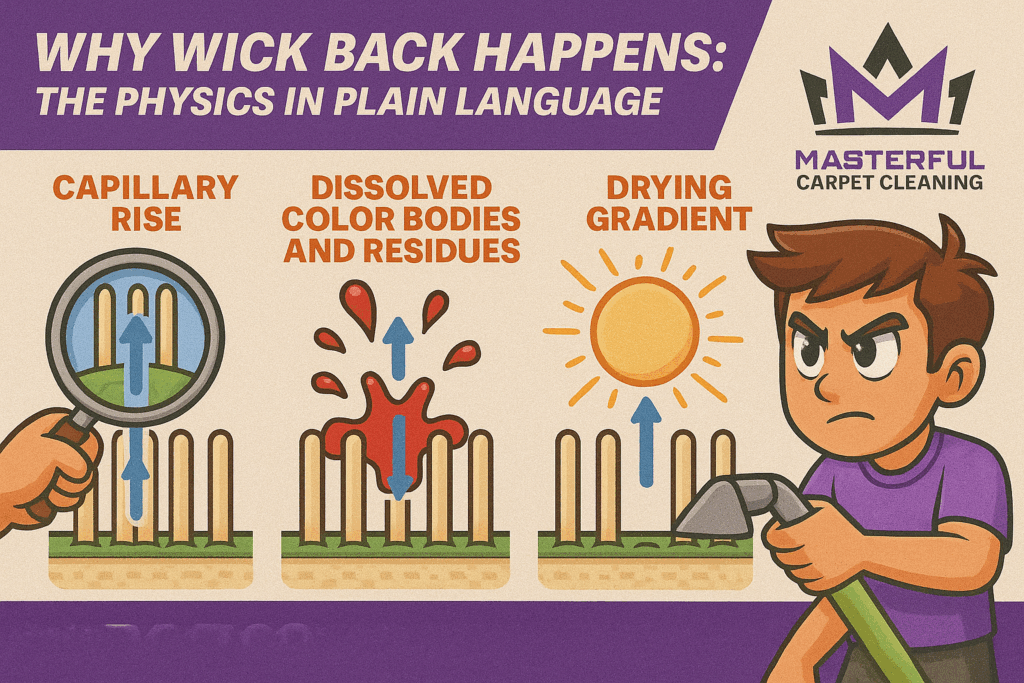
Why wick back happens: the physics in plain language
- Capillary rise: Yarn bundles act like straws. As surface moisture evaporates, water from deeper layers climbs to replace it.
- Dissolved color bodies and residues: Sweet drinks, pet accidents, and sticky cleaners dissolve readily. As they move upward, they tint the tips again.
- Drying gradient: Dry air at the surface pulls moisture from below. If more liquid is left at depth than the surface can evaporate evenly, concentration rises at the face yarn.
This isn’t failure; it’s physics. Once you manage depth and evaporation, the reappearance stops.
Top risk scenarios (know them when you see them)
- Flooded drink spills with sugar, dyes, or milk products.
- Pet accidents that soaked backing or cushion.
- Stair noses and hall turns with repeated spotter use by homeowners.
- Basement and slab rooms where humidity slows surface drying.
- Commercial glue down where oily soil lives low and wicks rapidly after aggressive flushing.
- Shag or deep pile that hides solution mid fiber.
- Loop/Berber where solution can track along yarns and appear feet away from the original drop.
Each scenario wants conservative moisture, strong recovery, and directed airflow.
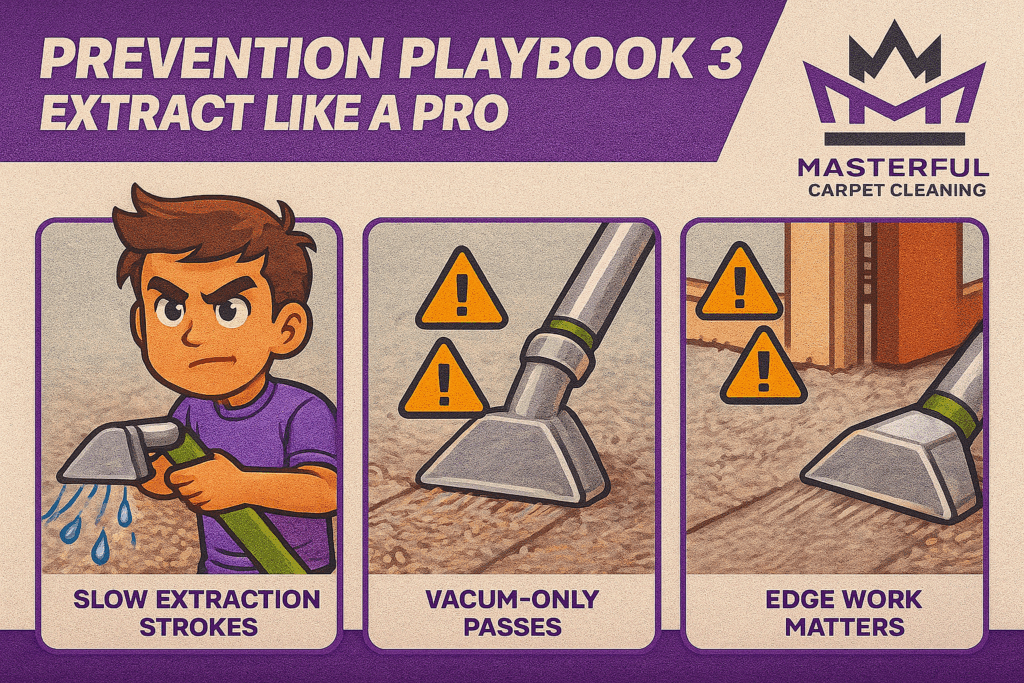
Prevention playbook: what to do during the clean
1) Set chemistry correctly
Start by unlocking soil without creating a residue problem.
- Match the family to the dominant soil: enzyme pre-spray for protein spills, solvent-boosted for lane film, and an oxygen finisher only after soil removal. The aim is even coverage, not heavy dosage. For product logic, keep carpet pre-sprays: enzymatic, solvent-boosted & oxygenated open while you work.
- Keep enzyme stages moist during dwell and avoid drying on the fiber.
- Avoid stacking concentrate “just in case.” Uniform coverage and agitation do more than heavy shots.
2) Control liquid at depth
- Tune flow and pressure to the construction, not to impatience.
- On spill craters, flush in a controlled pattern rather than flooding the entire field.
- Use a subsurface tool or small flood tool only when the cushion is known to be involved and you can extract to dryness.
3) Extract like a pro
- Use slow extraction strokes so the wand has time to carry away what chemistry freed.
- Add two or three vacuum-only passes in spill zones and traffic lanes. Those extra seconds reduce what’s left below the face yarn.
- Edge work matters: baseboards, doorway thresholds, and pivot points hold hidden moisture.
4) Finish clean and neutral
- Run a balanced rinse to a neutral state so leftover surfactants don’t act like magnets for new soil. A clean finish lowers the need for re-visits and keeps lanes looking right.
5) Draw moisture up before it rises on its own
- Place absorbent pads or towels over heavy spill sites after the rinse. Replace once they’re damp.
- Set a small airmover or ask the homeowner to run the HVAC fan so air moves across the area.
- Groom the pile so yarn stands up and air can reach deeper segments.
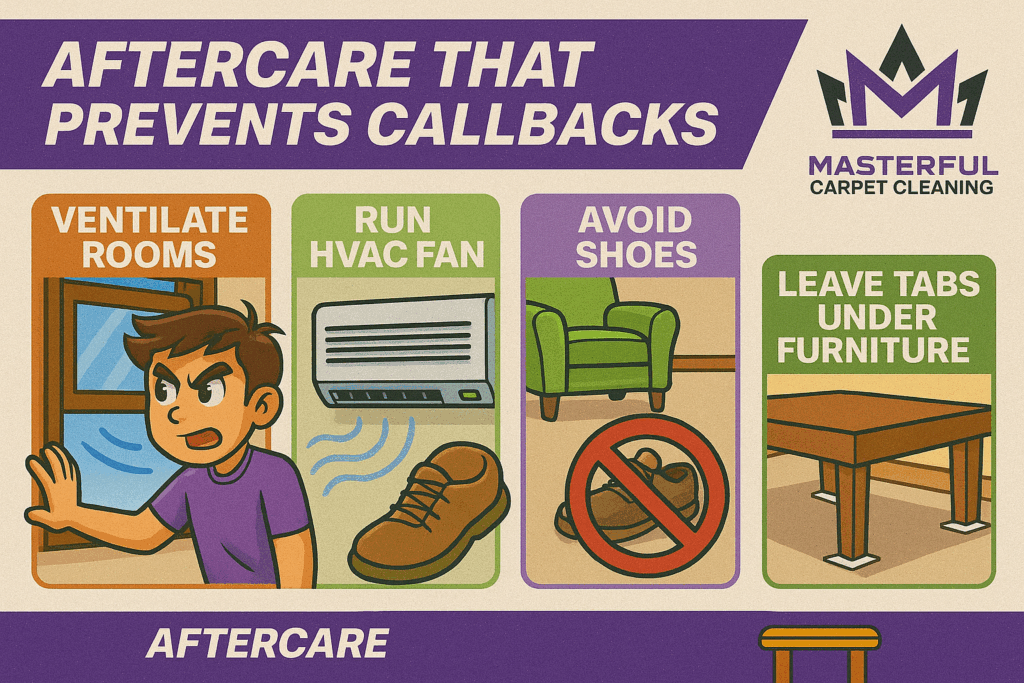
Aftercare that prevents callbacks
Short checklist:
- Ventilate rooms; create a light cross-breeze if weather allows.
- Run the HVAC fan or a small portable fan across treated areas.
- Avoid shoes and rolling chairs until dry to the touch.
- Leave tabs and blocks under furniture until dry.
- If a shadow appears, blot with a clean, dry towel and call for a quick flush rather than applying household spotters.
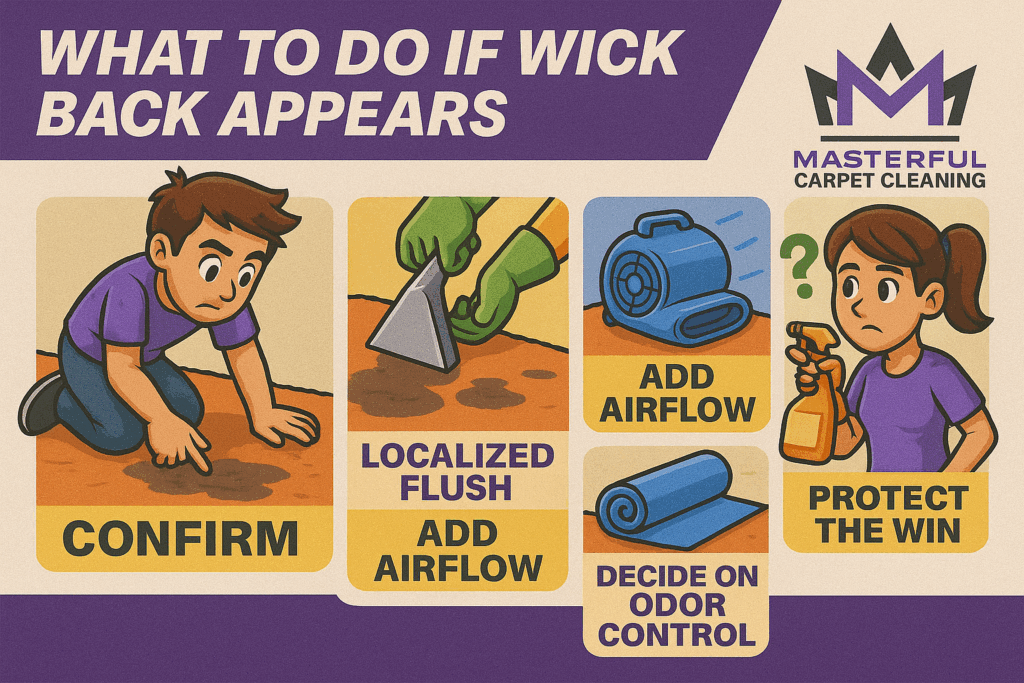
What to do if wick back appears anyway
Even with perfect prep, some spills live deep. Here’s a fast recovery path.
Step 1: Confirm what you’re seeing
- Low-angle light shows the shape of the shadow. If it mirrors a known spill, assume depth involvement.
- Feel for dampness. Slight moisture suggests recent movement; bone dry shadows can be old dye transfer, not fresh wick back.
Step 2: Localized flush without overspread
- Mask the area with towels around the perimeter to contain migration.
- Use a controlled flush through the face yarn with a detail or flood tool.
- Extract slow and steady, then run vacuum only passes until the hand test shows minimal moisture.
Step 3: Draw remaining moisture up
- Place absorbent pads and add directed airflow.
- Recheck in 20-30 minutes. If the pad is damp, replace it and continue airflow.
Step 4: Decide on odor control
- Pet accidents often need a two-stage approach: enzyme source treatment followed by a measured oxidation step once the zone is clean.
Step 5: Protect the win
- On traffic lanes or family hubs, suggest carpet protector application once fully dry. It buys time on future spills and makes vacuuming more effective.
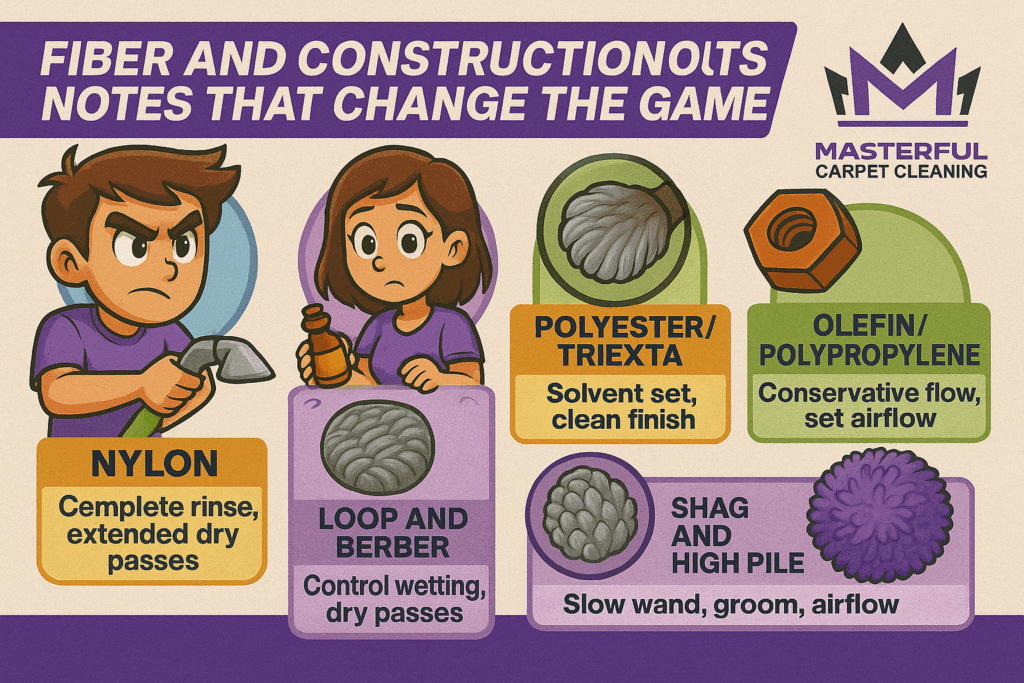
Fiber and construction notes that change the game
Nylon
Strong and resilient. It responds well to a complete rinse and extended vac-only passes. Wick back usually points to depth saturation, not fiber sensitivity.
Polyester/Triexta
Attracted to oils, which can disguise themselves as gray shading. Thorough film removal with a solvent infused set plus a clean finish is key. True wick-back shows defined edges; film haze looks broad and uneven.
Olefin/Polypropylene
Resists many water-based stains but is magnetized by oils and tar. In basements or commercial glue down, keep flow conservative and extraction long. Airflow makes a clear difference.
Wool
Delicate with dyes and texture. Keep heat modest and agitation gentle. Use a mild surfactant set, balanced rinse, and extra vac-only passes.
Loop and Berber
Solution travels along the strand like a wick. Control wetting, use shorter strokes, and invest in dry passes. Place absorbent pads over the whole loop path, not just the obvious spot.
Shag and high pile
Moisture hides mid fiber. Slow strokes, long extraction, and grooming are your friends. Airmovers aimed across the surface (not straight down) speed evaporation without matting.
Commercial glue down
Soil beds at the base of the yarn and moves quickly when over flushed. Meter flow, extract patiently, and always set airflow. Chair lanes and coffee points near desks are repeat offenders.
Spot type playbook (with wick back notes)
Sugary drink with dye (juice, sports drink)
- On day one: mild enzyme if protein is present, controlled rinse, vac-only passes, pad stack, airflow.
- If it returns: localized flush, pad stack again, and consider a short oxygen touch to normalize tone once clean. Always rinse after the oxygen touch.
Coffee or tea
- On day one: remove any dairy with an enzyme stage first; rinse. Then a measured oxygen finisher to even tone; rinse again.
- If it returns: assume cushion involvement; controlled flush, vac only passes, pad stack, airflow.
Wine
- On day one: controlled extraction, then a careful oxygen step; rinse.
- If it returns: repeat controlled flush with strict perimeter control; oxygen contact only as needed; rinse.
Pet accident
- On day one: enzyme source treatment, dwell with moisture management, thorough rinse to neutral, extended dry passes, airflow.
- If it returns or odor lingers: run a targeted subsurface flush. Follow with enzyme + oxidation sequence if needed, then pad stack.
Mystery gray shadow
- Test: solvent infused small patch with agitation and rinse.
- If it brightens: it was film, not wick back; clean the field the same way.
- If tone persists: try a measured oxygen touch; rinse.
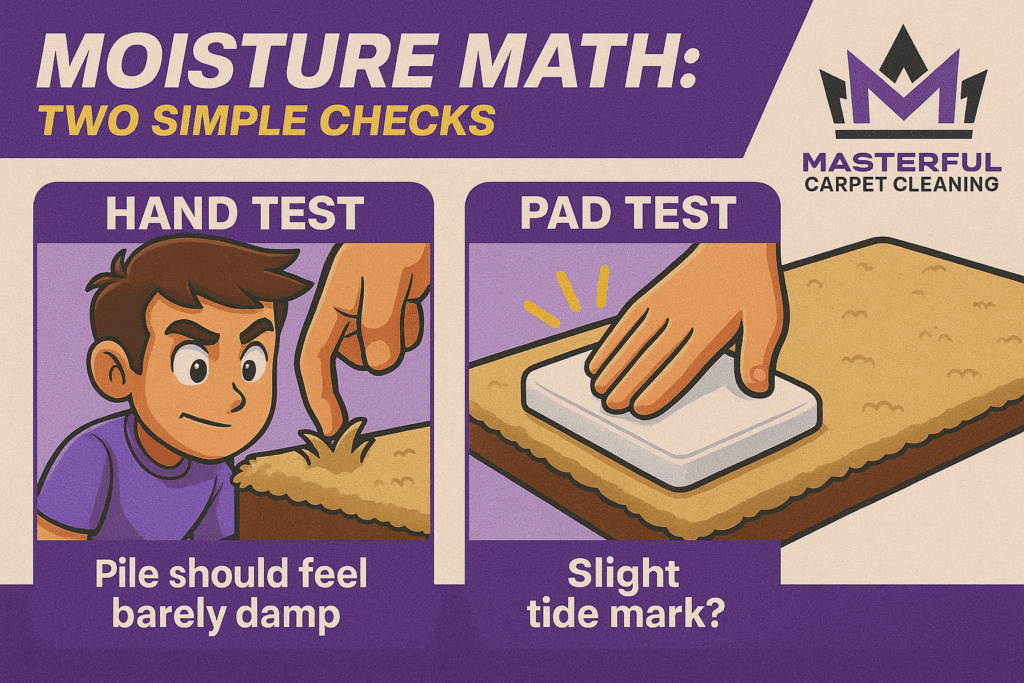
Moisture math: how much extraction is “enough”?
You don’t need instruments to make good decisions, though they help. Two simple checks:
- Hand test: squeeze a small pinch of pile after your final vac only passes. It should feel barely damp, not cool-wet.
- Pad test: place a clean white pad with light pressure for two minutes. A slight tide mark is fine; a wet patch means run more vac only passes.
If you repeat these two tests on every “tricky” job for a month, your call-backs will plummet.
Airflow positioning that speeds dry down
- Aim across the carpet at a shallow angle so air travels over the surface rather than hammering straight down.
- Open interior doors to avoid bottlenecks.
- Where safe, crack a window on the downwind side of the home to create a small pressure path.
- Remind the client to keep airflow running for a few hours. Small fans can be rotated between rooms.
Mythbusting
- “If it came back, the tech didn’t clean it.” Wick back is usually about depth and drying, not missed effort. The fix is a targeted flush and better moisture management.
- “More soap will fix it.” Extra detergent leaves more residue to draw soil. The solution is a balanced rinse and extraction, not more surfactant.
- “Crank the heat and drown it.” Flooding intensifies wicking. Metered flow plus vac only passes beat brute force every time.
- “Fans aren’t needed.” Airflow closes the loop. Movement over the surface speeds evaporation and reduces upward migration.
When to escalate beyond standard recovery
- Repeated reappearance in the same zone despite controlled flush and pad stack suggests cushion contamination or subfloor involvement.
- Odor that worsens in humidity points to source material below the backing.
- Stain that matches furniture rust or dye transfer may require specialized spot work rather than wick back treatment.
Keep air moving across cleaned rooms for a few hours. Walk in clean socks once the surface feels dry. Tabs and blocks should stay under furniture until everything is dry. If any spot shadow shows up as the carpet dries, blot with a clean towel and reach out for a quick follow-up flush.
Can wick-back be prevented every time? Risk can be lowered dramatically with measured wetting, extra vacuum only passes, a balanced rinse, pad stacks on heavy spills, and airflow. Depth saturation from old spills may still need a targeted follow-up.
Will more soap stop wick-back? No. Extra detergent leaves residue that attracts soil. The key is controlled flushing and a clean, neutral finish.
Do fans really make a difference? Yes. Airflow speeds evaporation at the surface so moisture doesn’t keep rising from below and depositing color at the tips.
Is wick-back more common with certain fibers? It’s more about spill depth and drying than fiber identity, though long pile, loop goods, and commercial glue-down show it more often because of how solution travels.
What should I do at home if a spot returns? Blot with a dry towel and keep air moving. Skip household spotters that can leave a film. Contact your cleaner for a quick, localized flush.
Author