Carpet cleaning aftercare refers to the actions taken after professional carpet cleaning to allow carpets dry correctly, stay clean longer, and avoid common post-service problems like odor, resoiling, or recurring stains. Proper aftercare focuses on moisture control, timing, and behavior, not additional cleaning. When handled correctly, aftercare protects carpet fibers, padding, and subflooring while extending the results of professional service.
Many post cleaning issues are not caused by the cleaning itself, but by what happens in the hours and days that follow. Knowing what to do, and what to avoid, makes the difference between carpets that stay fresh and carpets that quickly look dirty again.
What to Do After Professional Carpet Cleaning
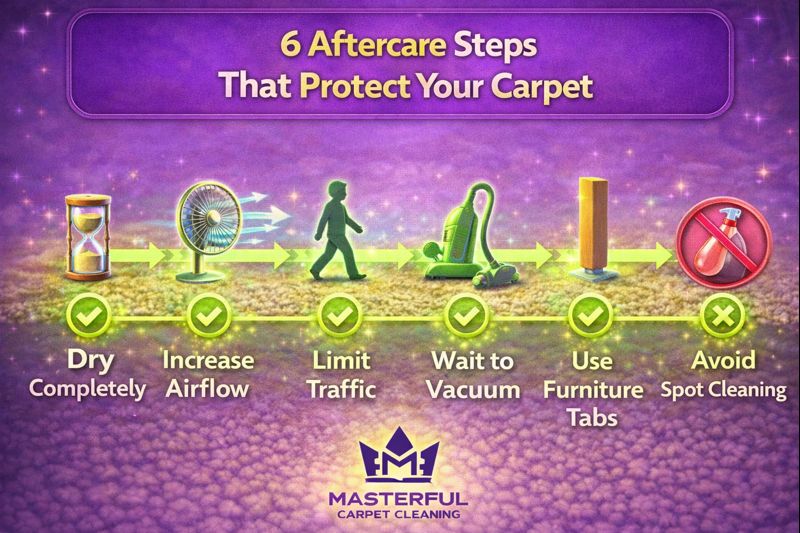
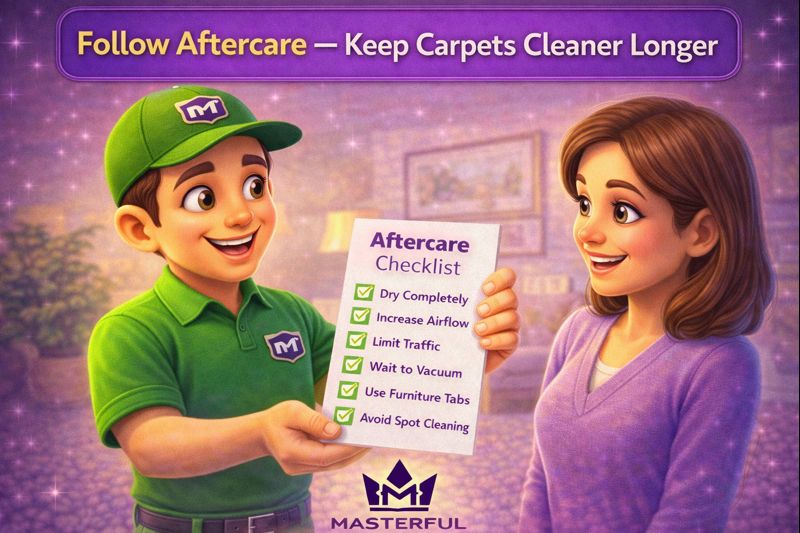
After professional carpet cleaning, follow these six core steps:
- Allow carpets to dry completely before normal use
- Increase airflow and manage indoor humidity
- Limit foot traffic during the drying window
- Wait before vacuuming carpet fibers
- Replace furniture carefully using protective tabs
- Avoid spot cleaning until carpets fully stabilize
Each step supports the others. Skipping one increases the likelihood of moisture retention, fiber distortion, or residue reappearing on the surface.
How Long Does It Take for Carpets to Dry After Professional Cleaning?
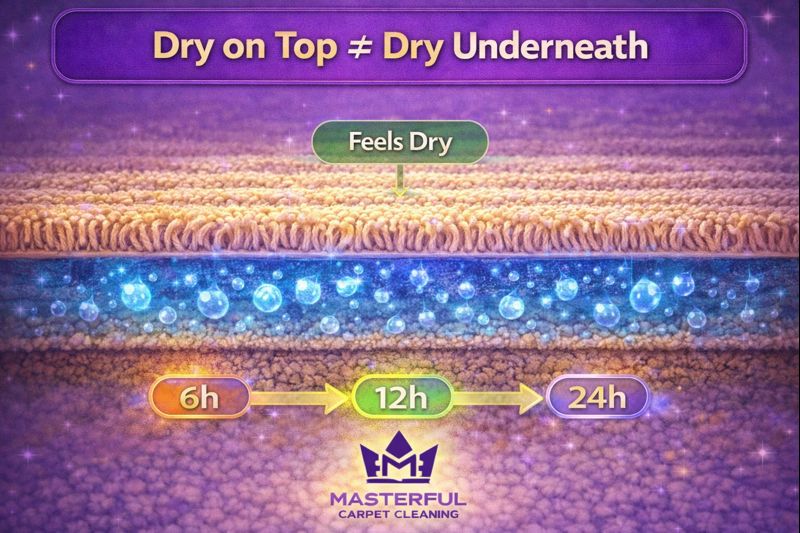
Most carpets dry within 6 to 12 hours after professional cleaning. Thicker carpet, dense padding, cooler temperatures, and high humidity can extend drying time to 24 hours or more.
Why Carpet Drying Is Not Linear
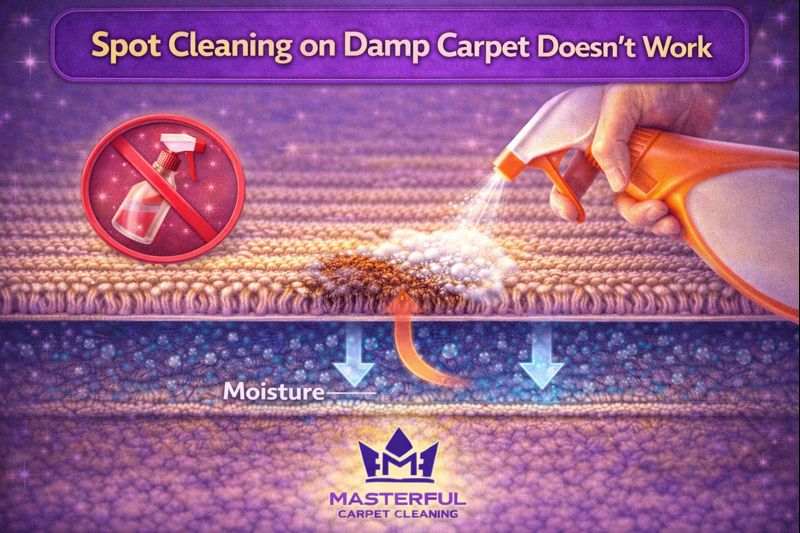
Carpet drying does not happen evenly from top to bottom. The surface fibers often dry first, while moisture remains trapped deeper in the carpet system, particularly in the carpet padding and backing. This is why carpets may feel dry to the touch while still holding moisture below the surface.
That trapped moisture is responsible for many post cleaning issues, including odor development and stain reappearance. Proper aftercare focuses on allowing moisture to escape evenly from the entire system, not just the visible surface.
How Airflow, Humidity, and Temperature Affect Drying Time
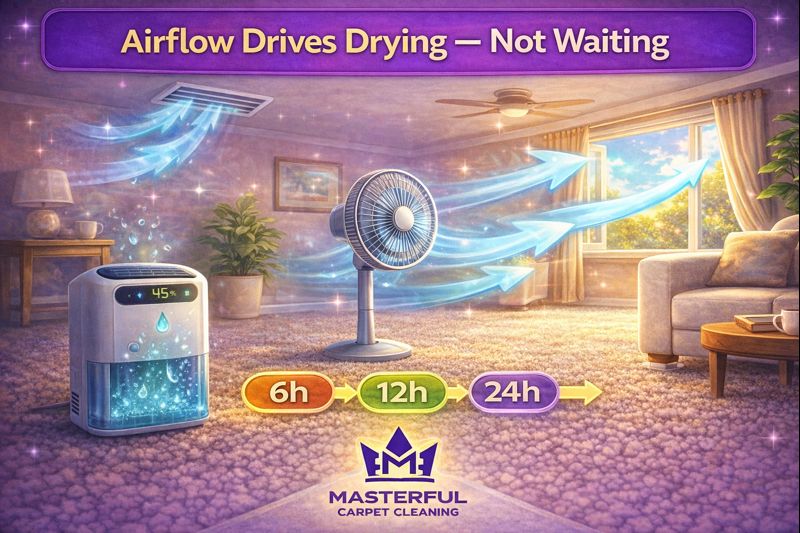
Environmental conditions in drying than time, especially in Oregon’s naturally damp climate.
| Factor | Effect on Drying |
|---|---|
| Humidity | Higher humidity slows evaporation |
| Air circulation | Poor airflow traps moisture |
| Carpet padding | Holds moisture longer than fibers |
| Foot traffic | Pushes moisture deeper |
| Furniture placement | Blocks airflow and compresses fibers |
Running HVAC systems, opening interior airflow pathways, and using fans or dehumidifiers all help moisture evaporate evenly. Closing up a home or business and waiting passively often leads to uneven drying.
Can You Walk on Carpet After Professional Cleaning?
Light foot traffic is acceptable once carpet feels mostly dry, but traffic should be limited until full drying is complete.
Why Foot Traffic Matters During the Drying Window
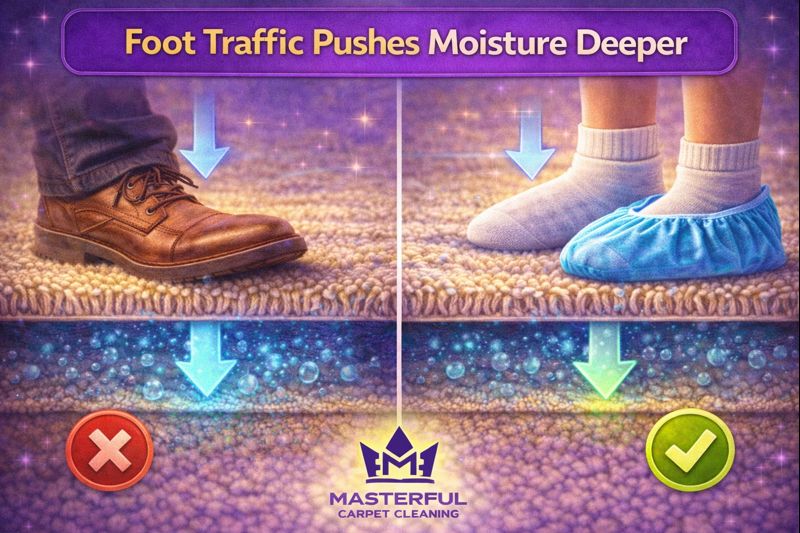
Walking on damp carpet compresses fibers while forcing moisture deeper into the pile and padding. Shoes also introduce new soil, which can bond to fibers before they fully dry. This combination increases the likelihood of uneven wear patterns and resoiling.
If walking is necessary, clean socks or shoe covers are safer than bare shoes during the drying phase.
When Can You Vacuum After Carpet Cleaning?
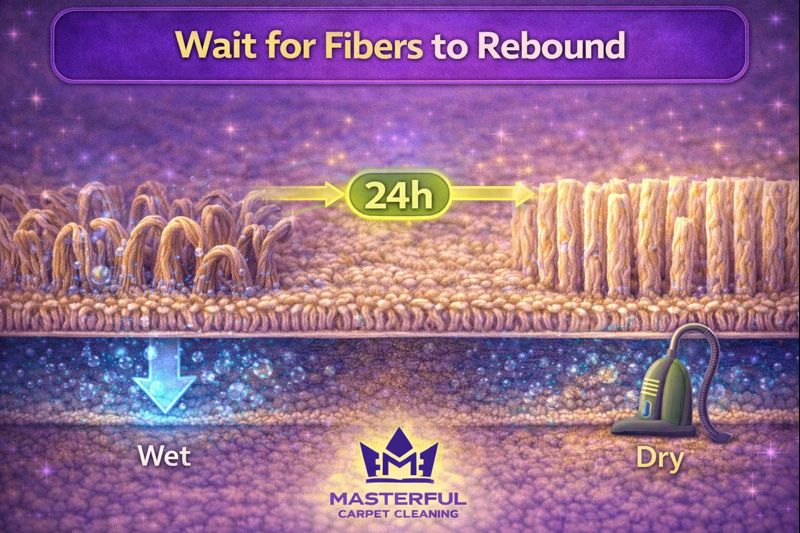
Vacuuming should wait at least 24 hours, or until the carpet is fully dry.
How Vacuum Timing Affects Carpet Fiber Recovery
Professional cleaning temporarily relaxes carpet fibers through moisture and heat. Vacuuming too early disrupts fiber recovery and can cause distortion, fuzzing, or premature wear, especially in high traffic areas.
Allowing fibers to fully rebound before vacuuming helps preserve texture and appearance, particularly for plush or cut pile carpets.
When Is It Safe to Put Furniture Back After Carpet Cleaning?
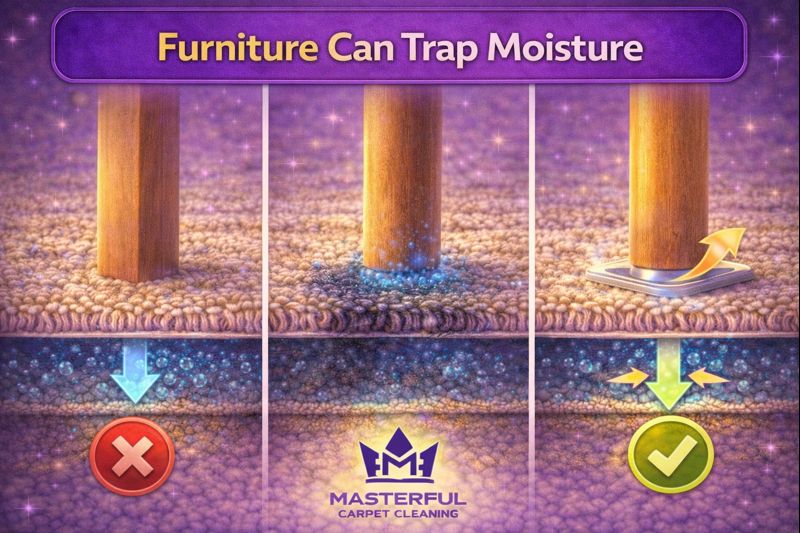
Furniture should only be returned once carpets are completely dry.
How Furniture Weight and Moisture Cause Permanent Compression
Placing furniture on damp carpet compresses fibers and traps moisture beneath legs and bases. This can slow drying, create odor pockets, and leave permanent dents in the carpet pile. Wood or metal furniture may also transfer stains or rust marks onto damp fibers.
Using protective tabs or blocks allows airflow and reduces pressure during the drying period, preventing long term damage.
Why Does Carpet Smell After Cleaning?
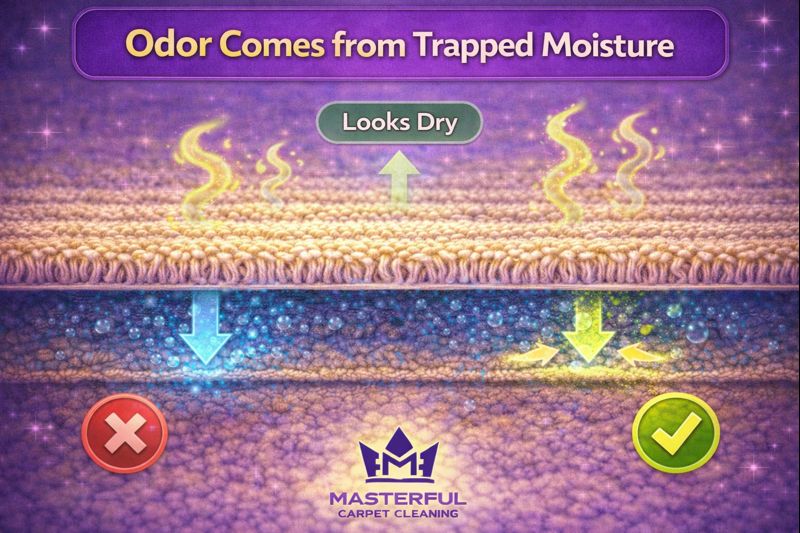
Post cleaning odors usually result from moisture trapped below the surface, not from cleaning solutions.
How Moisture Trapped in Carpet Padding Causes Odors
When moisture remains in carpet padding or backing, it creates conditions for mildew odor even if the carpet looks dry. Improving airflow and reducing indoor humidity typically resolves this issue.
For deeper explanations of moisture related problems, see: Wick Back After Carpet Cleaning: Causes, Prevention, and Fixes That Really Work
What Is Wickback After Carpet Cleaning?
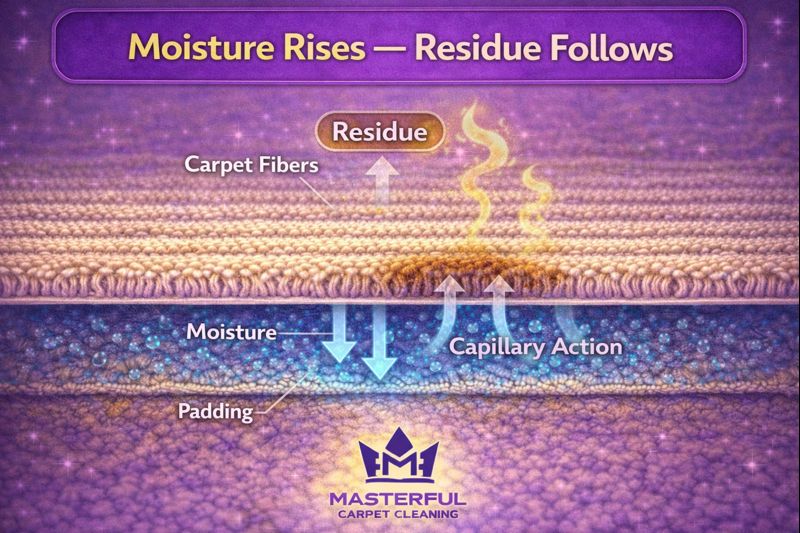
Wickback occurs when deep moisture migrates upward, carrying dissolved residue back to the carpet surface as it dries.
How Moisture Migration Causes Stains to Reappear
As surface fibers dry first, moisture from deeper layers moves upward through capillary action. When that moisture evaporates, it leaves behind residue that appears as returning stains. Wickback is not a cleaning failure, it is a moisture management issue that proper aftercare helps prevent.
Spot Cleaning Rules After Professional Carpet Cleaning
Spot cleaning too soon after professional service often causes more problems than it solves.
Why Spot Cleaning Too Soon Causes Residue and Resoiling
Applying cleaners to damp carpet adds residue before fibers have stabilized. That residue attracts soil, making carpets look dirty again much faster. Repeated spot scrubbing can also distort fibers and spread moisture deeper into the carpet system.
What to Do Instead of Spot Scrubbing
If a spill occurs during the drying window:
- Blot gently with a clean, dry towel
- Avoid adding liquids or cleaners
- Allow the carpet to dry completely
For stains that persist after drying, professional treatment is safer than aggressive DIY methods: Professional Stain Removal Services: When DIY Isn’t Enough
How Proper Aftercare Extends Carpet Longevity
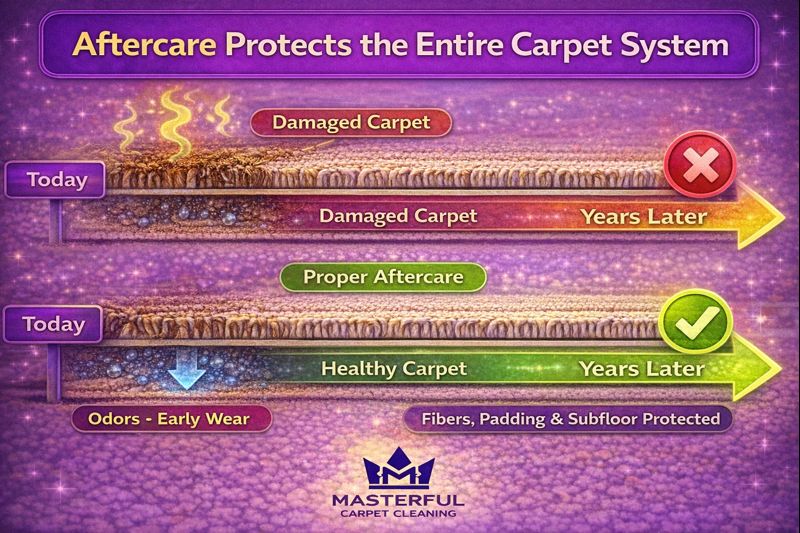
Correct aftercare protects more than just surface fibers, it protects the entire carpet system.
Protecting Carpet Fibers, Padding, and Subfloor
Moisture that remains trapped can weaken carpet backing, degrade padding, and even affect subfloor materials. Over time, this leads to odor retention, delamination, and shortened carpet lifespan. Proper aftercare allows moisture to dissipate safely and evenly, preserving structural integrity.
How Aftercare Supports Manufacturer Warranty Compliance
Many carpet warranties require professional cleaning followed by appropriate post service care. Improper drying, aggressive spot cleaning, or premature vacuuming can void warranty coverage.
Protective treatments applied during professional service also depend on correct aftercare to perform as intended. Learn more about protection timing here: Carpet Protector Application: What It Does and How Long It Lasts
Professional Carpet Cleaning Aftercare Support in Oregon
Masterful Carpet Cleaning provides aftercare guidance based on professional standards, carpet system behavior, and Oregon’s moisture heavy environment. Proper aftercare education helps clients avoid preventable issues and maintain results long after service is complete.
Key Takeaways for Carpet Cleaning Aftercare
- Aftercare controls moisture, not just time
- Most post cleaning problems are caused by behavior
- Drying, airflow, and timing prevent odor and re-soiling
- Correct aftercare protects carpet lifespan and warranties
Author