Bonnet and shampoo carpet cleaning can make carpet look better fast, but they’re appearance first methods. This guide explains where they work well, where they fall short, and how we decide, on-site in Oregon, when to switch to a restorative rinse. If you want the broader context for every major approach, see the complete overview of carpet-cleaning methods.
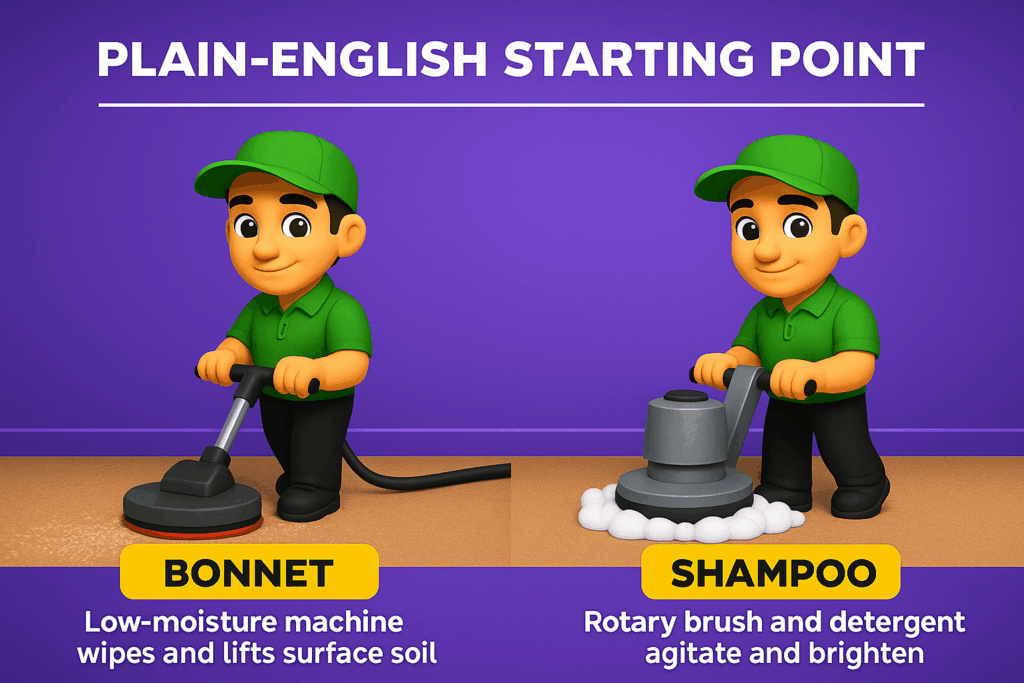
Starting point
Bonnet cleaning uses an absorbent or microfiber pad under a low-moisture machine to wipe and lift surface soil on the top of the pile. It’s quick, tidy, and designed to refresh appearance between deeper cleans.
Shampoo cleaning uses a rotary brush with a measured detergent solution to agitate and brighten the face fibers. Modern, low-residue chemistry can be helpful in targeted scenarios. Older high foam formulas (and optical brighteners) are what gave “shampoo” a reputation for residue and yellowing; we don’t use those.
Both methods minimize downtime. If fibers feel tacky, traffic lanes look gray, or there’s odor that won’t quit, a rinse-and-recover method (hot water extraction) is the honest fix. We often reset once and then maintain with low-moisture visits so you keep the fresh look without disruption.
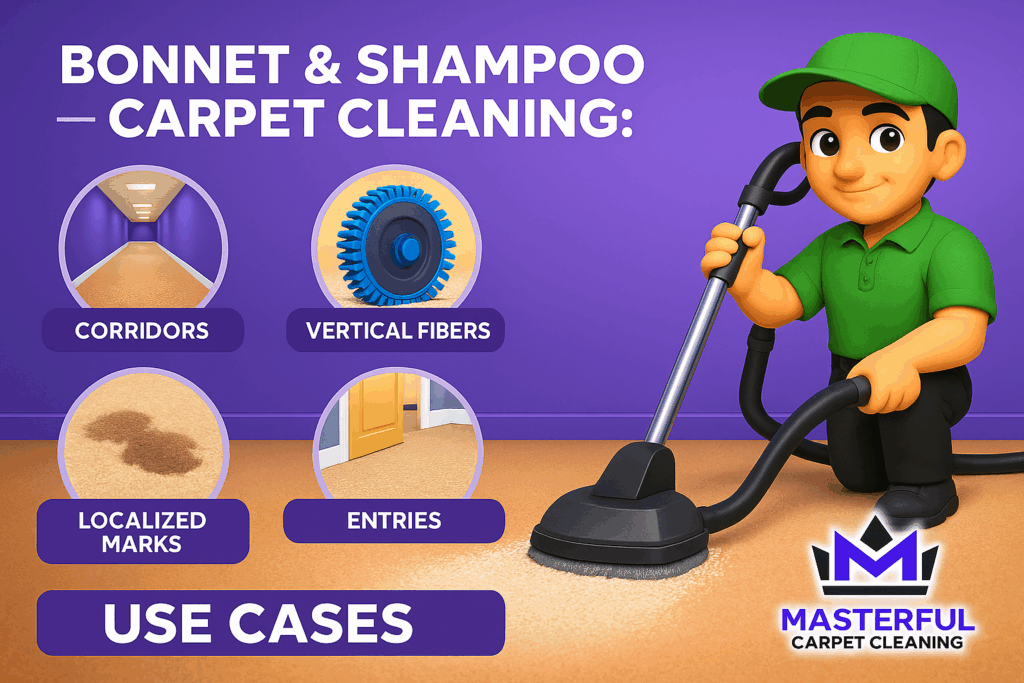
Where bonnet/shampoo genuinely help
In busy buildings, appearances matter by the hour, not the week. Bonnet or a light, modern shampoo pass can be a smart “right now” choice in corridors, entries, elevator lobbies, classrooms, and showrooms, especially on commercial glue down loop pile. The goal isn’t to strip the carpet back to factory fresh; it’s to lift the surface haze, even the traffic pattern, and restore a welcoming look before people arrive. Because moisture is limited, areas are typically usable within an hour or two.
For homes, these methods can tidy localized scuffs or dull lanes between deeper services. When we recommend them in residences, it’s because they’re the most practical tool for the specific cosmetic issue, not because they replace restorative cleaning.
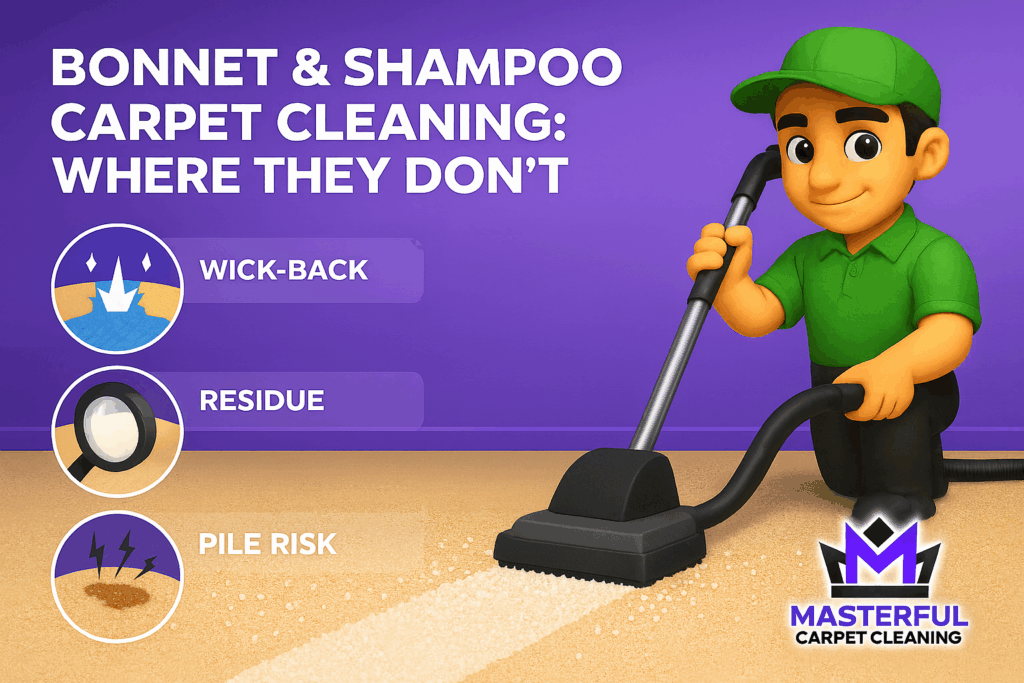
Where they don’t solve the problem
Wick back is the classic “why did the spot come back?” complaint after surface cleaning. Moisture wicks upward from below the face yarns, bringing deeper soil along for the ride. It’s preventable and fixable; if you’ve battled recurring spots, our wick back guide explains what’s happening and how we stop it.
Residue is another issue, usually from older chemistry or heavy DIY products. Sticky films hold on to soil, so the carpet resoils fast and feels slightly “grabby.” The solution is straightforward: a proper rinse and measured chemistry going forward. We break down the why in no residue carpet cleaning.
There’s also pile risk on plush cut pile: the wrong pad or too much aggression can fuzz or distort fibers. Technique and pad selection matter. And with old school shampooing, over wetting raises the risk of seam stress or adhesive issues, another reason we keep moisture tight and verify recovery.
When odor is in the backing or pad (pet accidents), surface methods can’t reach the source. That’s a targeted decontamination plus extraction scenario; see our pet odor approach for what works.
Finally, if lanes are gray and matted or fibers are coated in detergent film, you’re past the point of a quick gloss. We’ll map a restorative hot water extraction reset and then keep the look with low-moisture maintenance.
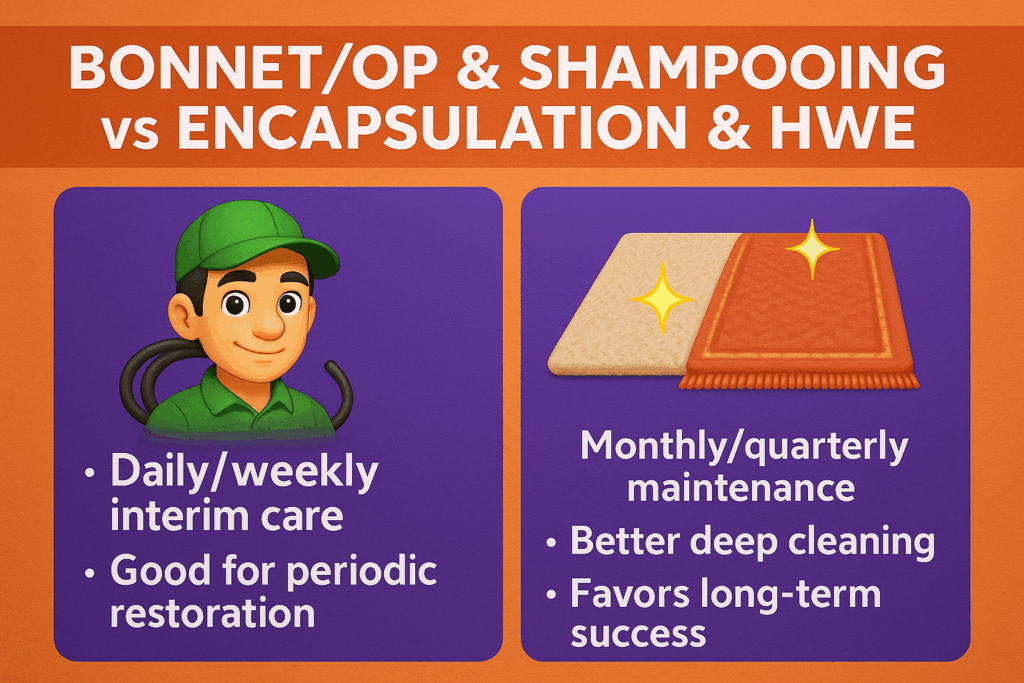
How bonnet & shampoo compare to encapsulation and HWE
| Method | How it cleans | Residue tendency | Typical dry time | Best use case |
|---|---|---|---|---|
| Bonnet/OP | Pad wipes/lifts surface soil on face fibers | Low-moderate (depends on chemistry) | 30-90 min | Fast appearance on loop pile/CGD |
| Shampoo (rotary) | Brush + measured detergent agitates/brightens | Moderate if not followed by recovery/rinse | 1-4 hrs | Targeted cosmetic projects; avoid old high foam blends |
| Encapsulation | Polymer crystallizes remaining soil for later vacuuming | Low | 30-120 min | Predictable maintenance over larger areas |
| Hot Water Extraction (HWE) | Heated rinse + strong vacuum recovery | Very low (with finishing rinse) | Sameday dry | Restorative reset; sticky residues; odor/urine at source |
If you’d like to see encapsulation’s role in maintenance (often paired with bonnet), here’s the how it works explainer.
Our Oregon playbook: when we switch to restorative
Greater Oregon’s rainy months mean higher humidity and a steady load of gritty soil. That’s a recipe for wick back if you only treat the surface. During your walk through, if we feel tackiness in the pile, see traffic shadowing, or trace odor below the face yarns, we’ll recommend a restorative HWE first. That flush and recover step clears residues and trapped soils so low-moisture maintenance holds.
From there, we design a cadence that fits your hours and foot traffic. For offices and retail, we often alternate encapsulation + bonnet for fast touch ups and schedule periodic HWE to reset the fiber fully. If you’re planning for uptime and costs, our commercial carpet cleaning page shows typical patterns we deploy across Salem, Corvallis, Eugene, McMinnville, and Albany.
Chemistry matters in the Northwest, pH balance, rinse quality, and drying all influence how long the carpet stays clean and how it feels underfoot. If you want to go deeper, carpet cleaning chemistry and aftercare explains why the soft, “no crunch” feel isn’t an accident.
What an “appearance-only” visit looks like (no fluff)
We begin with a pre-inspection to check construction (loop vs cut), fiber type, dye stability, seams, and past chemistry. Then we pre-vacuum thoroughly; dry soil removal is the foundation for tidy results with any method. If there are obvious lanes or marks, we use measured, targeted pretreatments, no flooding.
For the main pass, we run a bonnet/OP machine with the right pad for your construction and condition. On delicate cuts, agitation is gentle and controlled. Where appropriate, we add a light encapsulation application so fine soil crystallizes and leaves with your next vacuum cycles. We detail edges and transitions (pads miss those), verify pH, and set airflow to speed drying and protect nearby hard floors. Finally, a post inspection confirms the appearance lift and notes any zones that would benefit from a restorative rinse on the next visit.
When deeper work is warranted, this quick read shows the level of improvement a proper reset can deliver in traffic lanes: cleaning high traffic areas effectively.
Results you should expect (and not expect)
After an appearance only visit, expect a cleaner first impression in the spaces people notice most. Walk offs brighten, corridors look crisper, and you keep operating without downtime. What you shouldn’t expect is removal of sticky detergent films, deep oils, or subsurface urine. Those are restorative problems. We’ll be candid about that on the walk through and map the right fix so you’re not paying for the wrong tool twice.
FAQs
- Is bonnet bad for carpet? Used correctly, no. It’s designed for surface appearance and works best on loop pile and commercial glue down. It’s not a substitute for a deep flush when one is needed.
- Does shampooing leave residue? Legacy high foam shampoos could. We use low-residue chemistry and schedule rinses when appropriate. If residue is already present, a no-residue rinse is the fastest path back to normal: how we avoid residue.
- Why did a spot come back? That’s wick-back, moisture carried deeper soil to the surface during drying. Here’s how we prevent and fix it: wick back causes and cures.
- Will this help with pet urine odor? Surface methods can’t pull contamination from the backing/pad. You’ll want targeted decontamination plus extraction; our playbook is here: pet odor elimination.
Prep & Aftercare
- Before we arrive: clear small items, reserve parking near the entry, and point out any spots or high visibility lanes during the walk through.
- After we leave: use walk-off mats, vacuum high use areas within 24-48 hours (this also helps encapsulation release soil), and if a spot reappears, blot, don’t soak, so we can target it on follow up. For a single page checklist you can share with the team, see appointment prep steps.
Final take
Bonnet and shampoo are great at what they’re meant for: fast, low-moisture improvement you can see immediately. When the carpet needs more than cosmetics, residues, deep oils, or odor, we recommend a restorative hot water extraction first, then maintain with low-moisture passes so you keep that freshly, cleaned look without losing hours of uptime. If you’re unsure which path fits your space, a five minute walk through is all it takes to choose the right tool, once.
Author